August 10, 2026
AUGUST 2026 BATTLE OF NASHVILLE TRUST BULLETIN
Battle of Nashville Trust Bulletin August 2026
The August edition of the Battle of Nashville Trust Bulletin features President Brad Gericke’s discussion of the Trust’s newly revised mission statement, along with information about the August meeting of the Nashville Civil War Roundtable and an article examining the important role of women who cared for Civil War soldiers in Nashville.
In his President’s Message, President Gericke explains three important elements of the Trust’s new mission: protecting the memories, land, structures, and artifacts associated with the Campaign and Battle of Nashville; honoring the history of all who fought and lived through the Civil War in Tennessee; and pursuing the three principal functions of preservation, education, and advocacy. He notes that the Trust’s vision extends beyond battlefield land to include artifacts, documents, photographs, and structures that can help preserve and interpret the full story of the Battle and its participants. He also introduces the Trust’s new “Campaign Order,” which establishes benchmarks for moving its preservation, education, and advocacy efforts forward.
The Bulletin also announces the August 18 meeting of the Nashville Civil War Roundtable, featuring BONT Vice President and Vanderbilt professor Brandon Hulette presenting “What Lies Beneath: The Battle of Nashville.” The program will examine physical remnants of the Battle and Hood’s final campaign and explore new scientific and technological methods that can help historians understand what lies beneath historic battlefields.
The month’s featured article, “Caring For the Sick and Wounded at Nashville” by Howard Mann, focuses on the women who served as surgeons and nurses during the Civil War and shares stories of the courage and resilience of those who cared for the sick and wounded. For details on all of the above, click the Bulletin link above.
July 8, 2026
JULY 2026 BATTLE OF NASHVILLE TRUST NEWSLETTER
Battle of Nashville Trust Newsletter July 2026
The July 2026 Battle of Nashville Trust Newsletter marks an important milestone in the Trust’s continuing transformation. In his first extended message as President, Brad Gericke outlines a bold new vision for the organization, emphasizing BONT’s commitment to becoming a nationally recognized historical preservation organization dedicated to acquiring, preserving, interpreting, and sharing the story of the Battle of Nashville for future generations.
The newsletter also highlights the Trust’s then-pending opportunity to acquire an additional 1.2 acres of historic battlefield land at Shy’s Hill. Since publication of the newsletter, that acquisition has been successfully completed, expanding BONT’s preserved holdings on Shy’s Hill to nearly six acres and representing the Trust’s third battlefield property acquisition there in just over two years. Readers are encouraged to view the Trust’s accompanying News article (below) announcing the completed purchase and the launch of its continuing Battlefield Preservation Campaign.
Also featured are details of the July meeting of the Nashville Civil War Roundtable, Howard Mann’s historical article, “The Beaus of Maggie Lindsley,” and other news and activities of the Battle of Nashville Trust.
July, 2026
BATTLE OF NASHVILLE TRUST EXPANDS BATTLEFIELD PRESERVATION CAMPAIGN WITH THIRD SHY’S HILL ACQUISITION IN TWO YEARS
Enabled by a historic personal donation, The Battle of Nashville Trust has taken another major step in its long-term Battlefield Preservation Campaign with the acquisition of an additional 1.2-acre tract at 4619 Benton Smith Road on historic Shy’s Hill. The purchase, announced by BONT President Brad Gericke, marks the Trust’s third acquisition of Shy’s Hill battlefield property in just over two years, increasing its preserved holdings on the Hill to nearly six acres.
The $1.5 million acquisition was made possible by an extraordinary anonymous leadership gift of $500,000 from a long-time steward and donor of the Trust—the largest individual contribution in the organization’s history. The donor requested no public recognition, focusing instead on hoping to encourage others to continue financially supporting preservation of this nationally significant battlefield for future generations.
While Shy’s Hill has become the focal point of the Trust’s recent preservation successes, both Gericke and Exec. Dir. Bobby Whitson stressed that the acquisition reflects the Trust’s renewed commitment to identify, acquire, preserve, and interpret significant Battle of Nashville battlefield sites throughout the greater Nashville battlefield wherever opportunities arise. As one of the nation’s fastest-growing metropolitan areas continues to expand, preserving surviving battlefield land has never been more urgent.
Located immediately south of the Trust’s Benton Smith Road trailhead, the newly-acquired property occupies core battlefield ground where Union troops from Illinois, Indiana, Minnesota, and Ohio assaulted Confederate defenders from Florida, Georgia, and Tennessee during the climactic fighting of December 16, 1864. The overwhelming assault on Shy’s Hill broke the Confederate line and helped secure one of the Union Army’s most decisive victories of the Civil War. Unlike the Trust’s previous acquisitions, the property includes an existing residence that will become part of the organization’s long-range planning as Shy’s Hill continues to evolve into an expanded historical park and educational destination.
The Trust’s recent preservation accomplishments illustrate the momentum of this effort. In April 2024, BONT acquired a 1.2-acre tract at the base of Shy’s Hill, preserving the ground crossed by Federal soldiers during the final assault. In November 2025, the Trust secured ownership of the historic Shy’s Hill summit after decades of stewardship and maintenance in partnership with the Tennessee Historical Society. Together with the newest acquisition, these properties now form nearly six acres of permanently protected battlefield land extending from the Benton Smith Road entrance to the summit.
These recent acquisitions have been built upon a growing network of partnerships dedicated to protecting the Battle of Nashville battlefield. In 2025, the Tennessee Historical Commission, through its Tennessee Wars Commission, awarded BONT a landmark $505,000 Civil War Sites Preservation Fund grant that helped support acquisition of the Trust’s 2024 Shy’s Hill property. The Trust also gratefully acknowledges a “Preserving America Grant” from Americana Corner, which has supported improvements to the newly preserved battlefield, as well as technical assistance provided by the American Battlefield Trust.
Plans are already underway to determine how the newest property can best be incorporated into the expanding Shy’s Hill site. In addition to preserving another important section of battlefield ground, the property creates new opportunities for enhanced interpretation, visitor amenities, educational programming, expanded hiking trails, and additional green space. The existing residence will also be evaluated as part of the Trust’s long-term vision for the property.
The $1.5 million acquisition is one of the most significant preservation investments in the Trust’s history. To help complete the acquisition, the Trust has launched a fundraising campaign, inspired by the historically-generous anonymous gift associated with the purchase, asking members, friends, and preservation supporters to participate.
BONT Exec. Dir. Whitson stressed that the Battle of Nashville Trust’s recent acquisitions at Shy’s Hill demonstrate what can be accomplished when preservation-minded citizens, donors, members, volunteers, and partner organizations work together to protect America’s historic landscapes before they disappear. Although Shy’s Hill currently represents the Trust’s most active preservation effort, the organization’s mission extends across the entire Battle of Nashville battlefield. He added that wherever opportunities arise to preserve historically significant battlefield land, the Trust intends to pursue them.
June 30, 2026
BATTLE OF NASHVILLE TRUST REQUESTS DONATIONS TO HELP COVER COST OF NEW PROPERTY ACQUISITION ON SHY’S HILL
The Battle of Nashville Trust, through its Executive Director Bobby Whitson, has posted requests on BONT’s social media and through a special membership email to garner donation support for adding a new tract to its Shy’s Hill site.
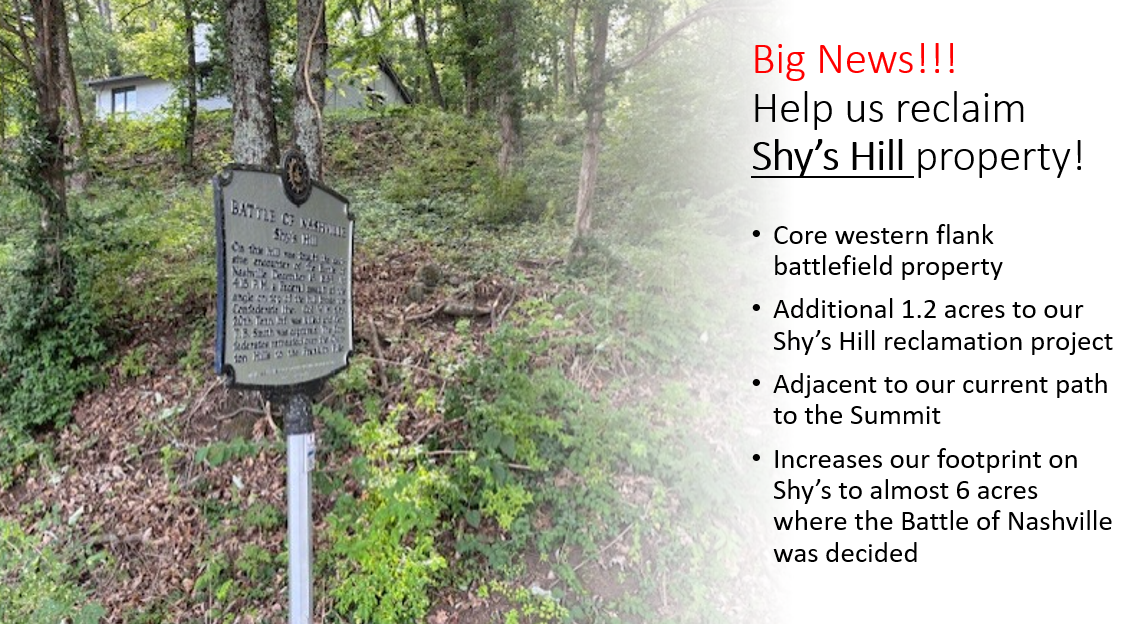 Battle of Nashville Trust supporters, thank you for your continued support of our efforts to honor the service of those who fought here at Nashville in December of 1864! We are excited to share the news that we have the opportunity to buy an additional 1.2 acres of land on Shy’s Hill adjacent to our current trail head that leads to the Summit from Benton Smith Rd. Your gift to support this effort would be greatly appreciated!
Why are we buying this parcel?
- • Protects hallowed ground from future development.
- • Preserves core battlefield land on the hill where the Battle of Nashville was decided.
- • Honors troops from Illinois, Indiana, Minnesota, and Ohio who fought troops from Florida, Georgia, and Tennessee at this spot.
- • Positioned adjacent to our current trail head and summit properties.
- • Expands our battlefield footprint to almost 6 acres on Shy’s Hill.
- • Creates a better opportunity for visitors to envision what transpired here and for the BONT to interpret the action for them.
- • Will enable us to increase our hiking trail and green space footprint.
Please consider making a donation today by visiting https://www.battleofnashvilletrust.org/about-us/join/.
Important Matching Alert – – Every dollar donated toward the new site helps BONT qualify for a significant matching fund that will greatly increase our ability to make this vital purchase!
June 11, 2026
JUNE 2026 BATTLE OF NASHVILLE TRUST NEWSLETTER
Battle of Nashville Trust Newsletter June 2026

President Brad Gericke
The June 2026 Newsletter highlights the Trust’s new leadership, upcoming Nashville Civil War Roundtable program, and an in-depth look at Belle Meade’s role in the Battle of Nashville.
In his first newsletter message as President, Brad Gericke reflects on his lifelong interest in Civil War history and outlines a vision for a revitalized, modern Battle of Nashville Trust.
The Nashville Civil War Roundtable will meet on Tuesday, June 16, 2026, at Belle Meade Historic Site and Winery at 7:00 p.m. The NCWRT presentation will feature Howard G. Mann, President of the Nashville Civil War Roundtable, speaking on the topic “Love, Tragedy and Redemption,” the remarkable story of Nashville native Martha O’Bryan and Confederate officer Robert Yates Beall. Their wartime romance was cut short when Beall was captured and executed near the end of the Civil War after participating in a secret Confederate operation. Martha O’Bryan never married, but dedicated her life to helping others through church-based charitable programs whose legacy continues today. The meeting is open to the public. [NOTE: The Newsletter went to press with an incorrect topic for the Round Table meeting. The correct topic, about Nashvillian Martha O’Bryan, is summarized above.]
This month’s featured article, written by Casey Gillespie, Director of Historic Interpretation at Belle Meade, explores the significant role Belle Meade played during the Battle of Nashville.
The newsletter also includes information on the upcoming CWRT Congress Sustainability Conference, membership renewals, and opportunities to support ongoing battlefield preservation efforts as Nashville’s historic landscapes continue to face development pressures.
May 13, 2026
MAY 2026 BATTLE OF NASHVILLE TRUST NEWSLETTER
Battle of Nashville Newsletter May 2026
The May 2026 newsletter of the Battle of Nashville Trust highlights a major new era in battlefield preservation efforts while also featuring the latest news, programs, and historical articles from across Middle Tennessee’s Civil War community.
This month’s lead story announces significant organizational and leadership changes designed to strengthen BONT’s mission to preserve endangered battlefield land. Bobby Whitson has transitioned into the newly created Executive Director position, with Brad Gericke elected President and Brandon Hulette Vice President. The new structure is aimed at accelerating preservation, fundraising, education, and public outreach efforts as development pressures continue across Nashville.
The newsletter also includes a link to the latest Nashville Civil War Roundtable newsletter and information on the May 19 NCWRT meeting at Fort Negley, featuring author S. Scott Anderson presenting “The Scott Boys From East Tennessee,” a story of divided loyalties and family tragedy during the Civil War.
Featured articles this month include John Banks’ account of the public execution of Private Julius Milika on Granny White Pike, Casey Gillespie’s look at “Belle Meade and the Battle of Nashville,” and another John Banks feature examining lesser-known skirmishes around Nashville during the war.
May 8, 2026
BATTLE OF NASHVILLE TRUST INITIATES NEW ERA OF PRESERVATION EFFORTS WITH MAJOR INNOVATIVE ORGANIZATIONAL AND LEADERSHIP CHANGES
The Battle of Nashville Trust has announced historic organizational and leadership changes in its non-profit structure as it moves forward with plans to expand preservation of the Battle of Nashville battlefield.
For the first time in its 34-year history of preserving battlefield ground, BONT has retained the services of an Executive Director who will join the Officers and Board of Directors to drive the efforts to upgrade the acquisition and interpretation of battlefield sites.
The BONT Board voted unanimously to elevate then-BONT President Bobby Whitson to the position of Executive Director of the Trust. Vice President Brad Gericke, a retired U.S. Army Major General, was elected president, and Brandon Hulette, a Vanderbilt University professor, as vice president. The new leadership structure went into effect as of May 5, 2026.
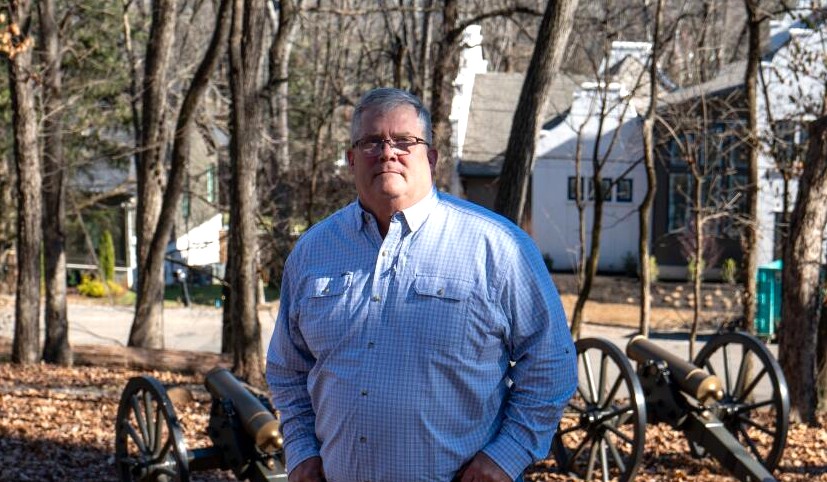
Bobby Whitson, Executive Director and former President, Battle of Nashville Trust
“Our objective is to advance the operations of the Trust to meet the urgent demands of historical preservation in a growing metropolitan region where development pressures continue to press against the imperatives to preserve our history,” said Gericke. “The Trust is looking for new ways to tell the story of the campaign and Battle of Nashville to today’s communities that may not realize a major battle and turning point of the Civil War was literally fought across Nashville’s neighborhoods.”
He added, “We are looking for volunteers to help us — all are invited and welcome. In the coming months the Trust will initiate a major fundraising campaign to preserve key properties that are at risk of being lost forever. We must act aggressively and act now!”
Bobby Whitson, who began 2026 as President of BONT and now moves into the ED position, noted that he was grateful that he will get to continue in an effective role to help move BONT forward to achieve the Board’s new objectives to save more of the dwindling remnants of the battlefield.
“Over the last two years, we have accomplished unparalleled growth. With our new leadership and structure, I am more confident than ever of our ability to drive greater awareness and raise more funds to honor those that served while creating valuable green space for all Nashvillians to enjoy,” said Whitson, a Nashville sports and education technology executive involved in recruiting and athletic team data management from the high school to professional levels. “I am one of the luckiest people on the planet. Every day I get to work alongside some of the best people in Nashville and engage with people about how important Nashville was to the Civil War. At the same time I get the opportunity to honor all of those who fought and sacrificed here.”
All three of those in the new leadership structure emphasized the core values set forth in the Battle of Nashville Mission Statement:
“The Battle of Nashville Trust (BONT) protects the memories, land, structures, and artifacts of the Campaign and Battle of Nashville to honor the history of all who fought and lived through the American Civil War in Tennessee by maintaining and interpreting the battlefield through world-class preservation, education, and advocacy.”
The Battle of Nashville Trust, known prior to 2020 as The Battle of Nashville Preservation Society, was begun in 1992 by local historians who recognized how quickly commercial and residential development was erasing the original Nashville battlefield. Fortunately, a developer in 1954 had recognized the non-residential value of the summit of Shy’s Hill and allowed its acquisition by the Tennessee Historical Society. Since its renaming in 2020, BONT has acquired ownership of the THS property as well as purchased an additional one acre plus of the lower slope of Shy’s Hill.
For more complete statements by Gericke and Whitson, see the May, 2026, Battle of Nashville Trust Newsletter on this page.
April 12, 2026
APRIL 2026 BATTLE OF NASHVILLE TRUST NEWSLETTER
Battle of Nashville Trust Newsletter April 2026
 The April Battle of Nashville Trust newsletter highlights a busy and meaningful spring season. President Bobby Whitson shares a reflective message inspired by a recent artifact discovery at an 1863 battlefield, underscoring the importance of preserving the stories of the soldiers who fought there.
The Trust invites volunteers to participate in the 30th Annual Park Day on April 25 at Shy’s Hill, beginning at 9 AM, to assist with cleanup efforts following winter storm damage—an important part of BONT’s ongoing preservation mission.
The Nashville Civil War Roundtable will meet on April 21 at 6 PM at Belmont Mansion, featuring William Parker’s presentation on “Feeding Civil War Armies,” examining how both sides sustained their troops in the field.
A highlight of this month’s newsletter is Howard Mann’s column on Colonel John A. Martin of the 8th Kansas Infantry, who served as Provost Marshal of Nashville from December 1862 to June 1863. The article provides valuable insight into the challenges of maintaining order, enforcing military authority, and managing civilian life in a Union-occupied city. Click on link above for details about the Martin story and other NCWRT news for April, 2026.March 11, 2026.
March 11, 2026
MARCH 2026 BATTLE OF NASHVILLE TRUST NEWSLETTER
Battle of Nashville Trust Newsletter March 2026
The March 2026 newsletter from the Battle of Nashville Trust highlights preservation updates, an upcoming Nashville Civil War Roundtable program, and reflections on a valued member of the Trust community.
President’s Message
As spring approaches, the Trust is continuing its work preserving the Battle of Nashville landscape. Recent ice storms caused tree damage on Shy’s Hill, and the Trust partnered with Casey Pope and his team to clear downed trees and limbs. Visitors are advised to use caution when visiting the area while debris removal continues. President Bobby Whitson also invites neighborhood groups in Green Hills, Oak Hill, West Meade, Brentwood, and Belle Meade to reach out to BONT for informal history sessions about Civil War events that occurred in their communities.
The Trust also honors the memory of longtime friend and board member Bob Henderson, remembered for his deep passion for Nashville Civil War history and aviation history. Henderson played a key role in preserving Kelly’s Point and helped digitize important 1930s aerial photographs of Nashville that continue to assist researchers studying historic battlefield landscapes.
Preservation Advocacy
Members and supporters are encouraged to help protect Tennessee’s Civil War sites by contacting Governor Bill Lee and state legislators in support of the Tennessee Civil War Sites Preservation Fund, an important tool for protecting historic battlefield land. Details are in the Newsletter.
Nashville Civil War Roundtable – March Program
The next meeting of the Nashville Civil War Roundtable will take place on Tuesday, March 17, 2026, at 7:00 PM at the Fort Negley Visitors Center in Nashville.
This month’s program, “Thaddeus Lowe, Civil War Balloonism,” will be presented by historian Dr. Cheryl McAuley. The presentation explores the remarkable story of Thaddeus Lowe, Chief Aeronaut of the Union Army Balloon Corps, whose pioneering work in aerial reconnaissance during the Civil War helped shape early military aviation. Lowe’s balloons were used to observe Confederate troop movements during campaigns such as the Peninsula Campaign of 1862.
Dr. McAuley is a retired U.S. Army National Guard Lieutenant Colonel, former intelligence analyst with the Department of Defense, past president of the Tennessee Valley Civil War Round Table, and an author and speaker on Civil War history.
Howard Mann’s Column
This month’s historical column continues Howard Mann’s series on “The Provost Marshals of Nashville – February 1862 through 1865.”
Support the Mission
The Trust’s preservation work depends on member support and donations. Please remember to renew memberships and contribute to help protect the historic landscapes of the Battle of Nashville.
February 23, 2026
HISTORICAL PRESERVATION CHAMPION “AMERICANA CORNER” HAS AWARDED IMPORTANT GRANT TO THE BATTLE OF NASHVILLE TRUST FOR FUNDING VITAL IMPROVEMENTS TO CONFEDERATE REDOUBT NO. 1
The Battle of Nashville Trust’s never-ending battle to hold back the encroachment of everything from development to foliage at its significant preserved site at Confederate Redoubt No. 1 has received substantial support from Americana Corner, a major preservation resource dedicated to saving America’s significant Founding Era historic sites.
“The Battle of Nashville Trust (BONT) is proud to announce that we’ve been selected as a 2026 @AmericanaCorner Preserving America Grant recipient! Said Bobby Whitson, President of BONT. He noted that the Americana Corner program “was established to assist nonprofit organizations like us in the telling of the incredible story of America from its founding era through its first century as a nation. We and Nashville are honored to use these funds to continue the preservation of history for posterity.”
The Grant funds will support BONT’s efforts to keep the hallowed grounds of the Redoubt free of, among other things, invasive woody growth that has threatened to obscure what is known as the North viewshed. With the help of these funds, trees and other foliage have now been removed, opening the view North from the elevated earthworks so that the winter vista is now more like it was on December 15, 1864, enabling a clear line of sight from the northern edge of the works all the way to the cityscape of Nashville four miles in the distance.
This significant grant is the second which Americana Corner has awarded to the Battle of Nashville Trust, the first also coming at a key time to help fund the clearing of BONT’s acquisition of more than an acre of Shy’s Hill in late 2025.
“It’s difficult to express our appreciation to Americana Corner and its founder, Tom Hand, not only for their assistance with our preservation efforts at the Trust, but also for the multiple other projects which support the preservation of uncountable other projects across the country,” Whitson said.
In addition to funding efforts by non-profits such as BONT to save sites important to the Founding era, Americana Corner provides free resources, including articles, videos, and maps, aimed at fostering a deeper appreciation for the nation’s history, founders, and founding documents.For more details about Americana Corner and its important work to save American history and its historic sites, see www.americancorner.com, #preservingamerica, and learn about its founder, retired businessman, author, historian, and West Point graduate Tom Hand (www.americanacorner.com/tomhand). For more detail about the clearing of the earthworks at Redoubt No. 1, see story below on this News Page.
January 18, 2026
EAGLE SCOUT CANDIDATE USES ‘SERVICE PROJECT’ TO MAKE IMPROVEMENTS TO REDOUBT No. 1
Hudson Ewald, a Life Rank Boy Scout at Troop 87, Hillsboro Presbyterian Church, had an idea for a great “Eagle Project” – making a few key improvements to Redoubt No. 1, one of BONT’s signature historic sites located on Benham Avenue.
Before Scouts can become fully qualified to achieve Scouting’s highest rank of Eagle, Scouts must complete a significant “service project” that benefits a school, religious institution, or community organization. As part of the project, the Scout must demonstrate not only a solid plan and a willingness to put in the time and effort, but also, the important quality of leadership by organizing others to help achieve the common goal.
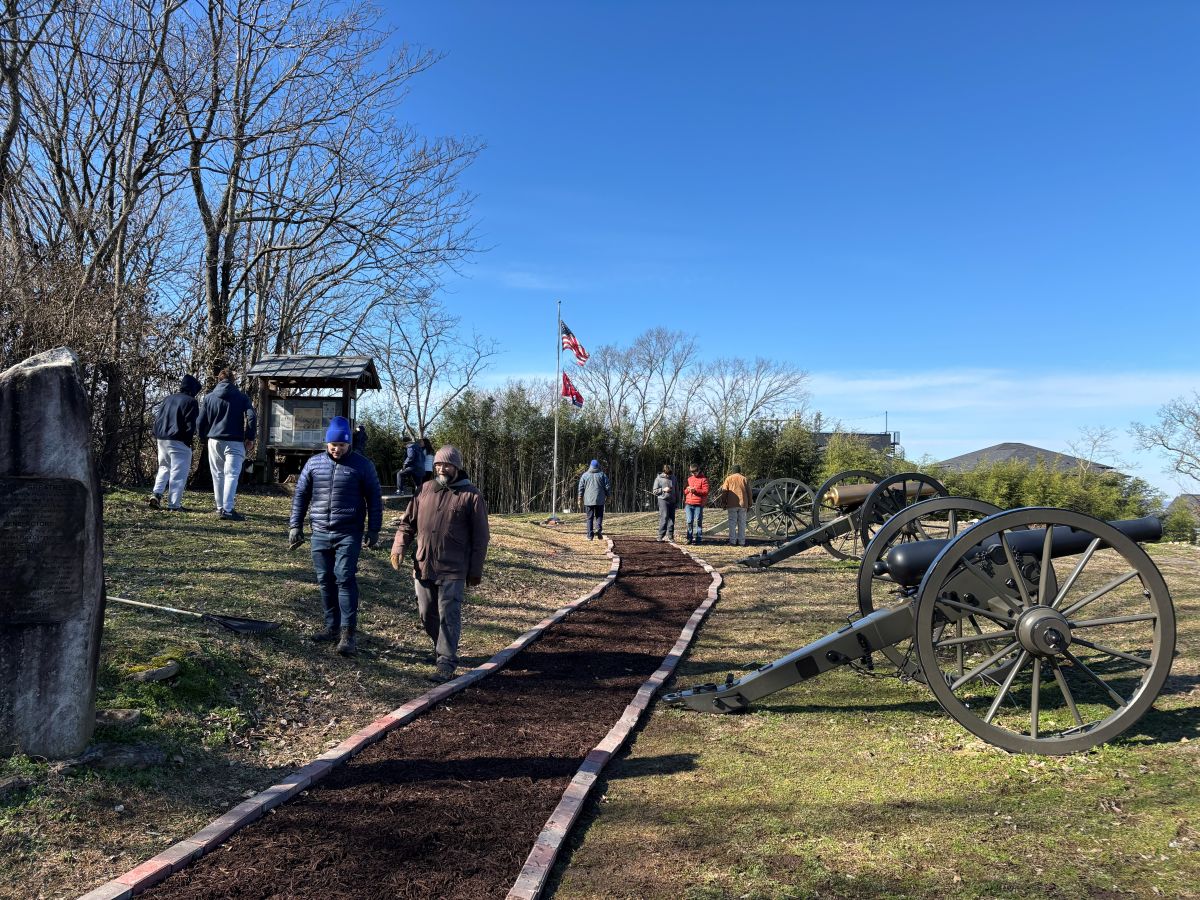 Hudson, noting that the Redoubt needed some cleanup and improvement, zeroed in on the 161-year-old earthwork for his Project, including laying a path for viewers to safely walk on the preserved works without damaging the fragile grounds, touch-up landscaping, and with permission from the neighbor, removed a large portion of bamboo/cane and tree limbs. He had wood boards replaced on and around the kiosk platform.
Hudson is a 16-year-old sophomore at Montgomery Bell Academy and is considering several universities such as Auburn, Vanderbilt and Sewanee. He was accompanied by his father and mother, Mark and Trina Ewald, his sister who is a member of Troop 78, and his “team” including fellow Troop 87 Scouts, Adult Leaders and friends from MBA along with his Scoutmaster Emeritus, Richards Hill, who is Battle of Nashville Trust board member.
Bobby Whitson, President of BONT, thanked Hudson and his “Eagle team” and the fathers who assisted them, noting the importance of involving young people in the preservation of Nashville history, and expressing the Board’s appreciation for a great service project that made a difference at the site. Whitson gave a presentation on the Battle of Nashville to the group which many of the Scouts continued to discuss around the campfire on their recent campouts.
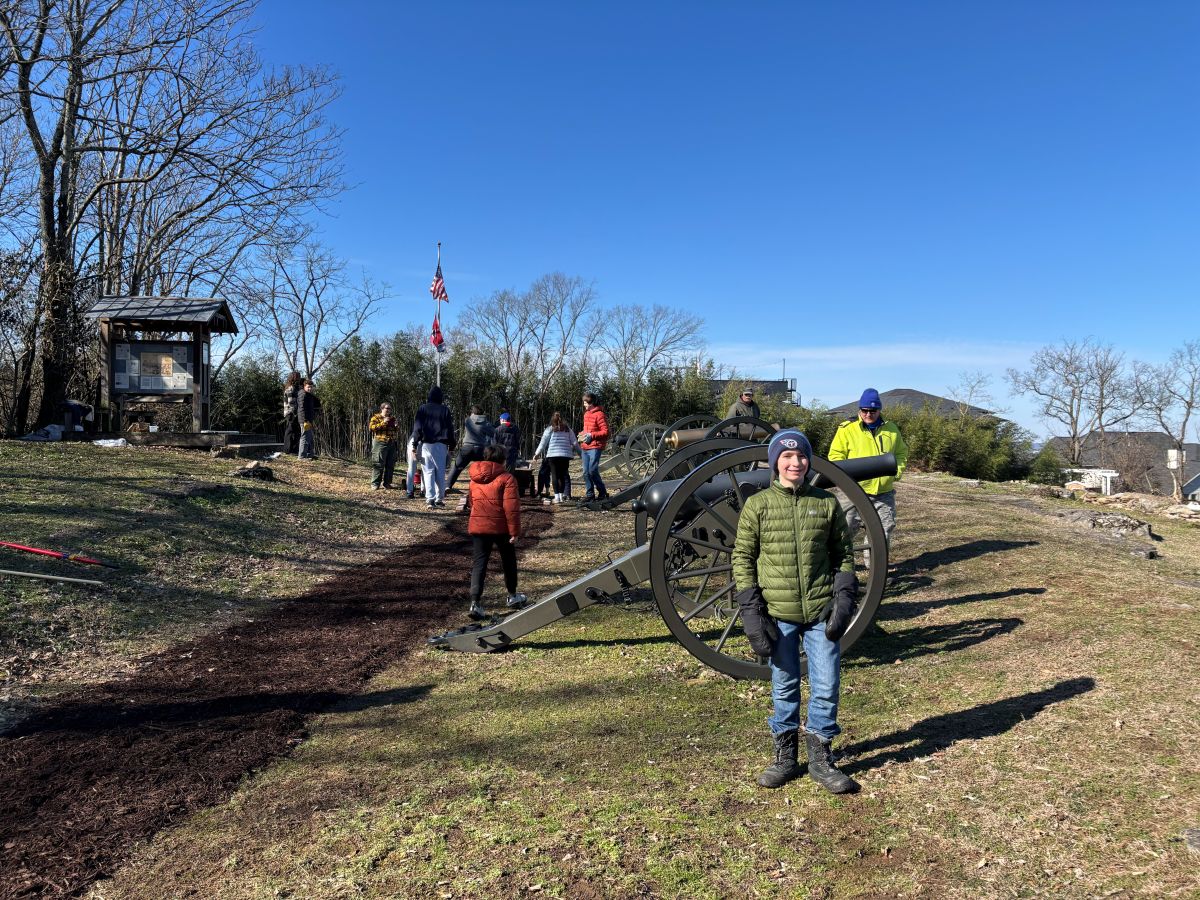
Hudson Ewald, Eagle Scout candidate, at Redoubt No. 1 with his team
February 9, 2026
FEBRUARY 2026 BATTLE OF NASHVILLE NEWSLETTER
The February 2026 Battle of Nashville Trust newsletter includes important updates on preservation efforts, upcoming programs, and ways to stay involved, with special emphasis on BONT’s call for members to send their requests to relevant Tennessee governmental officials to maintain funding for battlefield preservation.
Most importantly, the newsletter calls on members and supporters to contact Gov. Bill Lee and legislators in support of continued funding for the Tennessee Civil War Sites Preservation Fund, which plays a vital role in preserving threatened battlefield land across Tennessee. A prepared support letter is provided to make participation simple and effective. It can be used verbatim or customized. Please help us encourage Tennessee to keep this program fully funded.
Additional highlights include a message from BONT President Bobby Whitson, details on the February 10 Nashville Civil War Roundtable program at Fort Negley, news of an upcoming lecture on Black Civil War surgeons at Belmont Mansion, preservation updates, and membership renewal information.
Battle of Nashville Trust Newsletter February 2026
February 1, 2026
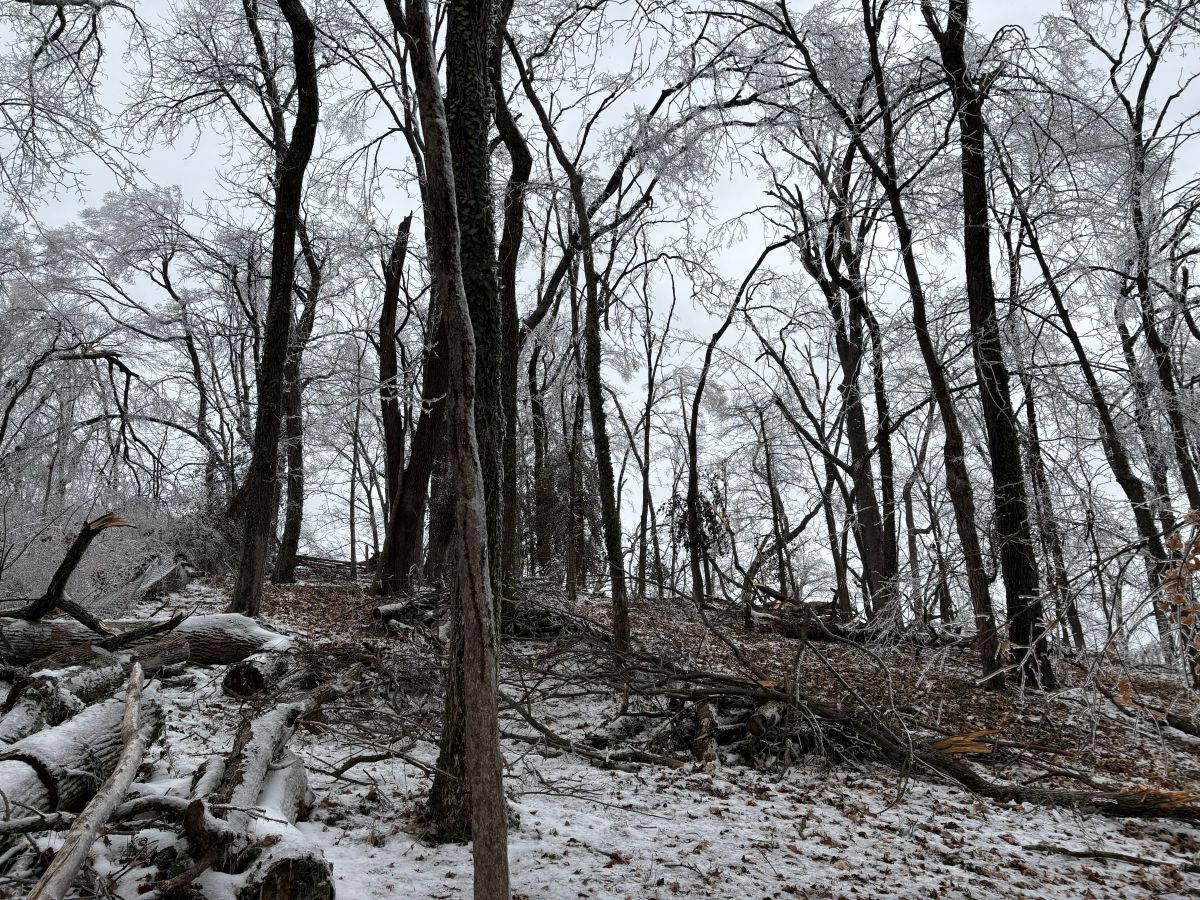
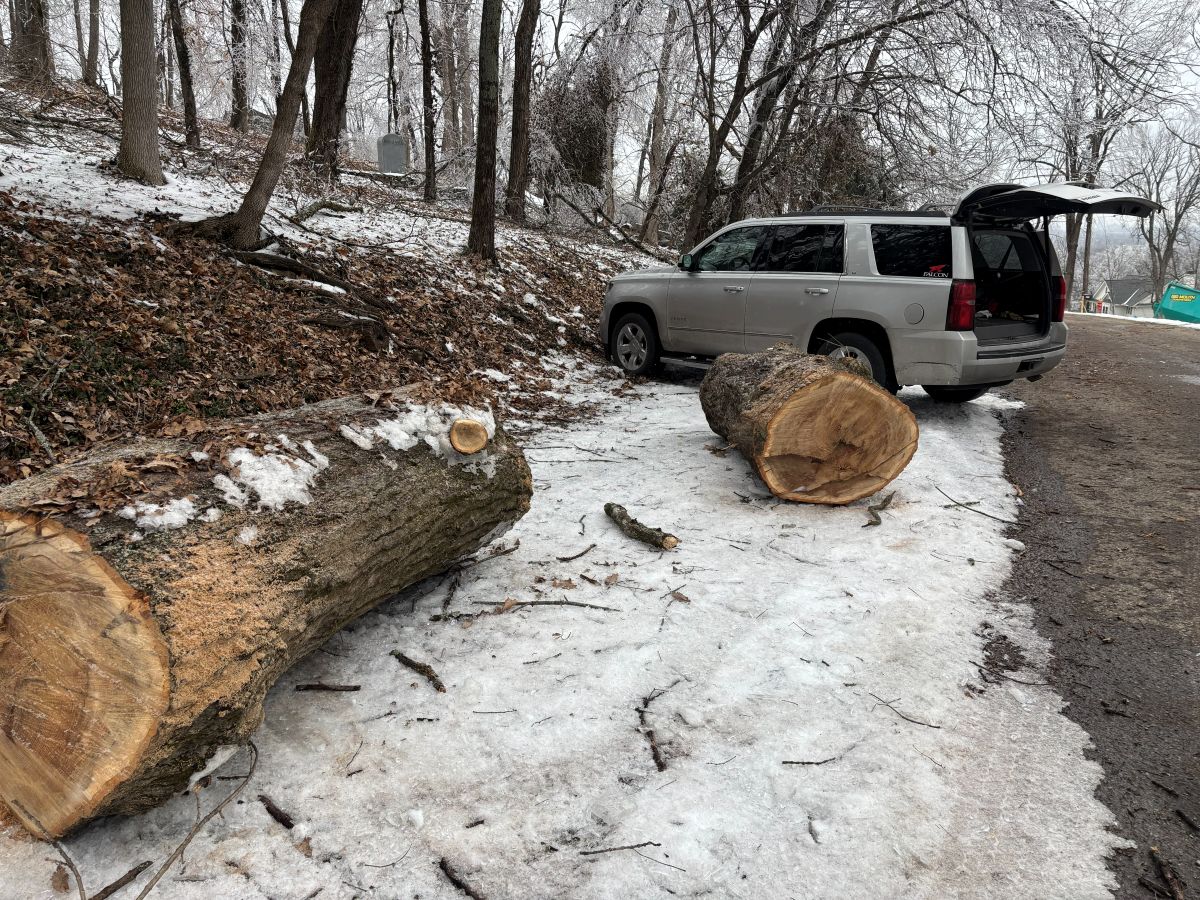
BONT PRESIDENT BOBBY WHITSON SENT HIS REFLECTIONS ON THE MASSIVE ICE STORM THAT HIT NASHVILLE AND SHY’S HILL ON JANUARY 25, 2026
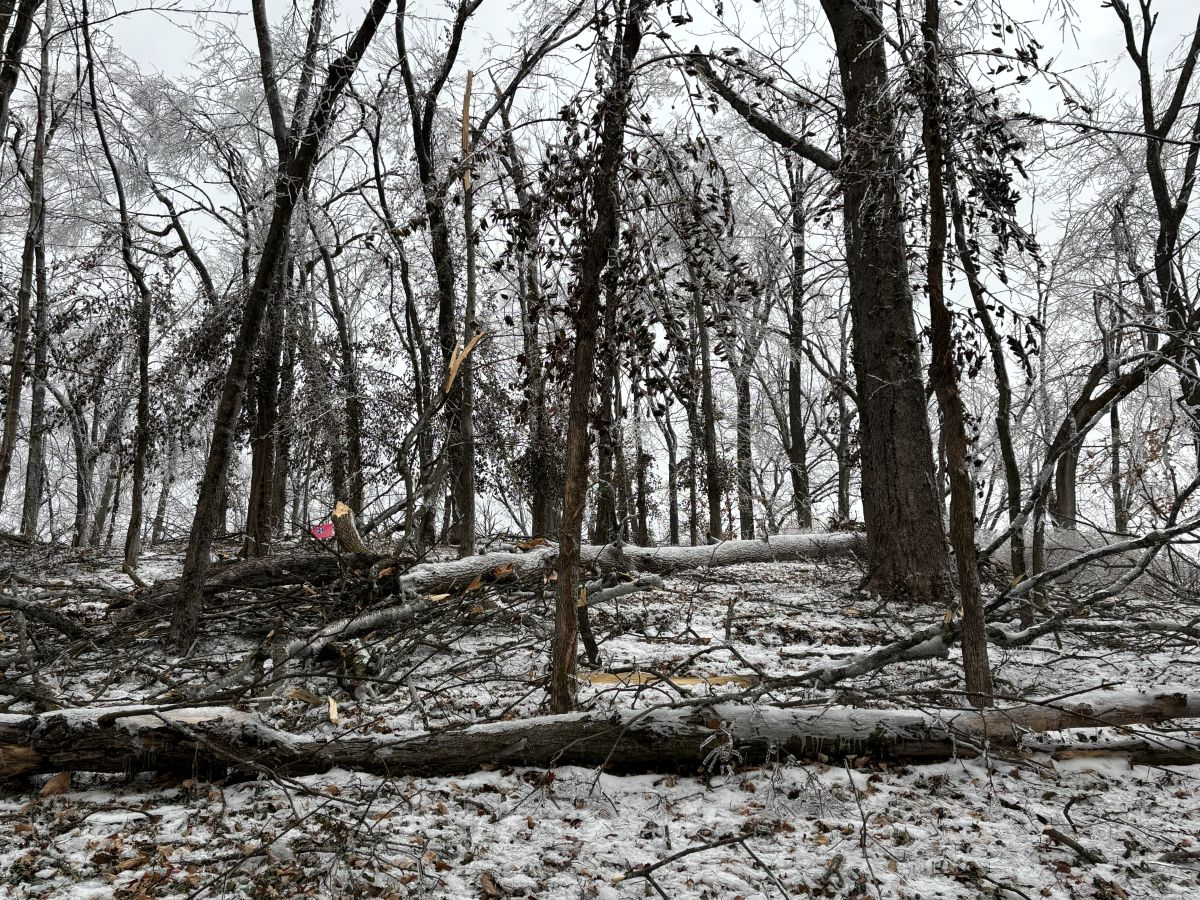
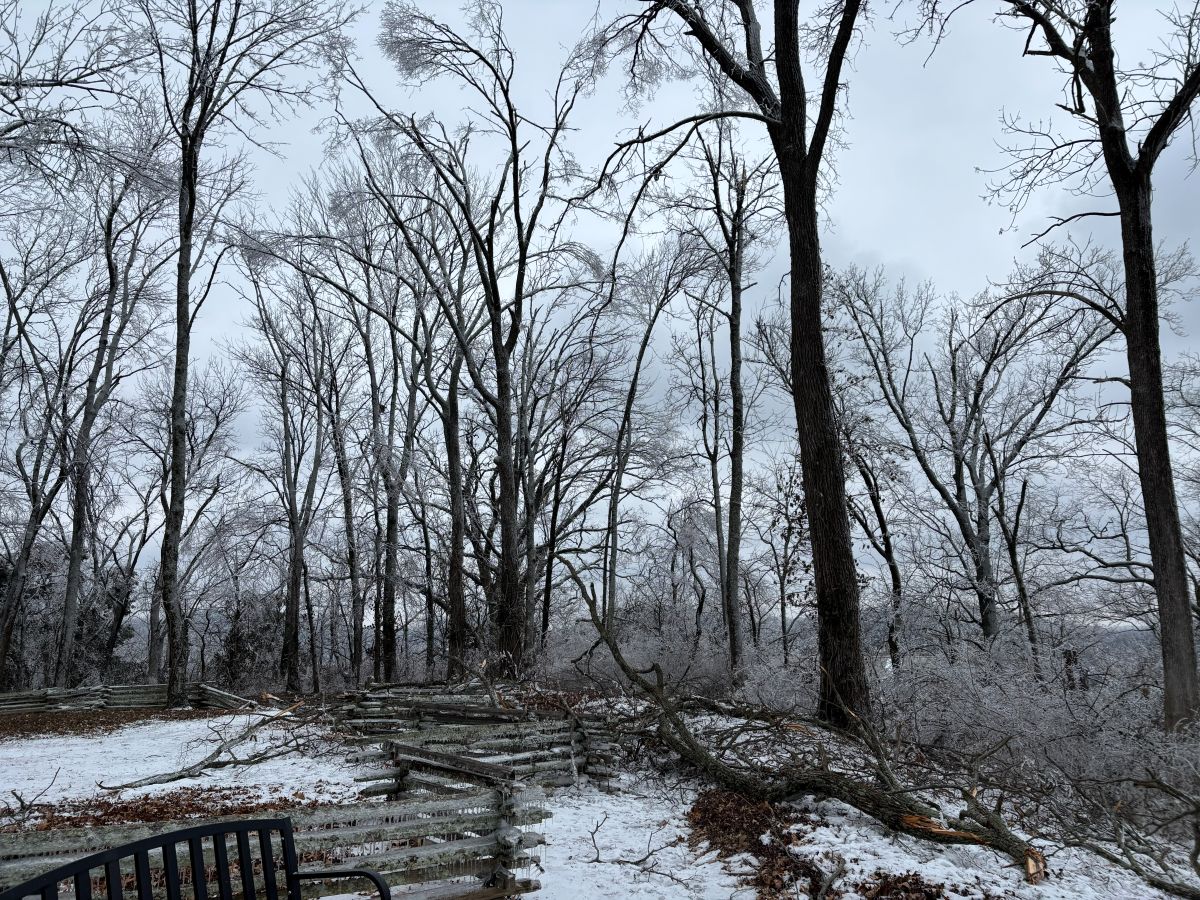
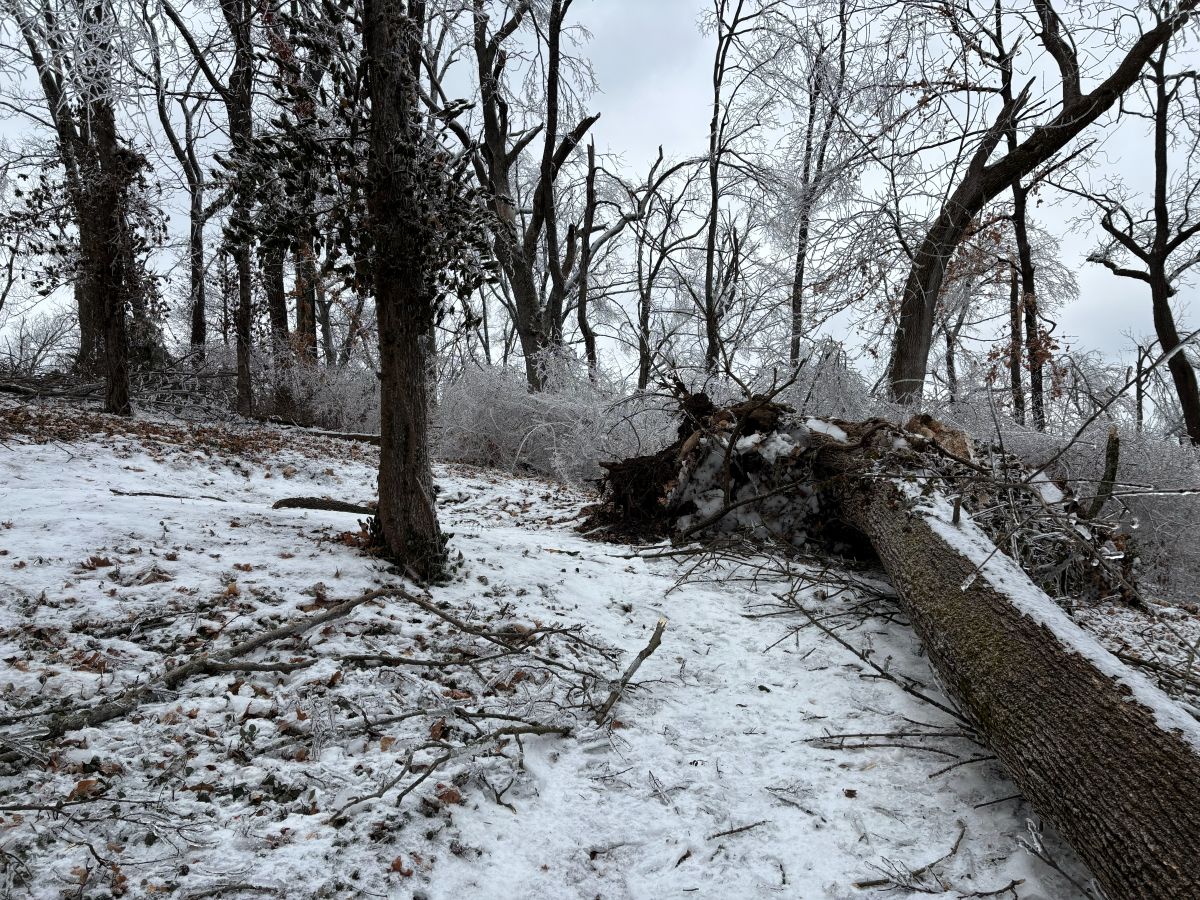
This letter was sent to the Battle of Nashville Board and Membership in the aftermath of widespread damage caused by a “generational” ice storm that paralyzed and devastated parts of the City of Nashville. Bobby Whitson inventoried the destruction on Shy’s Hill, but also put it in perspective, honoring the men who fought here and withstood these conditions 161 years ago:
“I took some time yesterday to make the hike up Shy’s Hill to assess the damage from the ice storm. I sent the pictures to Tom to share online. With only a couple of trees uprooted and hundreds of large and small branches on the ground, I feel like we were lucky given the amount and severity of damage across Nashville. That said, we’re going to need a lot of tree work done and a lot of debris hauled off.
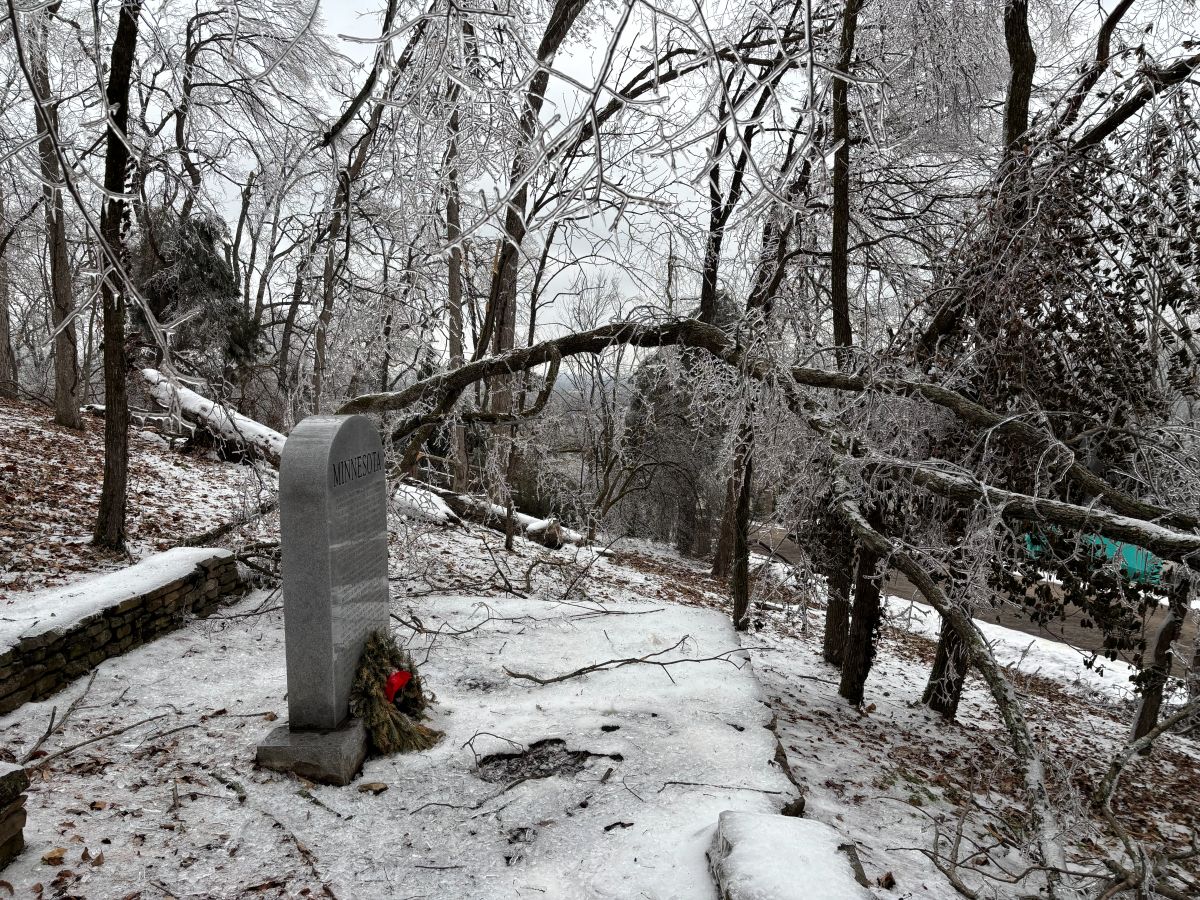
“Yes, the Civil War nerd in me emerged at some point, and I started thinking about the suffering of the soldiers from December 1864. Huddled underground in a dry basement around a heater made me realize how first world our current challenges really are and how horrible the conditions must have been for those soldiers exposed the sub-zero temperatures, snow, and ice huddled in dugouts without much firewood, food, blankets, or even shoes. For some of those soldiers, they had just experienced some of the worst fighting in the war at Franklin on November 30th followed by more, serious fighting at Murfreesboro on December 7th. Then, they would suffer the snow, ice, and bitter cold from the 8th through 12th that gave way to cold rain leading up to the fighting on the 15th and 16th . Contemplating that helped me realize just how strong and tough those soldiers of 1864 really were and just how privileged all of us are living in today’s world.
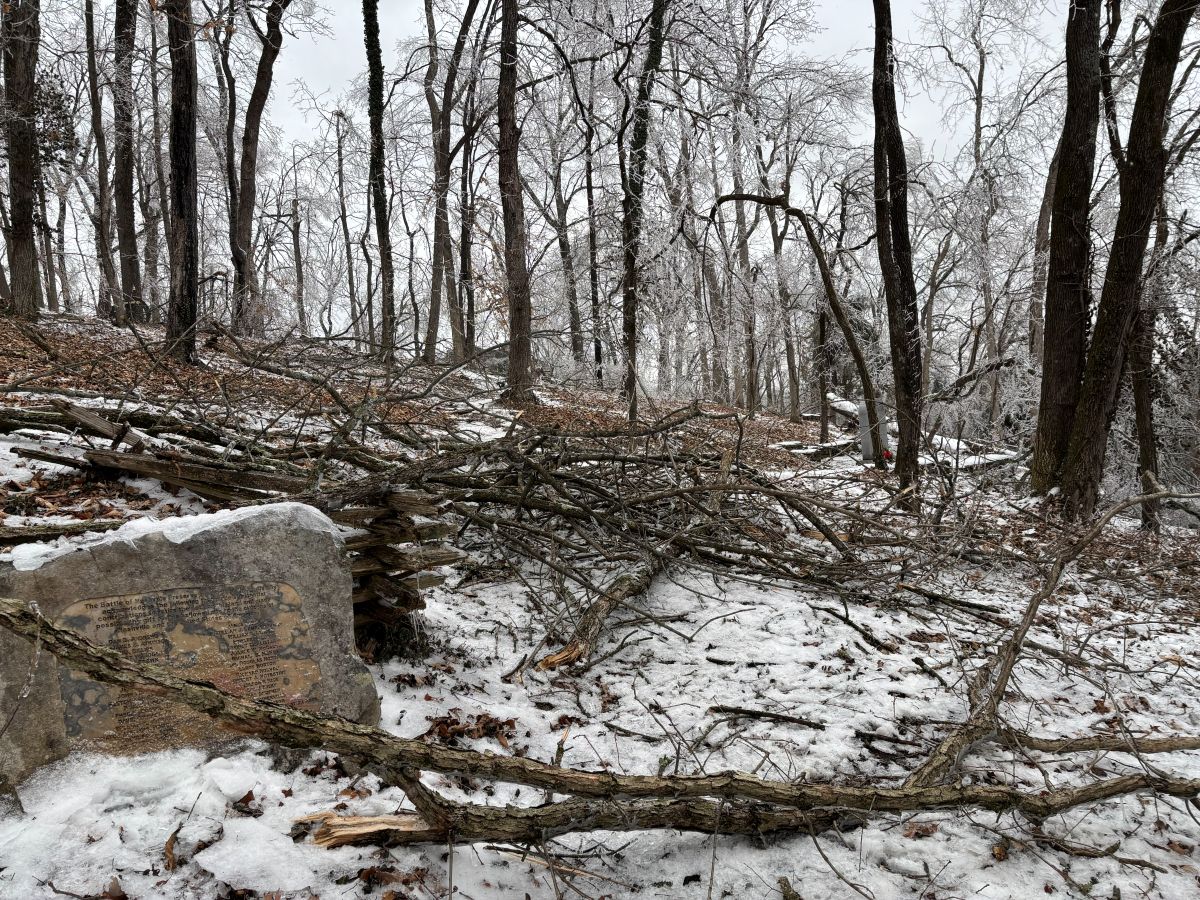
“I trust that you and your families are safe and warm. Please let me know if you need any help. Much peace and love to you all, Whit”
January 27, 2026
WPLN STORY EXPLORES THE OBSTACLES IN BONT’S PATH TOWARD GAINING MORE BATTLEFIELD GROUND FOR PRESERVATION
As development pressure intensifies across Middle Tennessee, the Battle of Nashville Trust faces an increasingly urgent and expensive challenge: identifying, acquiring, and preserving what remains of the city’s Civil War battlefield before it disappears forever. These challenges — including the rising cost of land and growing uncertainty surrounding a key state preservation funding source — are examined in a recent article by Pierce Gentry of WUOT News, published by WPLN News (Nashville Public Radio) on January 27, 2026.
Time – and money – is running out to save Civil War sites in Tennessee
January 10, 2026
JANUARY 2026 BONT NEWSLETTER
In its January 2026 Newsletter (see link below), the Battle of Nashville Trust sets the stage for a full slate of plans, programs, and reflections, including the following:
In a message to members and supporters, BONT President Bobby Whitson outlines several important developments for the coming year, including the Trust’s transition to a nonprofit structure better aligned with its core priorities of fundraising, education, interpretation, and preservation. He also highlights plans for increased community engagement with neighborhoods on the battlefield, partner historic sites, and local schools.
The newsletter features details on the January meeting of the Nashville Civil War Roundtable, marking its 174th meeting and continuing its sixteenth year. The January program will be held on Tuesday, January 20, 2026, at Belmont Mansion, with an earlier start time of 6:00 p.m. The featured presentation, “Maggie Vaulx and the Great Panic in Nashville,” will be given by Ross Hudgins, drawing on the remarkable Civil War–era diaries of a young Nashvillian who witnessed the city’s crisis in February 1862.
Also included in this issue:
-
Howard Mann’s column, “The Battle That Was or Wasn’t: White Oak Creek”
-
A photographic look at lost Battle of Nashville landscapes, featuring before-and-after photos of Lealand Lane in 1936 and present day
-
Article of the Month by John Banks, examining a soldier’s letter with a riveting, detailed first-person account of the battles at Redoubt No. 3 and Shy’s Hill
-
Updates regarding Americana Corner, one of BONT’s principal preservation and education partners
-
Important membership and dues reminders for the 2026 calendar year
-
Battle of Nashville Trust Newsletter January 2026
-
December 15-16, 2025
MULTIPLE BONT EVENTS COMMEMORATE 161st ANNIVERSARY OF THE BATTLE OF NASHVILLE
The Battle of Nashville Trust honored the 161st Anniversary of the Battle with a flurry of events, ranging from wreath placements to art exhibits and expert analysis of the military strategy that played out in the Battle of Nashville.
 The activities began with the Trust’s annual meeting and gathering on Dec. 13, 2025, at Travellers Rest. More than 60 attendees gathered to hear BONT president Bobby Whitson summarize the accomplishments of the past year in the name of preservation of the battlefield, including clearing the field of view at Redoubt No. 1, acquisition of a new 1.2 acre tract at the base of Shy’s Hill, purchase of the 2.23 acre tract which includes the summit of Shy’s Hill, and a soon-to-be-finalized agreement to purchase another acre of Shy’s adjacent to the trailhead.
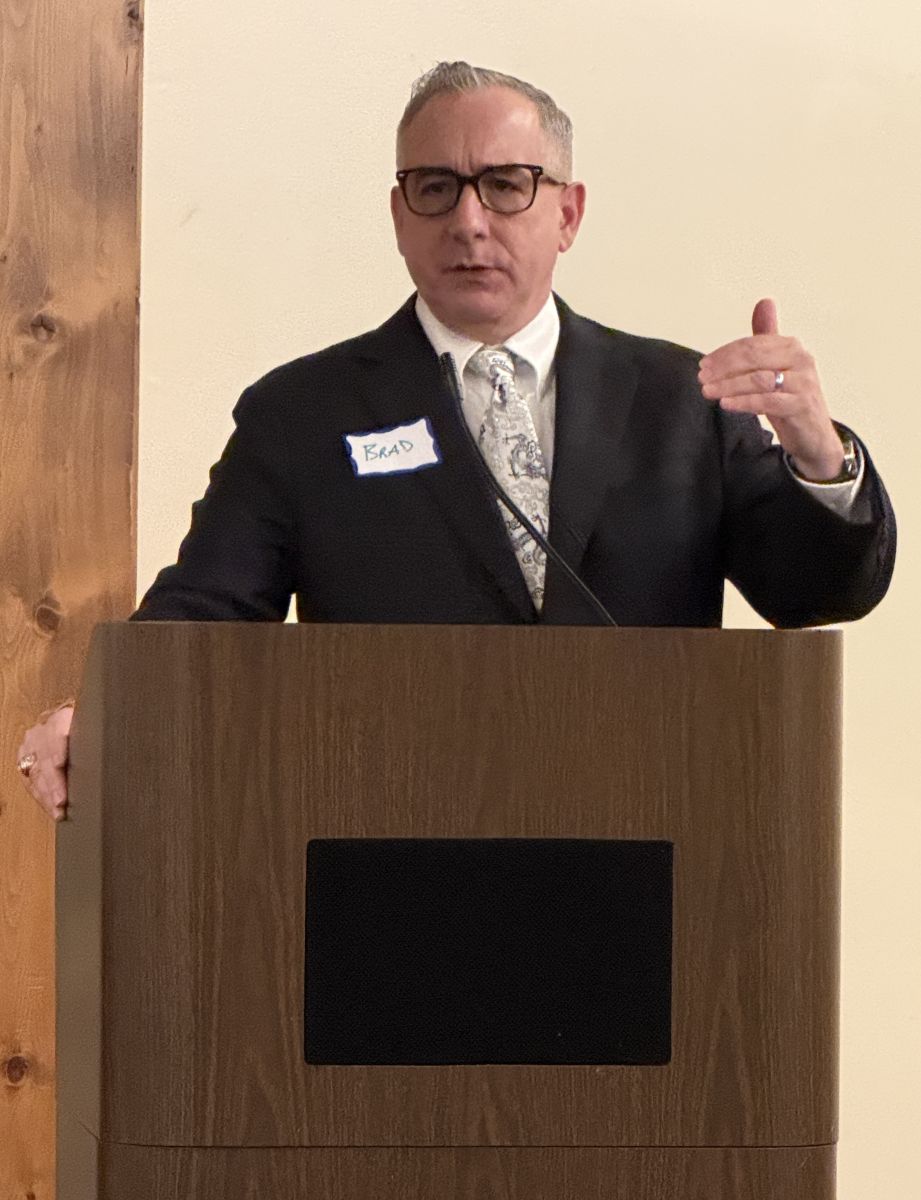
Retired Maj. Gen. Bradley Gericke
He added these thoughts to bring 2025 to a close: “We are proud of the progress that we are making to preserve more battlefield, maintain what we have already acquired, and educate the community about the battle, its importance in the war, and about those that fought here. While we are excited about what we have accomplished so far, we need your financial help and corporate financial help to pay appropriate homage to those that sacrificed here. Please help us make others aware of what we are trying to accomplished here.”
For details about the progress made by the Trust during 2025, please review full reports on each on the News and Shy’s Hill pages of this website.
The program also featured BONT board member and retired Maj. Gen. Bradley Gericke, who presented “An Army Strategist’s View of the Battle of Nashville.” He looked at Hood’s 1864 Tennessee Campaign and the Battle of Nashville at the strategic level of war and through the lens of classic military theory, noting that Hood had at hand several courses of action available to him to prolong the war and to preserve his army. A direct pursuit of the Union forces to Nashville was not his best choice. Overall, the North better aligned policy, strategy and operations in the field than did the South, creating Hood’s predicament.
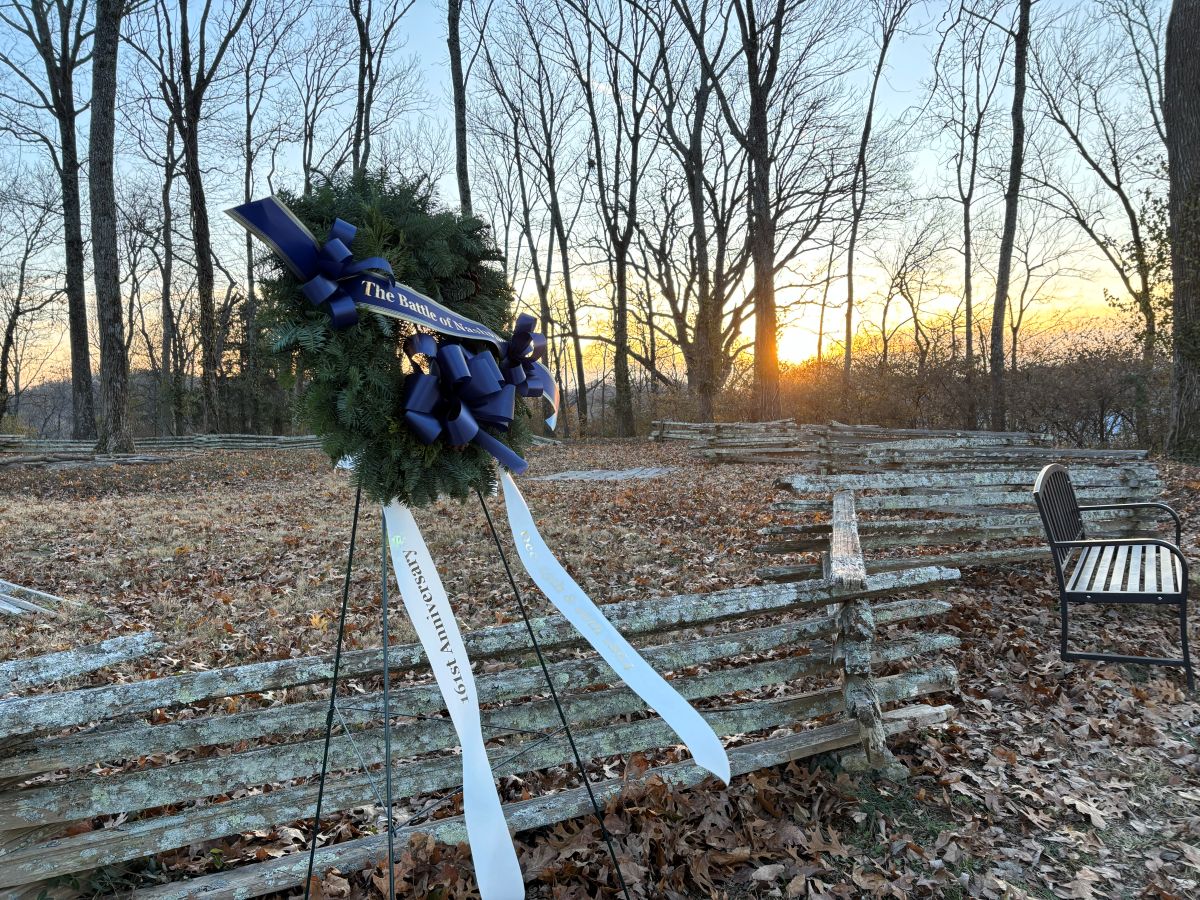
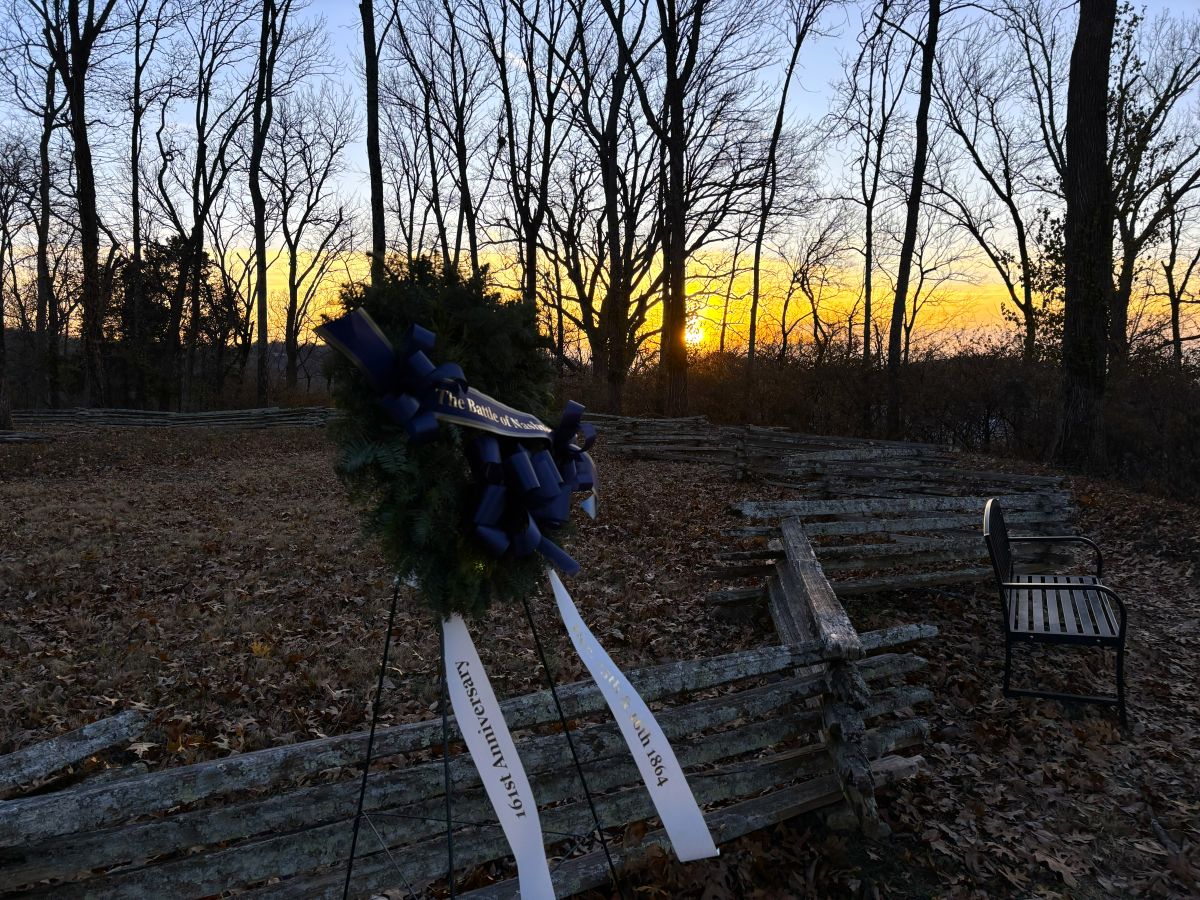
Following the annual meeting, the Trust carried out its annual tradition on Dec. 15 of placing Memorial Wreaths on the soil of both Confederate Redoubt No. 1, and the summit of Shy’s Hill. At sunset on Dec. 16, the traditional meeting on the top of Shy’s Hill drew another gathering to honor the men of both armies who waged war on that ground 161 years ago. As always, the gathering occurred on the grounds where 26-year-old Lt. Col. William Shy lost his life defending the Hill.
To view a solemn video made by Bobby Whitson at Redoubt No. 1 at sunset on Dec. 15, 2025, after he had placed the annual Memorial Wreath on the grounds, click on Wreath Placement at Redoubt No. 1.
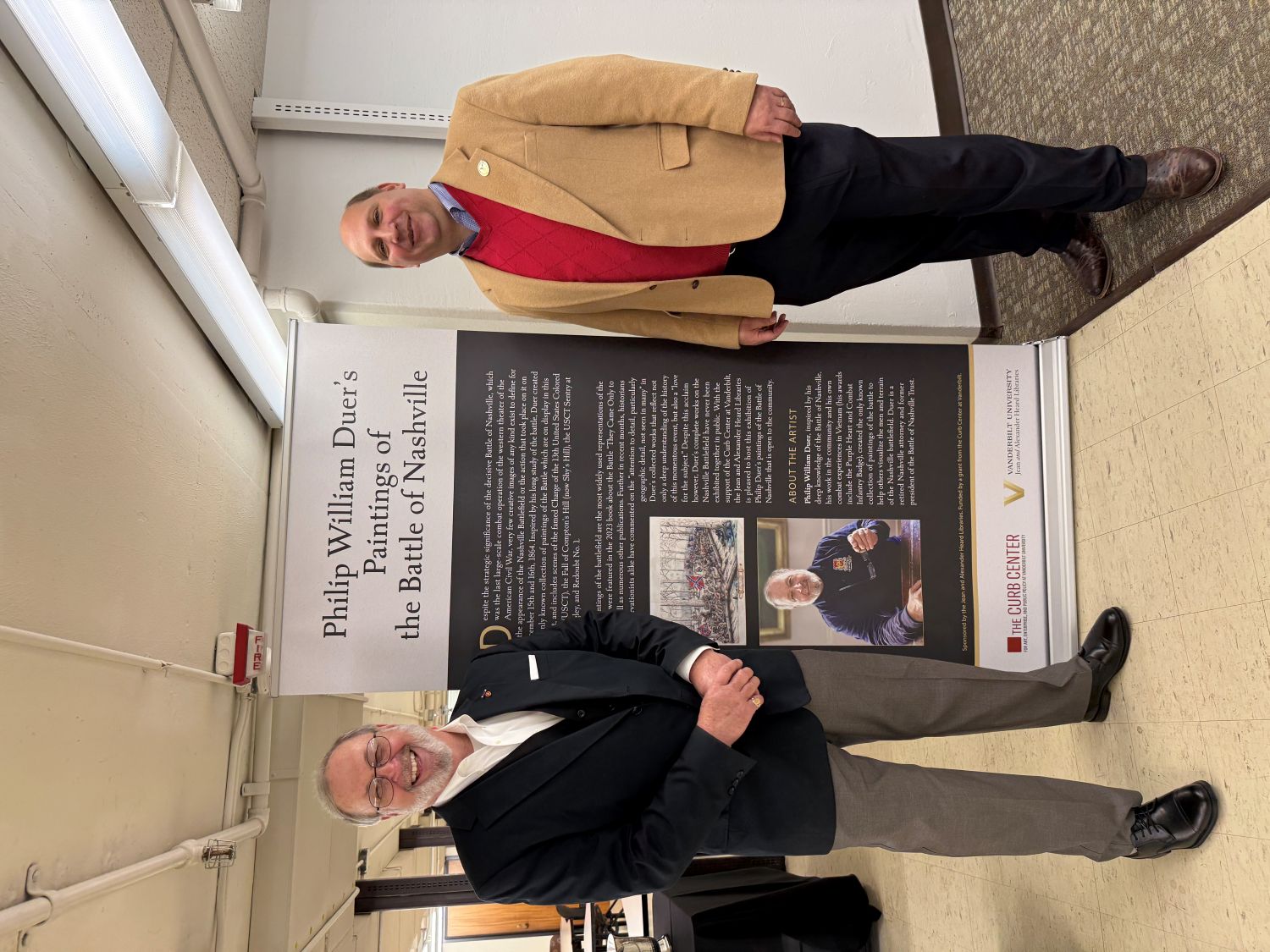
Artist Philip Duer (L) with Brandon Hulette
Activities continued after the Wreath Ceremony on the battlefield with the opening and reception for the Battle of Nashville art exhibit featuring the depictions of the battle by Board member and Vietnam combat veteran Philip Duer. The exhibit (see story below) drew more than 70 visitors who came to view the work and congratulate the artist on his artwork that comprises the only collection depicting important scenes of the battle, including Shy’s Hill, Peach Orchard Hill, and Redoubt No. 1.
The exhibit will continue in its location on the 4th floor of the Vanderbilt Heard Library (Central Library) and was curated by fellow Board member Brandon Hulette, a professor at Vanderbilt University. It is sponsored by The Curb Center at Vanderbilt.
For more detail about the artist’s work and its recognition in the sphere of Civil War and Battle of Nashville art depictions, see the separate reports in the Features page of this website.
Below: Gallery of photos depicting some of the 161st Anniversary events. Photos of Shy’s Hill and Redoubt No. 1 by Bobby Whitson. Photos of Duer art exhibit and annual meeting by Tom Lawrence.
-
- Shy's Hill sunset Dec. 16
-
- Flag display, Shy's summit
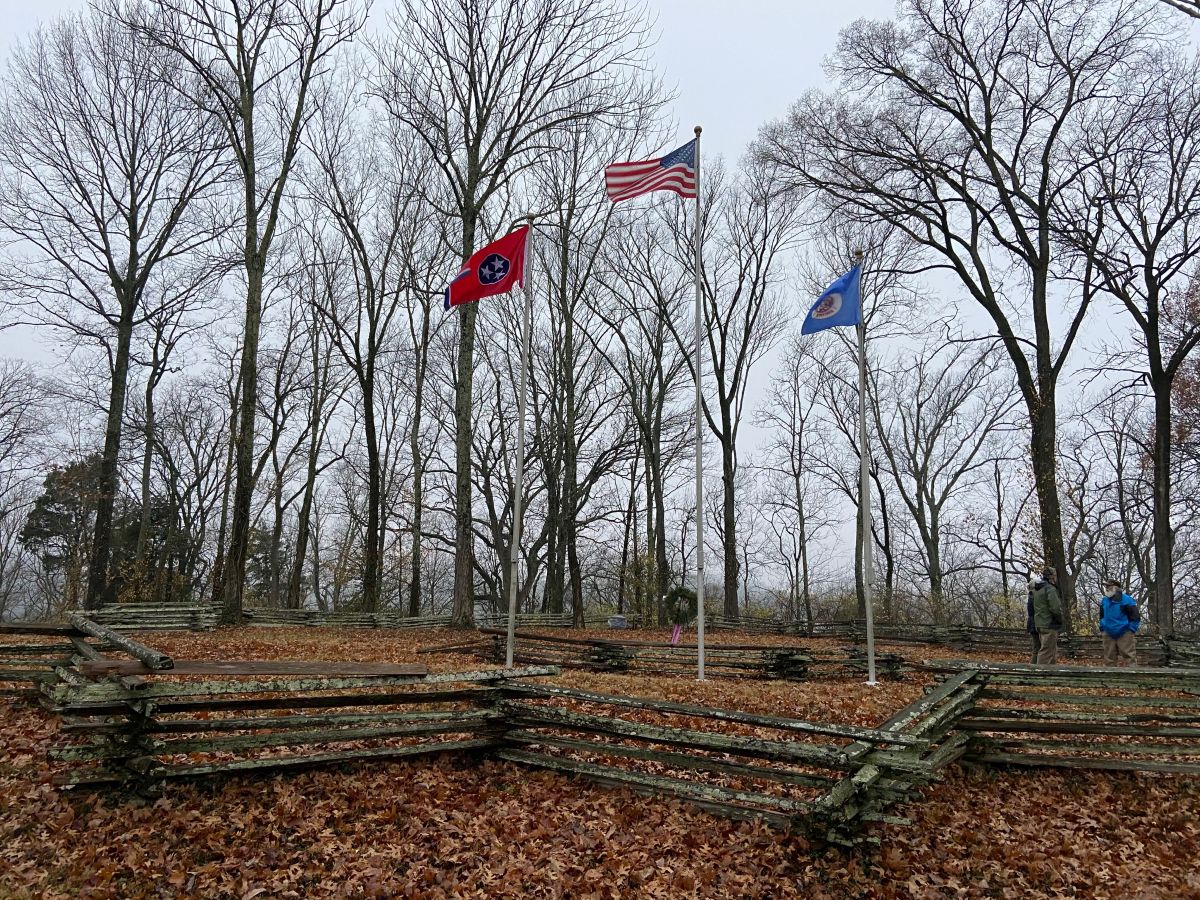
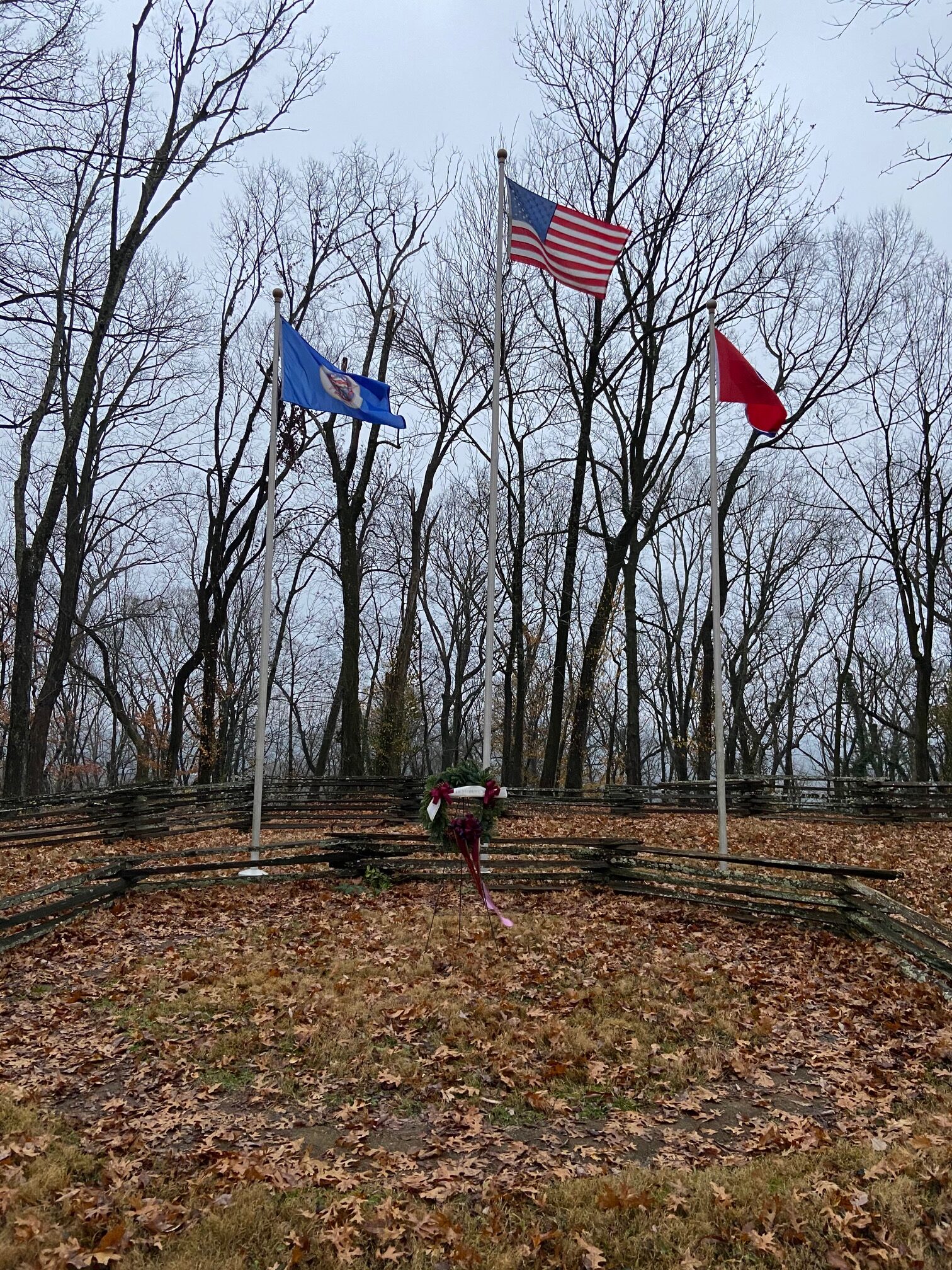
-
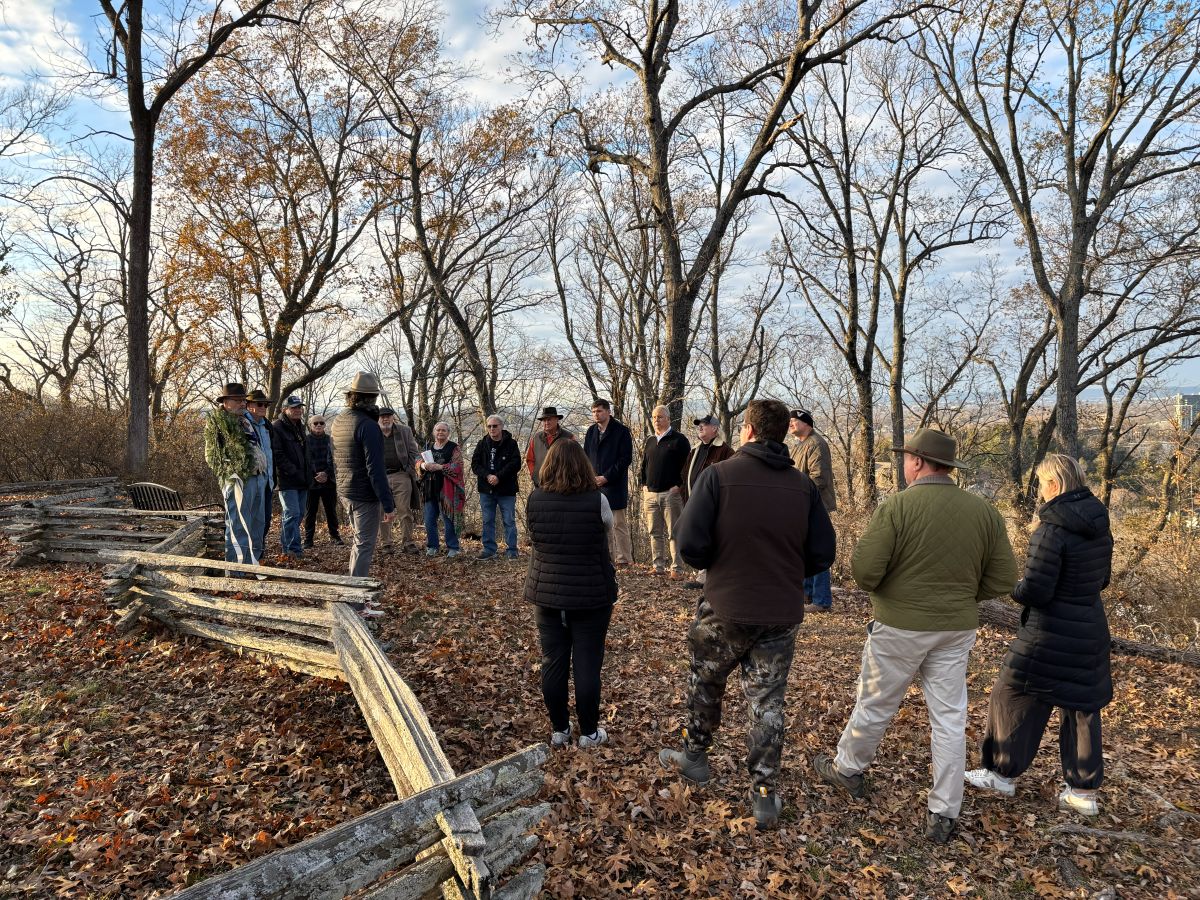
- Annual Shy's gathering
-
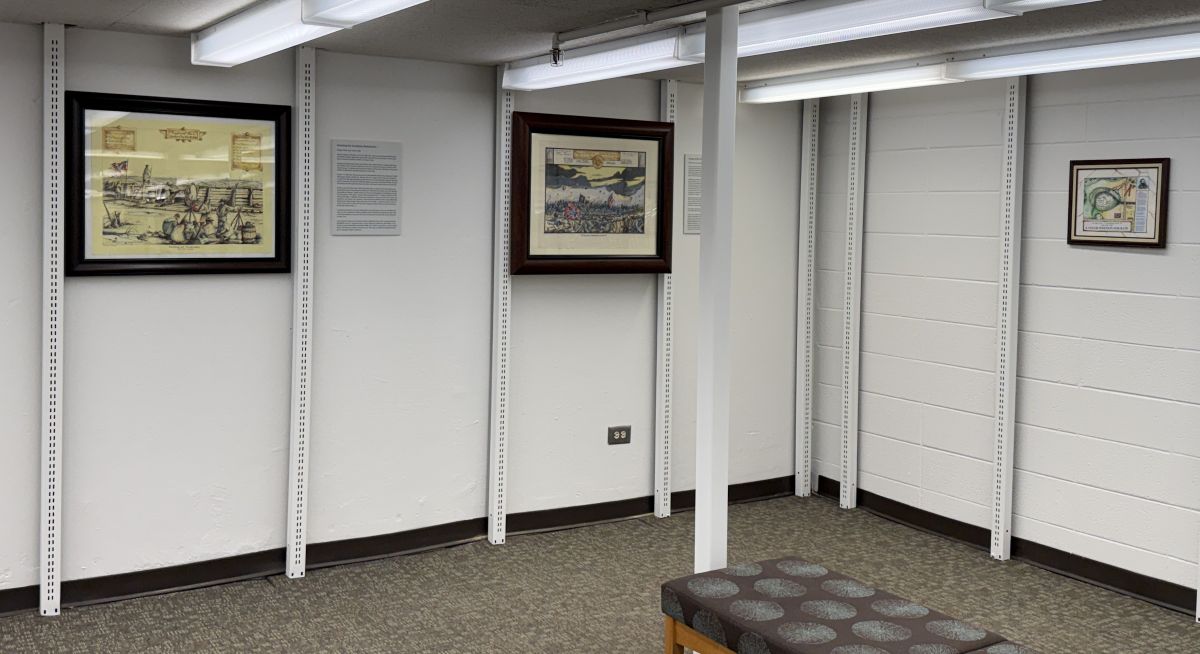
- Part of Duer art exhibit
-
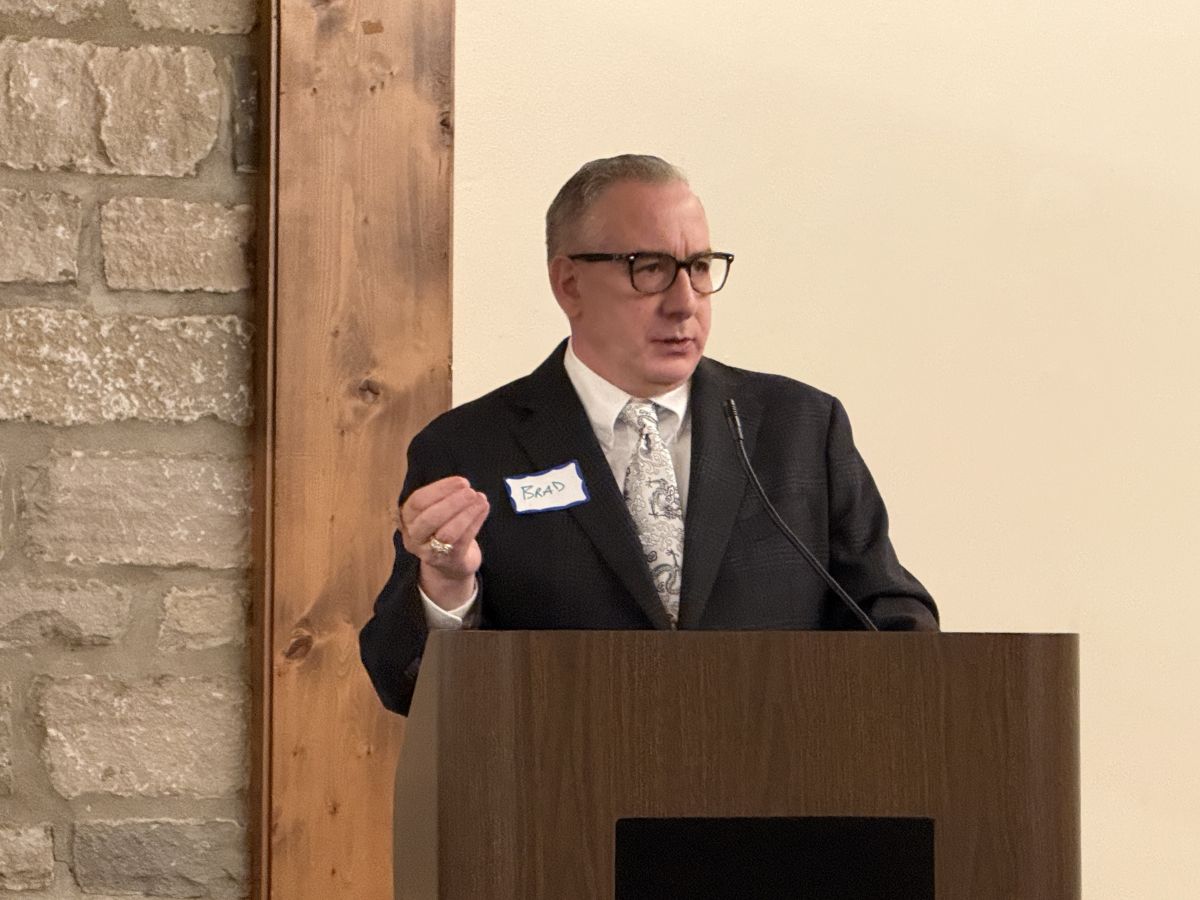
- Maj. Gen. Gericke speaking
-
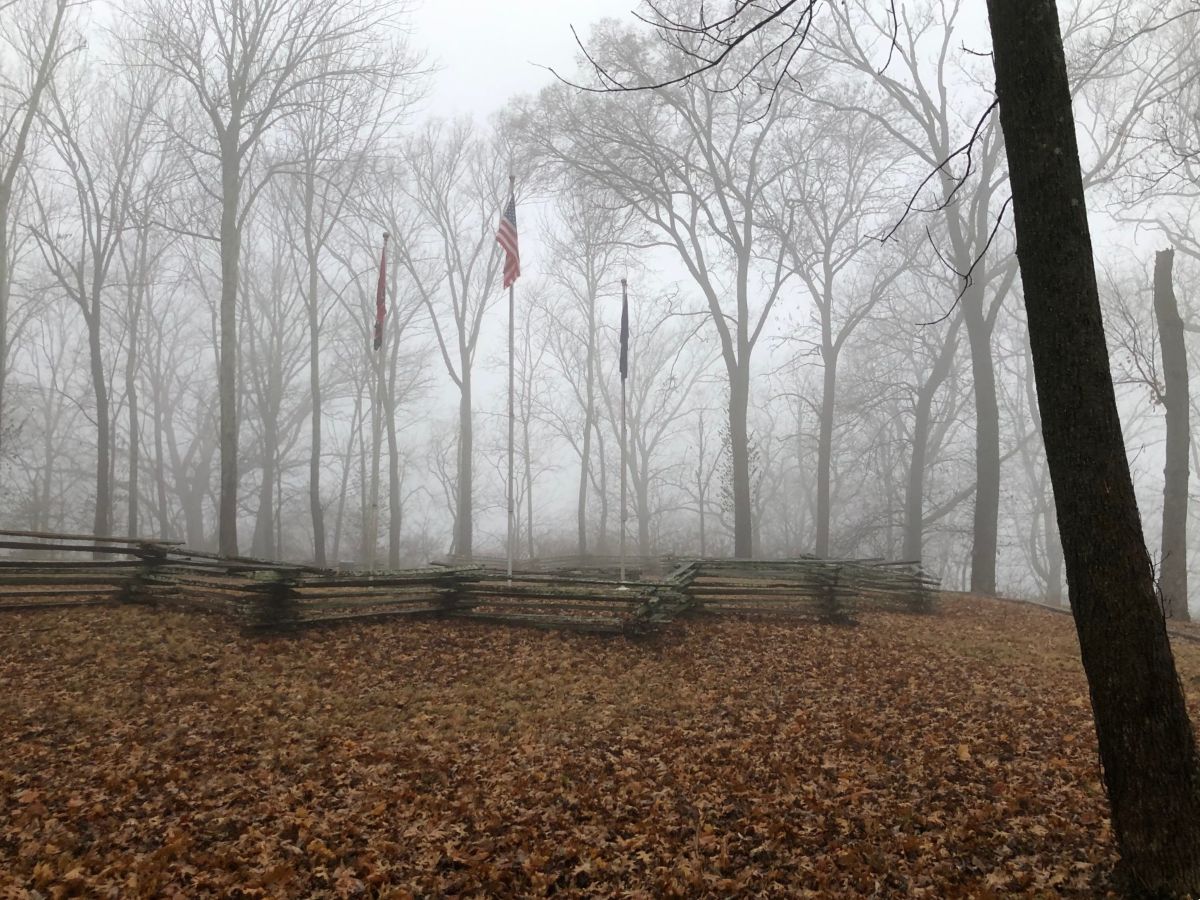
- Shy's in the fog
-
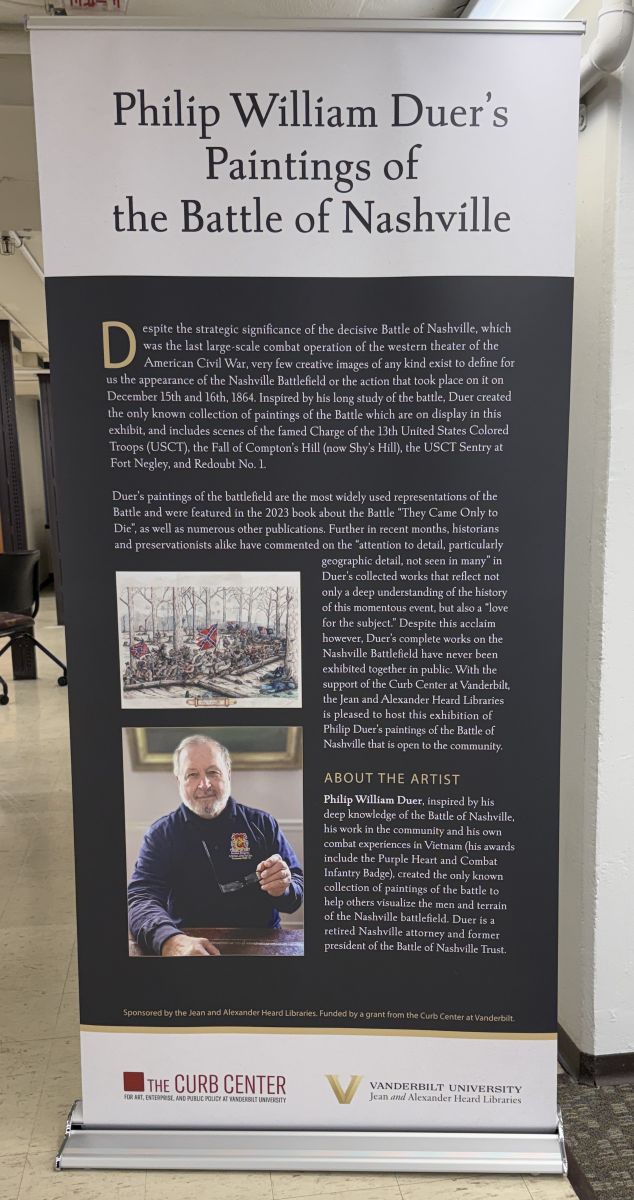
- Duer art exhibit
-
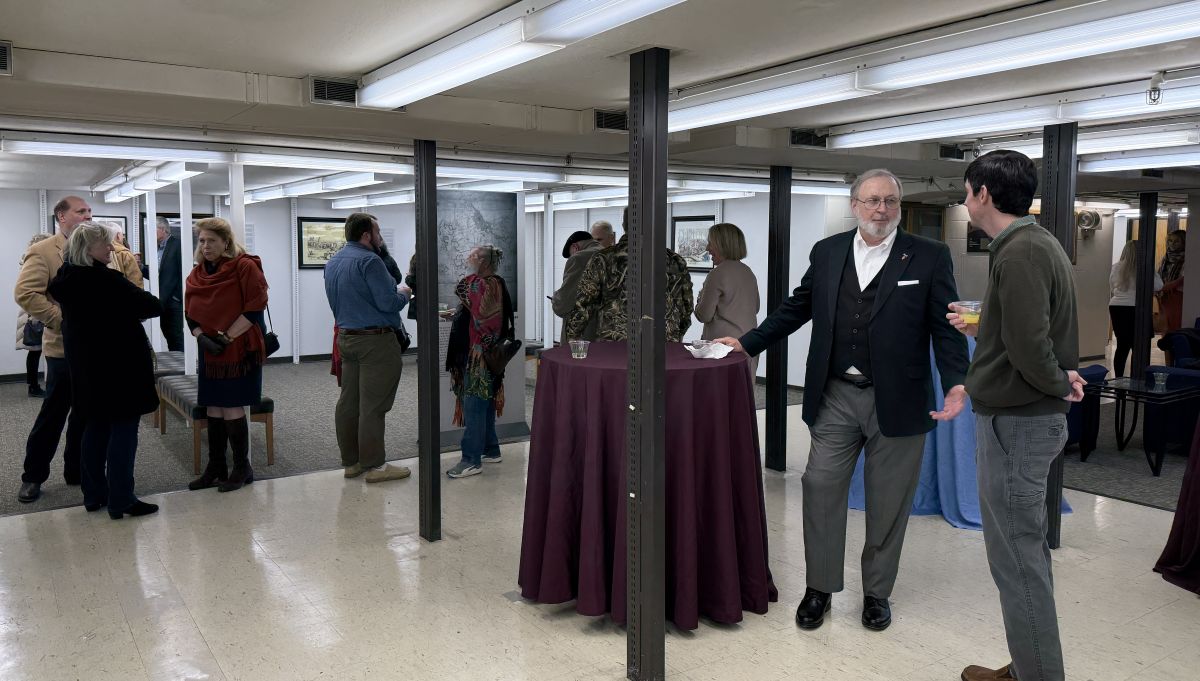
- Philip Duer in foreground
-
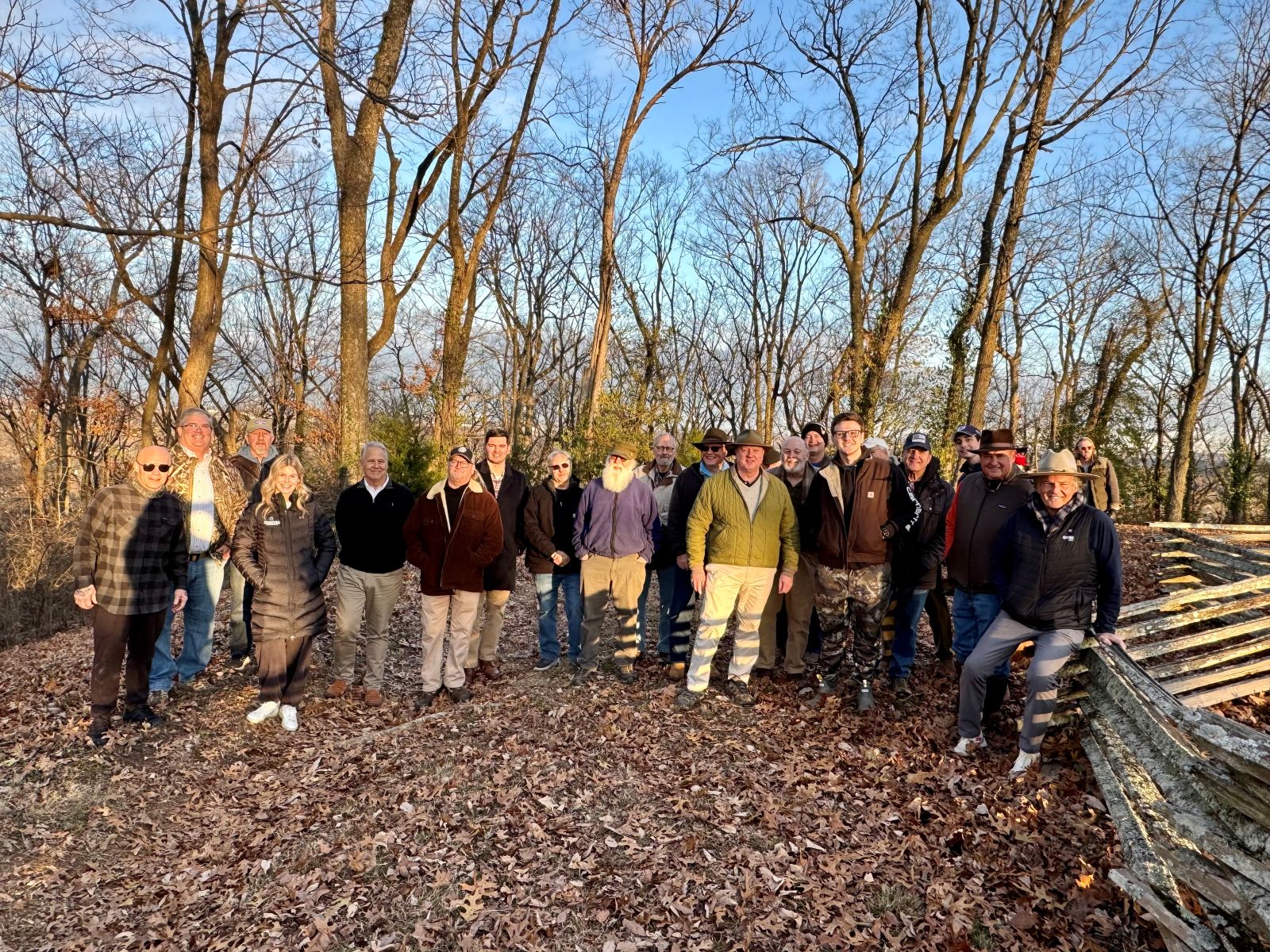
- Commemorating the anniversary
-
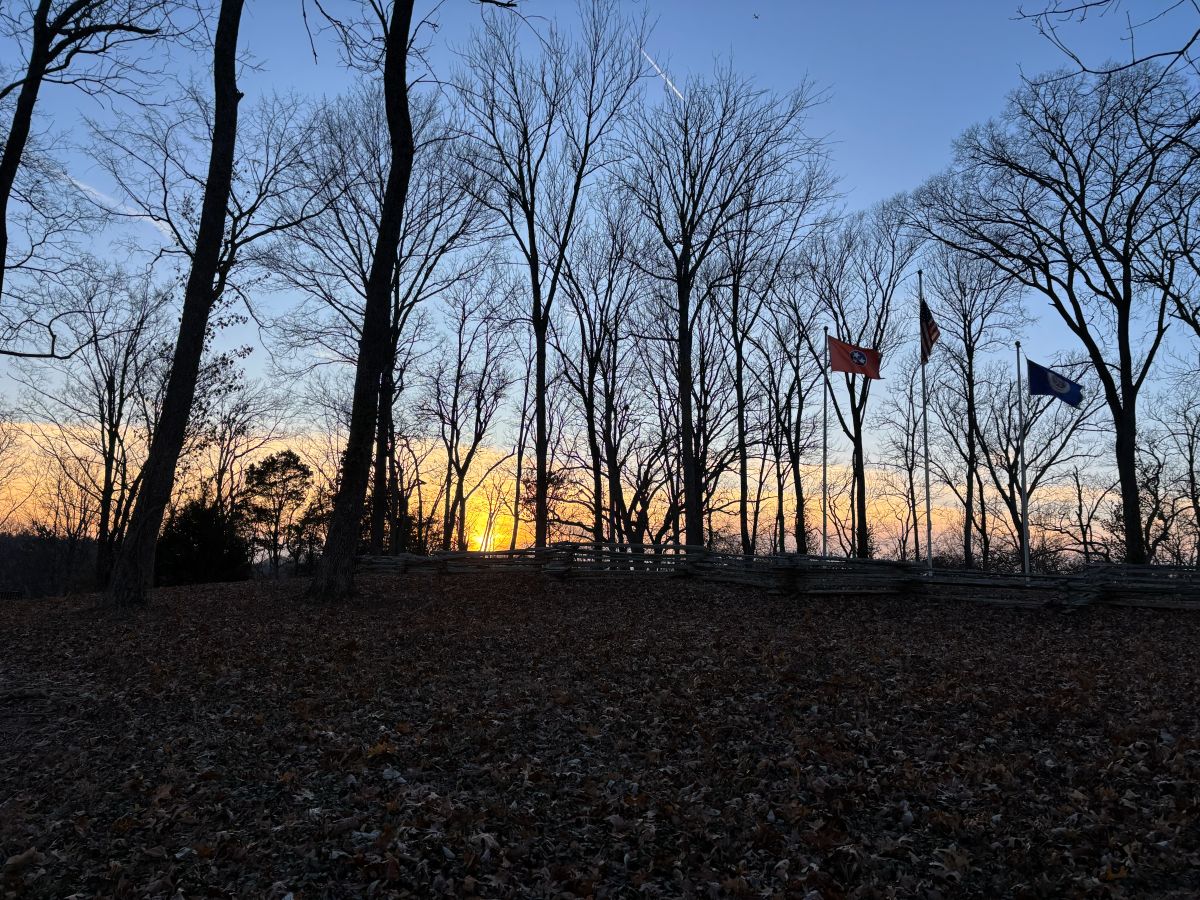
- Hallowed ground
December, 2025
DECEMBER 2025 BONT NEWSLETTER
The December 2025 edition of our newsletter highlights one of the most significant preservation milestones in the Trust’s history. This month’s issue features President Bobby Whitson’s update on the Trust’s acquisition of the summit of Shy’s Hill—securing the ground where the decisive action of the Battle of Nashville occurred. The newsletter also covers our earlier acquisition and restoration of property on the northeast slope of the hill, as well as recent clearing work at Redoubt No. 1 that has reopened historic views toward downtown.
Other highlights include announcements for our upcoming events, such as the Annual Members Celebration at Travellers Rest on December 13, the 161st Anniversary Gathering on the summit on December 16, and the Philip Duer art exhibition at Vanderbilt later that evening. You’ll also find Nashville Civil War Roundtable updates (the next meeting of the Nashville Civil War Roundtable will be held at the Belmont Mansion on Tuesday, January 20, 2026, at 6 pm.
Guest speaker Ross Hudgins will speak on “Maggie Vaulx and the Great Panic in Nashville”. There is
no December meeting) , a story about a rediscovered 1939 Vanderbilt battlefield plaque, an article of the month by John Banks on Brig. Gen. Thomas Benton Smith, and an archival aerial view of the Redoubt No. 4 area.
Click link to read the full newsletter: Battle of Nashville Trust Newsletter December 2025
BATTLE OF NASHVILLE TRUST NEWSLETTERS
BONT Newsletter, December, 2021
BONT Newsletter, December, 2022
November 25, 2025
BATTLE OF NASHVILLE TRUST SECURES FULL OWNERSHIP OF SHY’S HILL SUMMIT
The Battle of Nashville Trust has made “new history” of its own at Shy’s Hill – – by acquiring full and complete ownership of the summit. Adjacent to BONT’s 1.35 acre access property on Benton Smith Road, the 2.23 acre summit property was donated by a developer to our friends at the Tennessee Historical Society in 1954. In addition to improving the properties with the interpretive kiosk, field artillery, monuments, and memorial flag display, BONT has maintained the trails on both properties for years.
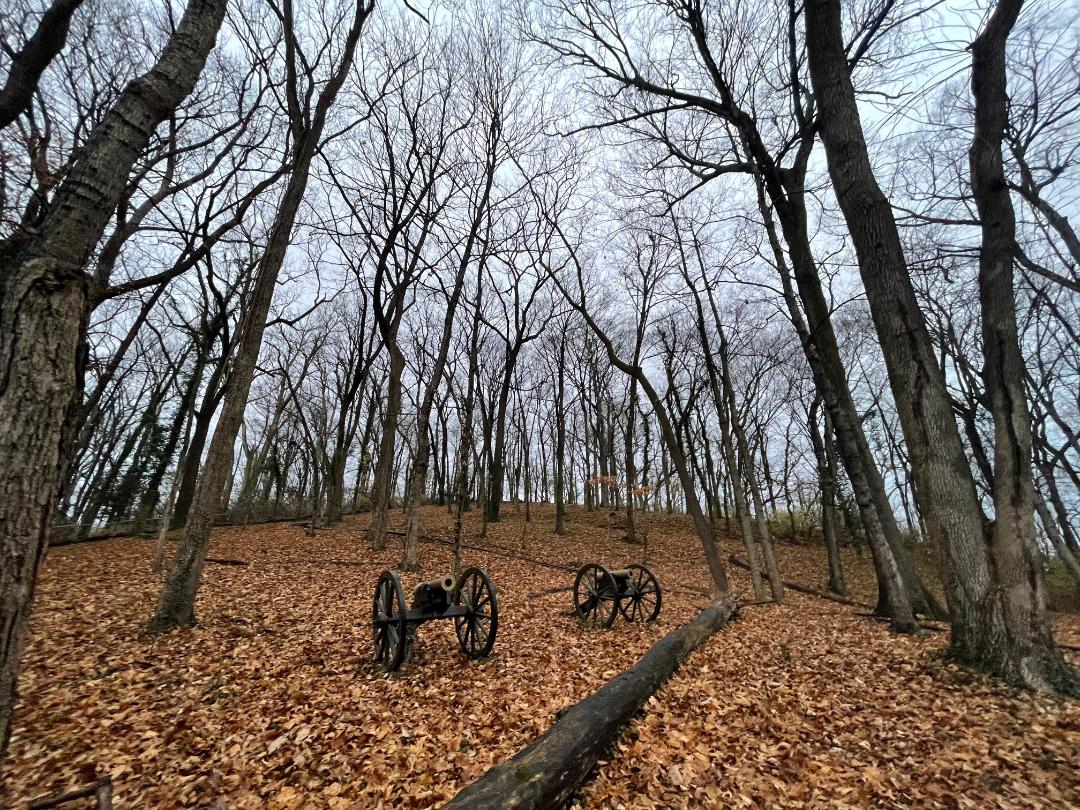 On Monday, Nov. 25, 2025, the Trust finalized purchase of the THS tract and added it to surrounding properties which it has acquired in an effort to preserve this important ground which is soaked in both blood and history. The BONT now owns a total of 4.65 acres of the remaining 17.69 acres encircled by Benton Smith and Shy’s Hill roads. All battlefield land owned and maintained by BONT will continue to be protected from development by a conservation easement through the Land Trust for Tennessee and Tennessee Wars Commission. BONT is thankful for the support of the Tennessee Wars Commission and Tennessee Historical Commission.
Bobby Whitson, president of the Trust, noted, “The spirits of those in blue and gray that represented the best that this country had to offer can rest easily knowing that their actions, their names, their regiments, and their brigades will never be forgotten. The Battle of Nashville Trust will ensure that they will be honored appropriately for the rest of time.” More details will be added soon to the BONT website.
October 8, 2025
NEW MARKER DEDICATED NEAR SITE OF COMPTON-BURTON HOUSE WHICH HAD CLOSE TIES WITH THE BATTLE OF NASHVILLE
The historic Compton-Burton House, which was involved in both days of the Battle of Nashville in multiple ways including its connection with Col. William Shy, was commemorated on Oct. 8, 2025, with a Metro Nashville Historical Commission historical marker in a dedication ceremony held near the original site of the house.
The original request for the marker was made both by Ms. Marsha Fagnani, a descendant of the original settlers and owners of the land, and by well-known Nashville historian Fletch Coke. Andrew Lucas and wife Nancy Gower, who were among Nashville’s first settlers, were Ms. Fagnani’s 6th great grandparents and owned half of the original Land Grant which included the plantation later owned by Felix Compton.
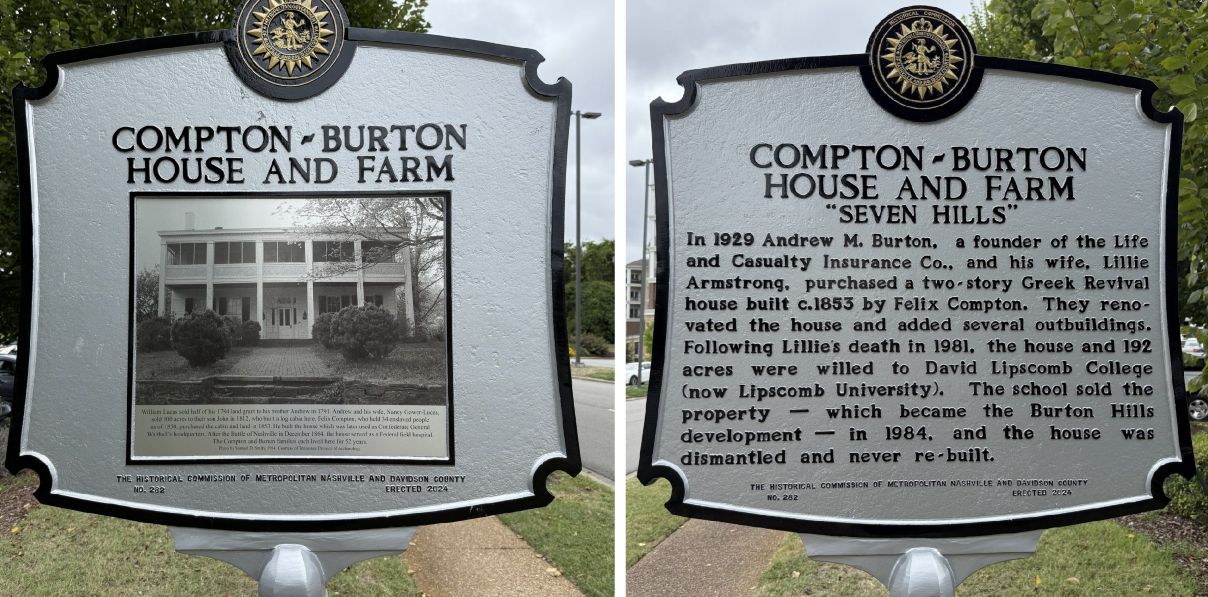 As the two-sided marker explains, Felix Compton was a successful farmer and major landowner in the 19th Century who purchased the house and remodeled it around 1853. The original home was built by John Lucas in the early 19th Century. At the time of the Battle of Nashville, Compton owned some 750 acres fronting along the Hillsboro Pike and stretching as far southeast as Shy’s Hill, known at the time of the Battle as “Compton’s Hill.” The two-story Greek Revival style house was named “Seven Hills.”
The house was sold to Nashville insurance executive A.M. Burton, founder of Life and Casualty Insurance Co., in 1929. In 1981, he donated the house and remaining land to David Lipscomb College. Descendants of both the Compton and Burton families were present at the dedication of the two-sided marker which is located on Burton Hills Blvd. near its intersection with Cumberland Place and the entrance to the Blakeford at Green Hills Senior Living facility (11 Burton Hills Blvd.).
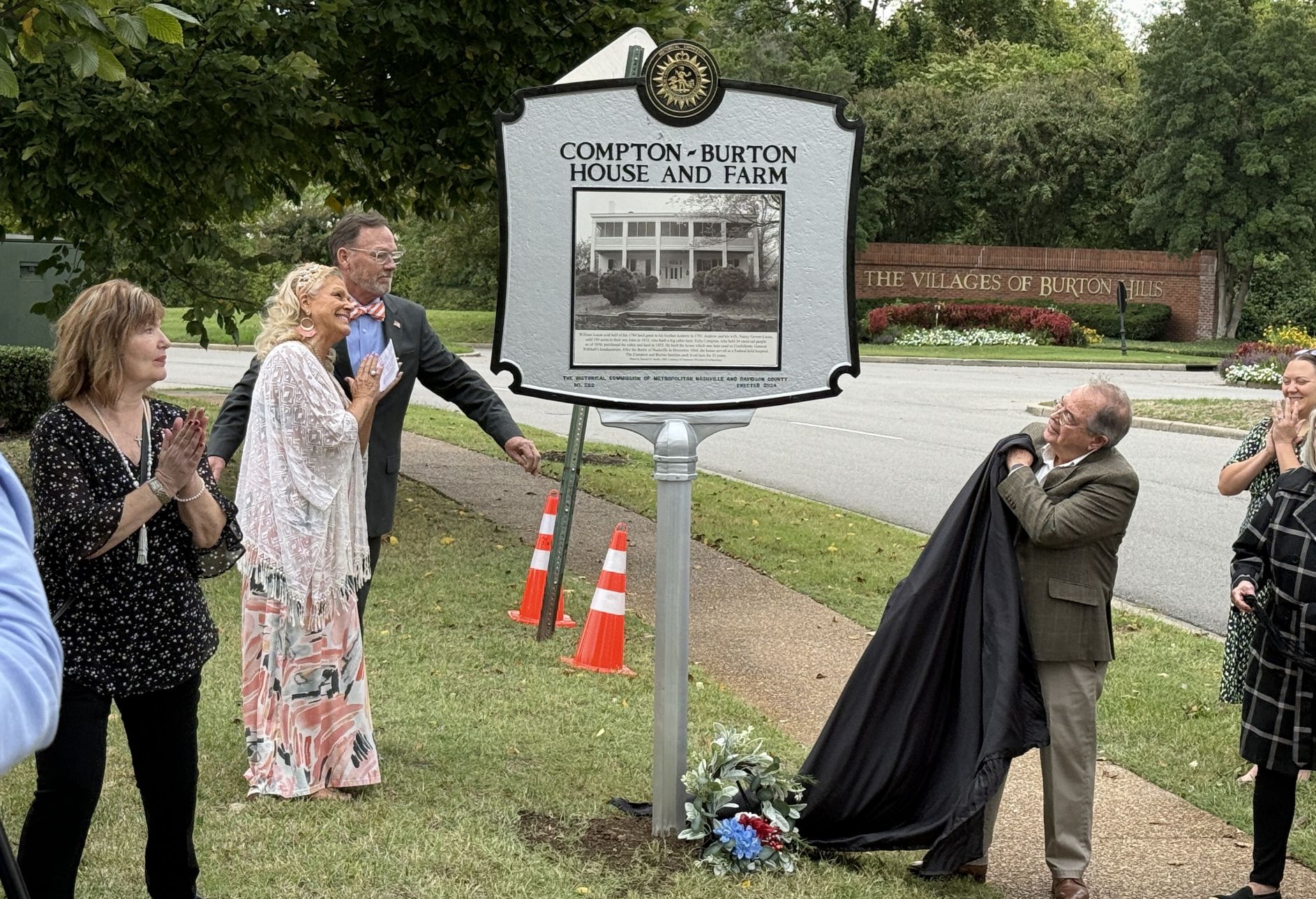
At the far left: Ms. Marsha Fagnani, leader of the historical marker project, directs unveiling of marker with other Compton-Burton family members on Oct. 8, 2025
Members of Felix Compton’s family were present in the house when the Battle of Nashville occurred on Dec. 15-16, 1864. His daughter Emily (Mrs. Emily C. Thompson) wrote about those two days in an article in the Confederate Veteran Magazine in 1912, including her recollections of seeing Confederate camp fires burning in the hills on the evening of Dec. 15, 1864.
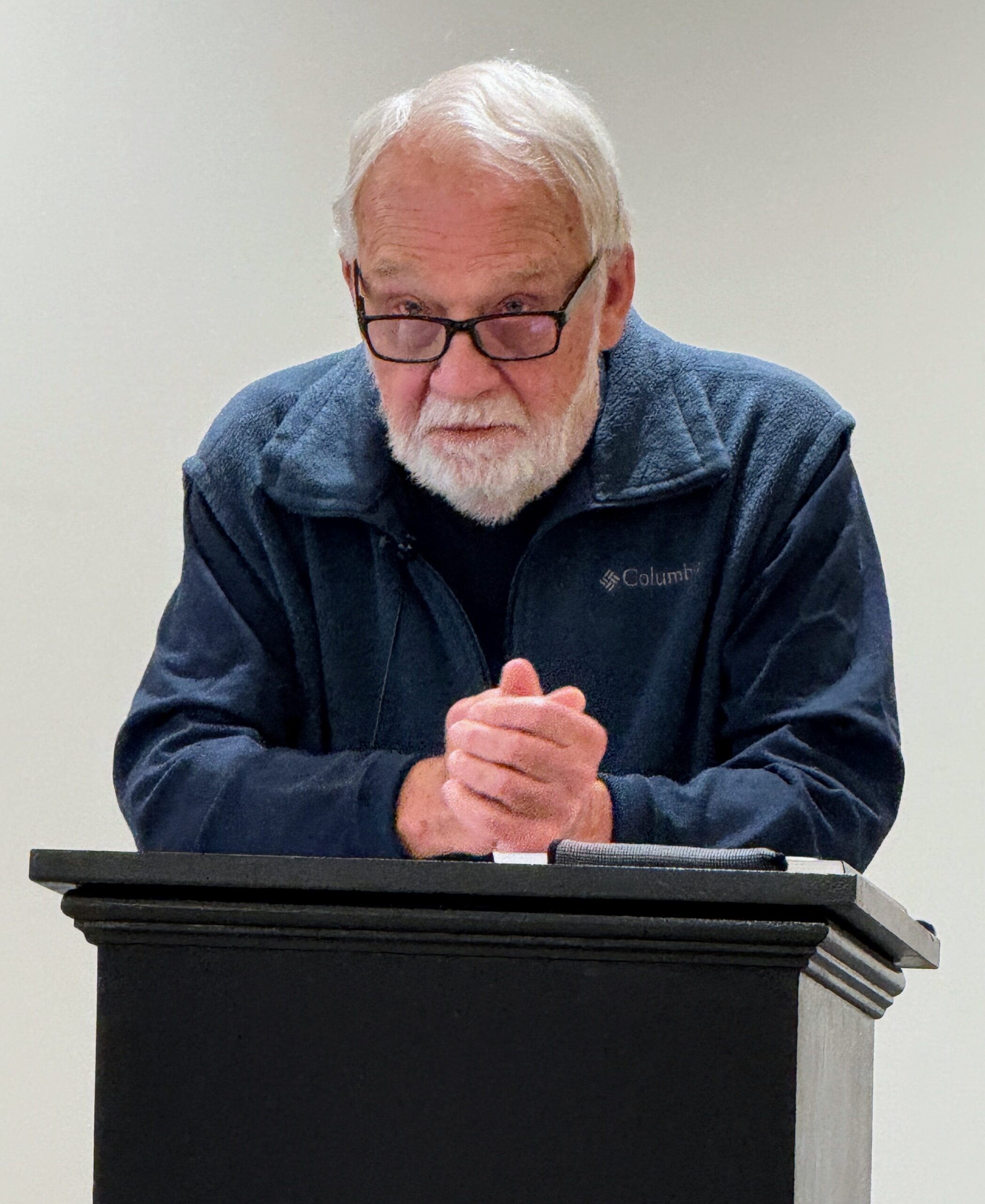
Archeologist Sam Smith, speaking at dedication ceremony
The historic house was a well-known fixture just south of the Green Hills shopping district of Nashville for many years. After the donation to Lipscomb, however, the house structure was sold to an entrepreneur who dismantled and removed it from the grounds with plans to reassemble it on land in Dickson County. The re-build never occurred and the ruins of the house longer exist. The remainder of the farm land was sold by Lipscomb for development of the currently existing mixed-use area known as Burton Hills. In 1984, just before construction began on the Burton Hills development, State archeologist Samuel D. Smith conducted a detailed survey of the house and grounds and published a full report shining a bright light on the history of the land and its structures. Click HERE to see the complete 218-page report.
The Compton house was situated on the Battlefield in December, 1864, and was located in such a way as to be involved in the battle on both days. In the early days of Hood’s Nashville campaign, it was used as headquarters for Confederate cavalry Brig. Gen. James Chalmers, and then later by infantry Maj. Gen. Edward Walthall. Walthall’s Division defended a line along the east side of Hillsboro Pike, facing west with the Compton house behind them. On the afternoon of Dec. 15, Federal troops attacking from the West first overran the Confederate Redoubts 4 and 5, then eventually stormed over Hillsboro Pike to help push Stewart’s Corps to the southeast. Compton’s house was on ground occupied by Union troops the night of Dec. 15.
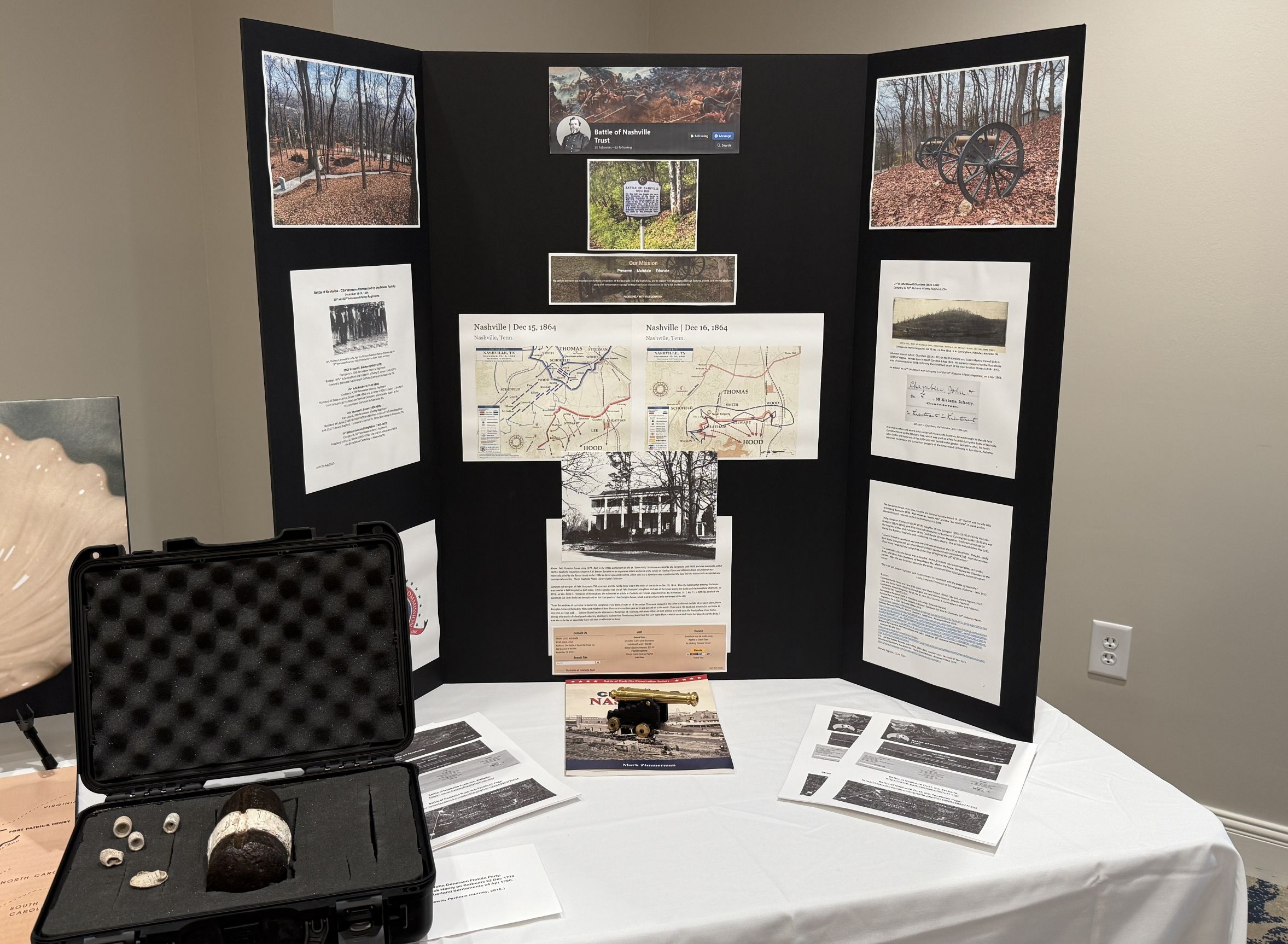
Battle of Nashville Trust display created by Ms. Marsha Fagnani as part of Compton-Burton House marker dedication
After the battle on Dec. 16 which saw the collapse of the Confederate line anchored on Compton’s Hill, the home was used as a field hospital and numerous casualties were brought there from both sides.
Among the casualties was the body of Col. William Shy of the 20th Tennessee. Shy had been shot in the head at point blank range as he defended the summit of Compton’s Hill, later renamed in his honor as Shy’s Hill. Felix Compton’s daughter Emily, in her later article published in Confederate Veteran Magazine, wrote that she recalled Shy’s body lying on the porch of the house. “There were 150 dead and wounded in our home at one time, so I was told. . . . Colonel Shy fell on the afternoon of December 16. His body, with many others of both armies, was laid upon the front gallery of our home. Shortly afterwards a Federal guard called my attention to Colonel Shy. Then turning back from the face a gray blanket which some kind friend had placed over the body, I saw him as he lay so peacefully there with that cruel hole in his brow.”
June, 2025
HISTORIC GRANT OF FUNDS BY TENNESSEE HISTORICAL COMMISSION AND ITS TENNESSEE WARS COMMISSION SOLIDIFIES SHY’S HILL PURCHASE
The Tennessee Historical Commission, through its Tennessee Wars Commission, has awarded a historic $505,000 grant to The Battle of Nashville Trust (BONT) to partially fund the Trust’s acquisition of 1.2 acres of land that was part of the Federal attack at Shy’s Hill on Dec. 16, 1864.
BONT had a rare opening in the spring of 2024 to buy a vacant lot, located at the corner of Harding Place and Benton Smith Road, from a residential developer. It did so with the technical assistance of the American Battlefield Trust. In 2025, the THC announced its decision to award $505,000 to the Trust, with the funds specifically designated for use in acquiring the Shy’s Hill site.
Logos of Tennessee Historical Commission and Tennessee Wars Commission will appear on signage to be erected at newly-acquired Shy’s Hill site
In accordance with requirements associated with the grant, BONT will install signage on the tract reflecting the source of the funding. The signage, to be erected this summer, will depict the logos of the THC and the Wars Commission, and contain the following language:
“The acquisition of the Shy’s Hill tract, associated with the Nashville Battlefield, is being supported in part by the Civil War Sites Preservation Fund, administered by the Tennessee Wars Commission and the Tennessee Historical Commission, Department of Environment and Conservation.”
As reflected in the language of the sign, the Tennessee Wars Commission is a division of the THC that focuses on preserving and promoting Tennessee’s military history from the French and Indian War through the Civil War. It administers two grant programs, one of which is the Civil War Sites Preservation Fund. Those funds support projects such as archaeological surveys, cemetery preservation, interpretive signage, and educational programs related to military history in Tennessee.
The Wars Commission has been involved in projects that have resulted in preservation of over 7000 acres of historic property. It collaborates with organizations such as the American Battlefield Trust and the American Battlefield Protection Program to further its preservation goals.
The historical value of this core battlefield site is monumental. Late in the afternoon of December 16, 1864, the Fifth and Ninth Minnesota Regiments, led by Col. Lucius Hubbard and part of Brig. Gen. John MacArthur’s division of the Federal XVI Corps, stormed up this portion of the base of Shy’s Hill and were devastated by Confederate fire as they crossed the open ground of a muddy cornfield. Remarkably, the scene was depicted in the huge 1906 oil painting of the Minnesota assault by famed artist Howard Pyle. Experts agree that Pyle’s painting, which hangs in the Minnesota State Capitol Building, depicts this very site in its background. Pyle had visited the Nashville battlefield before completing the painting in 1906, and had made photographs of the area where the Union assault occurred.
The magnanimous THC/Wars Commission grant has enabled the Trust to make a significant addition – the largest since acquiring the eastern slope of Shy’s Hill in the 1990s — to its preserved battlefield ground, which will now be protected against development and preserving it for the benefit of all people interested in walking on the ground where this decisive and bloody battle occurred more than 160 years ago.
June, 2025
WHITSON EXPLAINS BATTLE OF NASHVILLE TRUST’S “CALL TO ACTION” AS PROPERTY VALUES UNDERSCORE THE IMMEDIACY OF SECURING BATTLEFIELD GROUND
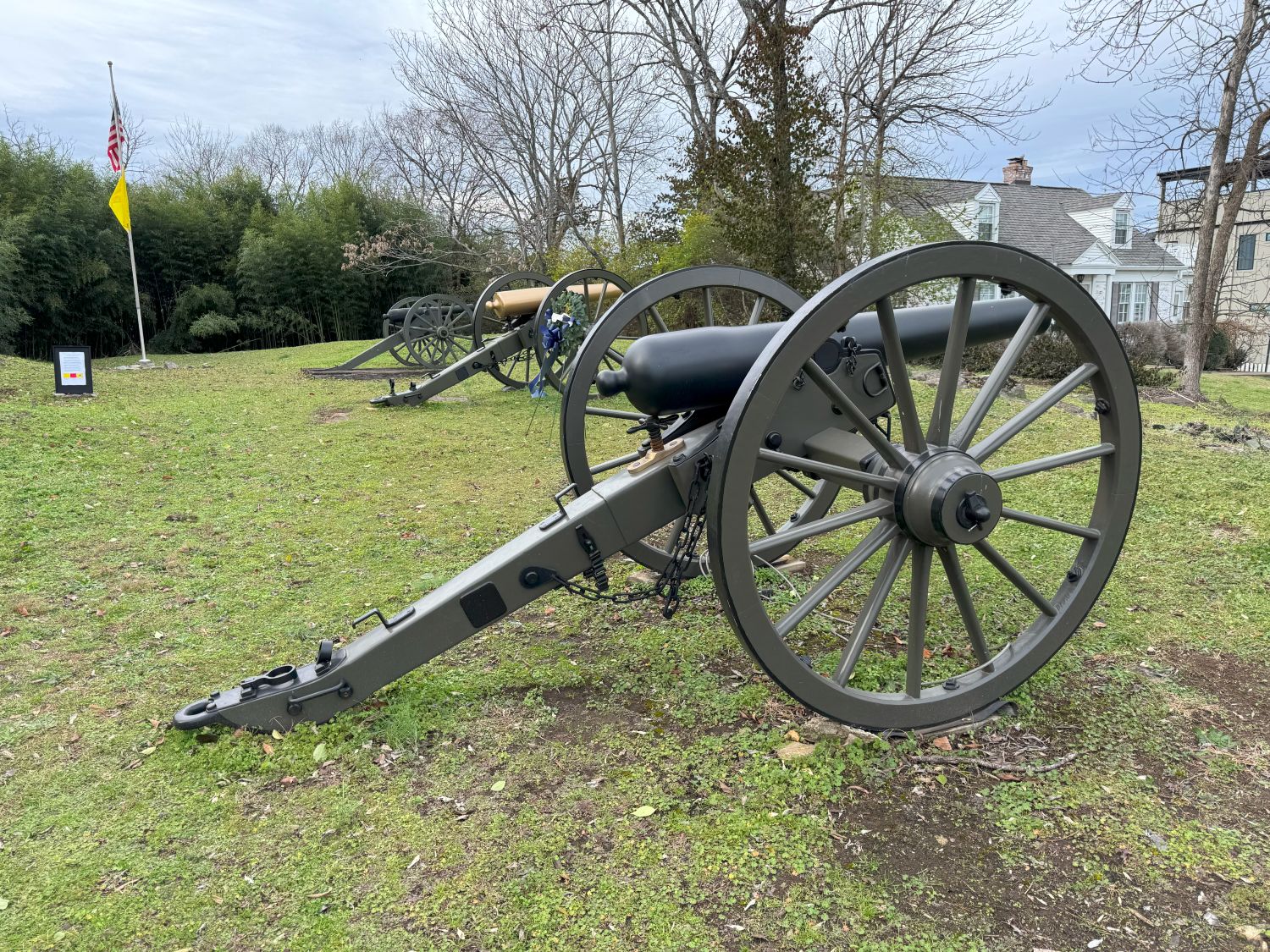
To view Bobby Whitson video, click on above photo of field pieces at Confederate Redoubt No. 1
The ground on which the Battle of Nashville was fought over two days in December, 1864, is becoming increasingly difficult to preserve. In the Spring of 2025, BONT President Bobby Whitson sat down with noted film producer and historian Yoshie Lewis to explain the extreme urgency of BONT’s attempts to identify and preserve remaining parcels of real estate on which blood was shed in the Battle. Click the photo to view Whitson’s “call to action” on behalf of the Trust.
BONT acknowledges with appreciation the producer of this video, Yoshie Lewis, a noted professional in various arenas of the entertainment business since 1983. She has been a camera operator, coordinator, and production manager on various indie films and TV shows, and since 2008, has become established as a network producer. Her specialty is a combination of art and history, and among other accomplishments, she has written three history books for Arcadia publishing.
April, 2025
NASHVILLE CIVIL WAR ROUND TABLE BECOMES PART OF THE BATTLE OF NASHVILLE TRUST
In a recently finalized agreement reached between the Battle of Nashville Trust (BONT) and the Nashville Civil War Round Table, the two organizations have now merged, and the Round Table has become part of the Trust.
The move brings together two organizations which, among their other missions, seek to interpret and educate the public about the significance of Nashville in the Civil War. The NCWRT has also traditionally dealt with all events and aspects of the Civil War in addition to its Nashville programming.
Bobby Whitson, president of the Trust, welcomed the merger: “Everything that we do at the BONT is about protecting, preserving, and interpreting the Battle of Nashville and honoring all of those that served here; bringing the NCWRT into the BONT family is absolutely the right move to continue to support and advance our mission. Members will benefit from immediate inclusion in both the BONT and the NCWRT; one annual fee, one membership. The NCWRT has a passionate and engaged membership base, and we look forward to helping to increase that membership by combining our efforts to inform and to educate those that are interested in the Battle of Nashville, the Civil War, and Tennessee history in general.”
Details of how the Round Table will be absorbed into BONT are currently being worked out. The NCWRT’s current president, Howard Mann, along with Greg Biggs, Program Chairman, have been named members of the BONT Board of Directors. They join Philip Duer, a board member and former President of BONT who currently serves as NCWRT’s treasurer. Biggs was instrumental in helping to establish the Round Table in Nashville and has long been in charge of securing the Round Table’s speakers and working to establish its seminars. Mann will continue to write his monthly Civil War feature stories which previously appeared in the Round Table’s monthly newsletter.
For the foreseeable future, NCWRT meetings will continue to be organized by Greg Biggs, continuing his record of locating dozens of extremely knowledgeable speakers on a wide variety of topics pertaining to the Civil War in Middle Tennessee. Meetings will continue to be held on a monthly basis, beginning at 7:00 p.m. and will be free and open to the public. Updated announcements will give the location of the meetings.
Additional details about upcoming meetings, including time, place, and the names and topics of the speakers, will be announced on the Battle of Nashville Trust’s Facebook page and website. To access the NCWRT page, click HERE. In addition, the two previously-separate groups are working out details regarding membership, dues, and related matters.
Feb. 17, 2025
SHY’S HILL PRESERVATION GETS GREAT BOOST FROM COVETED GRANT RECEIVED FROM HISTORICAL PRESERVATION RESOURCE “AMERICANA CORNER”
Improvements to the Battle of Nashville Trust’s newly-acquired part of the Shy’s Hill battlefield has gained a tremendous boost due to a new grant approved by Americana Corner and its founder and director, Tom Hand.
“We are very proud to announce that we’ve been selected as a 2025 Americana Corner Preserving America Grant Recipient,” said Bobby Whitson, President of the Battle of Nashville Trust (BONT). Americana Corner’s grant program was established to assist non-profit organizations like BONT in “the telling of the incredible story of America from its founding era through its first century as a nation.”
Americana Corner was created by Tom Hand in 2020 as an online resource “to help others rediscover America’s incredible founding and first century of expansion. The Preserving America Grant Program assists organizations (like BONT) that tell the story of our nation’s wonderful past and rekindle a love for American history and all its splendor.” For more information regarding Americana Corner’s mission of historical preservation and interpretation, BONT invites you to visit its website at www.americanacorner.com.
The new funds will be used to reimburse the Trust for the already-significant amount of expenditures that were necessary to clean up the new site and prepare it for visitors and future historical interpretive development such as signage explaining and describing the deadly warfare that occurred on the hallowed ground on Dec. 16, 1864.
The new site, covering a little more than an acre on the lower north slope of Shy’s Hill, was purchased by BONT in April, 2024, as part of its continuing efforts to preserve, maintain, and interpret the original Battle of Nashville battlefield.
Nov. 2, 2024
THE “BATTLE OF NASHVILLE STORYMAP”: A NEVER-BEFORE-SEEN LOOK AT THE BATTLE OF NASHVILLE, THE CITY DURING CIVIL WAR TIMES, AND A WIDE ARRAY OF RELATED EVENTS AND LOCATIONS
The “Battle of Nashville Storymap” gives a unique, graphic, first-time look at multiple aspects of Nashville during the time of the Civil War like we’ve never seen it before — both above ground and below.
This new way of viewing Nashville’s Civil War history was created by Brandon Hulette and Stacy Curry-Johnson at Vanderbilt University. Hulette is a Vanderbilt professor and member of the Battle of Nashville Trust Board, and Curry-Johnson is Director of Research Strategies at Vanderbilt University Libraries and GIS Lecturer at Vanderbilt.
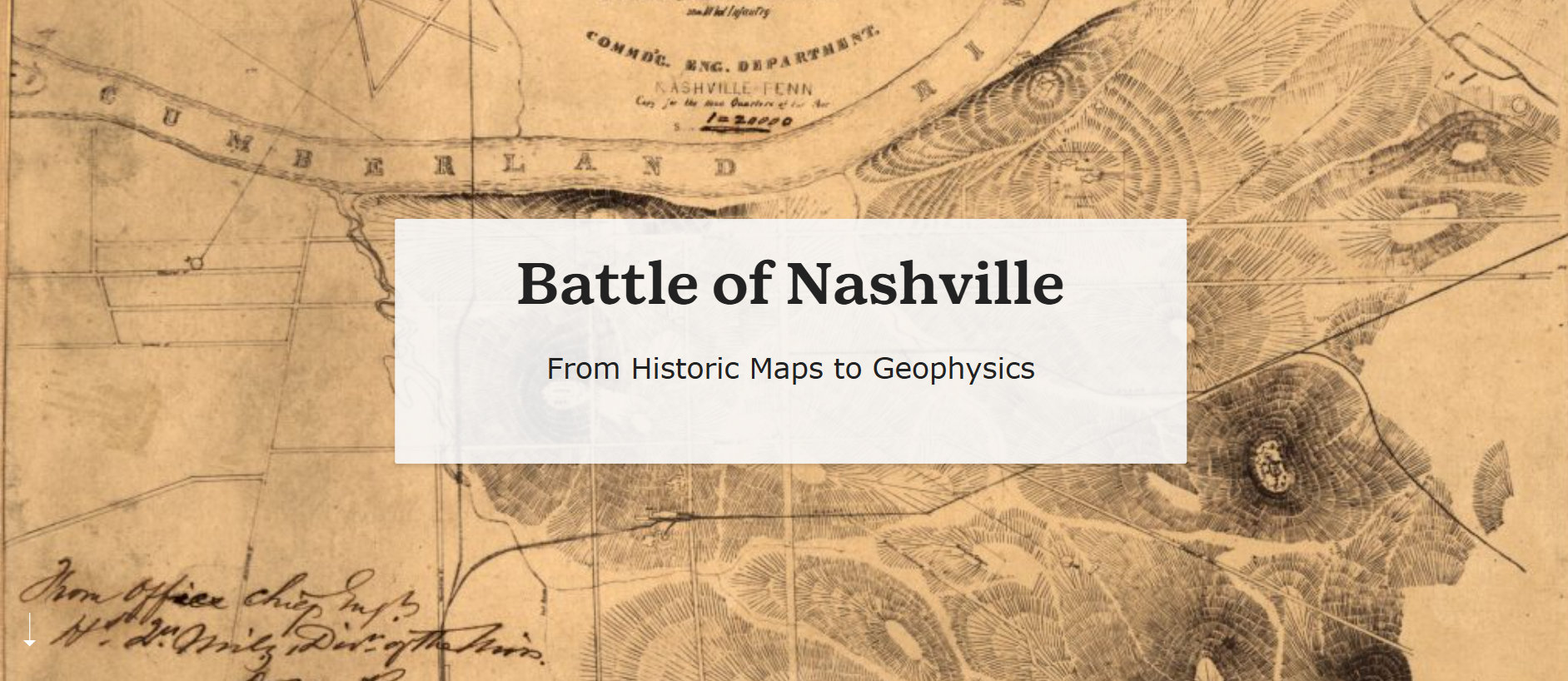
Click on the image above to open and view The Battle of Nashville Storymap
The Civil War in Nashville has never been seen through the lens of the sophisticated geospatial analysis and tools used in this study. “The Battle of Nashville Storymap is a first-of-its-king creation that combines traditional scholarship on the Battle with modern GIS [Geographic Information System] tools and cutting-edge ground-penetrating radar technology into one digital product to tell the whole story of the Battle of Nashville,” according to Hulette, adding, “This Storymap allows us to understand the Battle in an entirely new way and see how several aspects of Civil-War Nashville influences this pivotal event.”
To view the Storymap, click on the image of its introductory page above, or this link. To hear Hulette explain the Storymap and demonstrate how it works and its findings relating to the Fort Negley site, see the story immediately below, or click here for the link.
The Storymap enables viewers to visualize history in a new way, and its computers give us a new perspective on many aspects of Civil War Nashville, ranging from a description of the city in 1862 and the presence of landmarks such as forts and hospitals, to the battles of Fort Donelson , the naval skirmishes on the Cumberland River, the redoubts and earthworks to the south including Shy’s Hill, and numerous other never-before-seen aspects of the time.
The Storymap was created with support from a number of entities in addition to the Battle of Nashville Trust, including the Tennessee Wars Commission, the Community Foundation of Middle Tennessee, and others which are identified throughout the Storymap.
October 29, 2024
TAKING A FRESH LOOK AT FORT NEGLEY — WHAT SECRETS LIE BELOW ITS SURFACE?
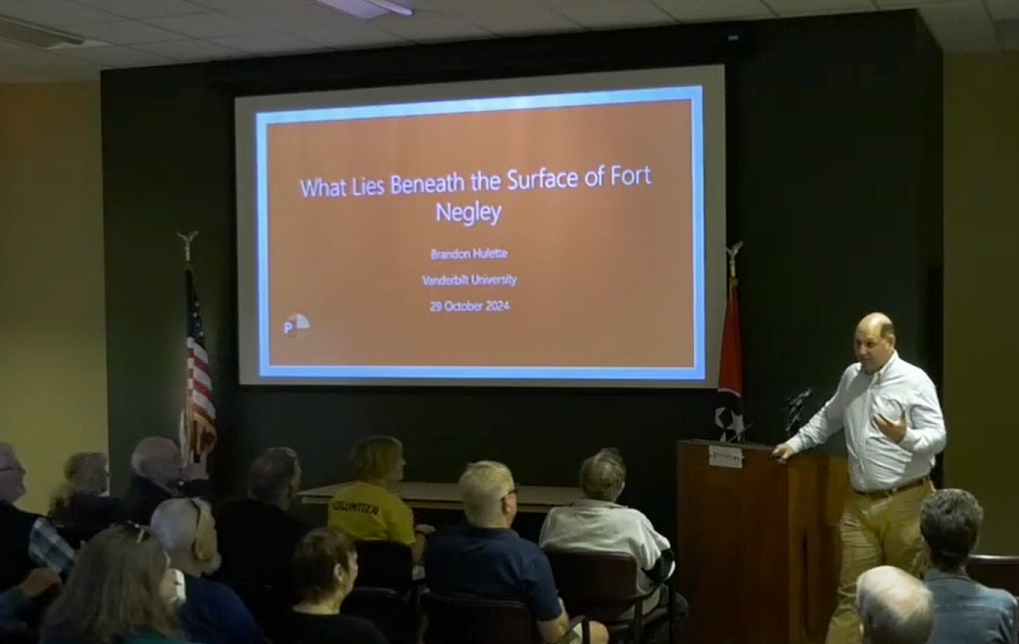
Click photo above to view Brandon Hulette’s presentation of his underground exploration of Fort Negley
Brandon Hulette, Vanderbilt professor and a member of the Battle of Nashville Trust Board, spoke to the Nashville History Club on Oct. 29, 2024, on the subject of his high-tech ground-penetrating exploration below the surface of Fort Negley Park and his findings to date. The presentation includes his explanation and review of the “Nashville Storymap” project, which is described and featured above on this page. As technology advances, historians like Hulette are finding new ways to look back at the past by, among other things, looking below the surface of the ground to find clues of locations and even events that occurred at the time of the Civil War, and beyond. To view his presentation, click the photo above, or here.
September, 2024
METRO HISTORICAL MARKER, HONORING U.S. COLORED TROOPS IN THE BATTLE OF NASHVILLE, DAMAGED AND REMOVED
A Metro Historical Commission historical marker honoring the role of United States Colored Troops (USCT) in the Battle of Nashville has been heavily damaged and will have to be removed and replaced with a new sign.
The damage was reported by WKRN-TV Chan. 2 News, noting that the cause of the damage is currently unknown. The marker was installed three years ago on Oct. 15, 2021, on Polk Avenue within sight of the preserved remnants of Granbury’s Lunette. It was the result of considerable hard work and expense on the part of the MHC and descendants of the USCT soldiers who fought on that ground on the first day of the Battle of Nashville, Dec. 15, 1864.

Photo: WKRN-TV News, Nashville. Click photo for Chan. 2 video story
The marker cannot be repaired and for safety, will be removed by NDOT. A replacement will entail significant expense and delay as the Historical Commission continues its efforts to commemorate the significant participation of Black troops in the battle.
The Battle of Nashville Trust released a statement expressing its hope that the damage was the result of an accident, but stressed the Trust would be “saddened and disgusted if investigation showed the damage was intentional.” BONT also offered to assist the MHC with the cost of the replacement, which could exceed $3,500.
Click photo above for full Chan. 2 story. For details of the battle at the Lunette, visit BONT’s “Granbury’s Lunette” page (insert link) and the story of the USCT marker’s installation on the NEWS page (insert link).
August, 2024
REPLICA SIX-POUNDER SMOOTHBORE ARTILLERY PIECE ADDED TO THE EARTHWORKS AT CONFEDERATE REDOUBT NO. 1
Confederate Redoubt No. 1 is now bristling with more fire power after a third artillery piece was added by the Battle Of Nashville Trust in August, 2024.
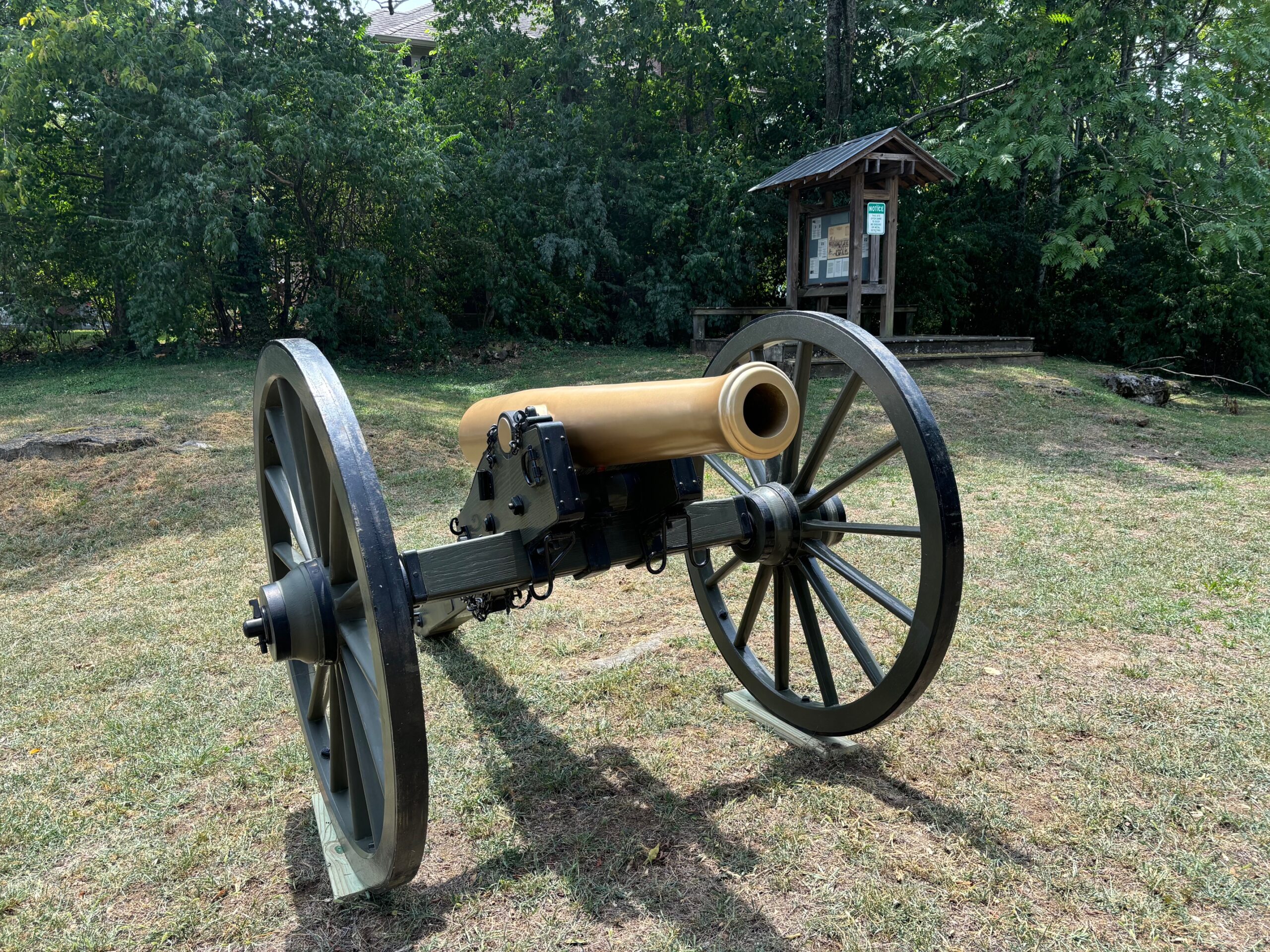
6-pounder cannon, newly cleaned and outfitted following donation by the Woowine family, takes its place at Redoubt No. 1. Transport and installation of the 1000-plus pound gun was done by BONT President Bobby Whitson with the help of Nashvillians Peter Darst and Jimmy Thompson. Photo by Bobby Whitson
The new piece is a replica six-pounder smoothbore designed to resemble those manufactured by Noble Brothers, a large ironworks factory in Georgia which switched from building steamboat engines and locomotives to cannon barrels for the Confederacy during the Civil War. The new iron tube was donated to BONT by Ms. Graham Woolwine–Gilson, a Nashville native who now lives in Luxembourg. The new field piece will eventually be accompanied by a bronze plaque stating, “Donated in Memory of Porter Anthony (Tony) Woolwine.”
Redoubt One was initially constructed in December, 1864, on the northernmost Confederate line to accommodate four Napoleon smoothbore cannons along with 200 men, half of which managed the battery, and the other half were infantry in support.
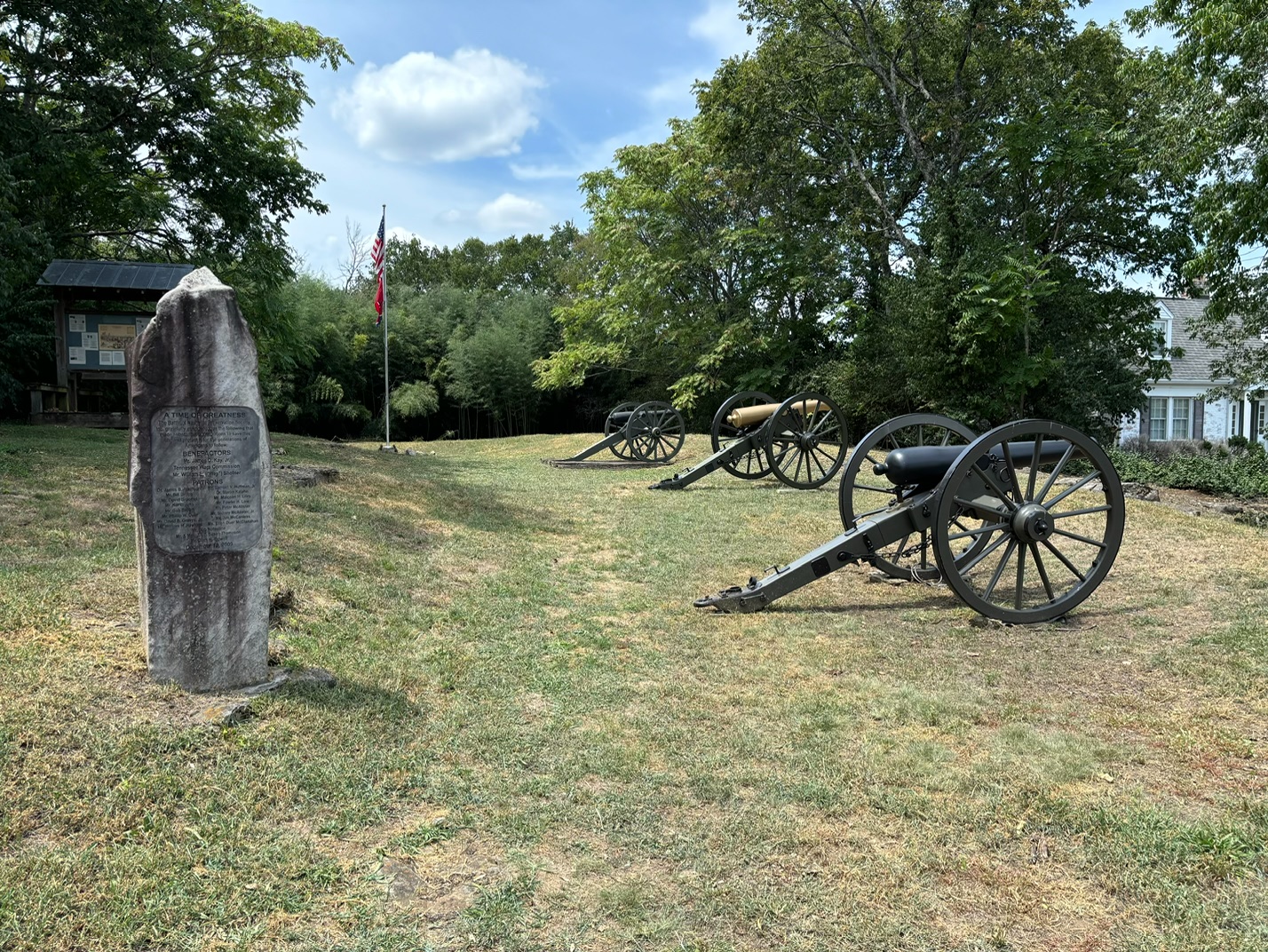
New firepower line-up on Redoubt No. 1, looking more like it did on Dec. 15, 1864, with four Napoleons. Photo by Bobby Whitson
The new field gun was rolled into place on the north wall of the Redoubt to a spot between the pre-existing 3-inch Ordnance gun to its left, and the replica Napoleon cannon which for many years had been positioned at the top of Shy’s Hill. It had to be brought down from the summit for repairs, and took its place on Redoubt No. 1 in 2020, symbolizing the battery of four which had been in place there on the morning of Dec. 15, 1864.
BONT had taken possession of the 1000-pound six-pounder barrel in September, 2121, after which it was sent for extensive work for display, including cleaning and painting of the barrel and being fitted for an aluminum replica gun carriage. For more detail on all three of the Redoubt’s artillery pieces, see individual stories about them on the Redoubt No. 1 page.
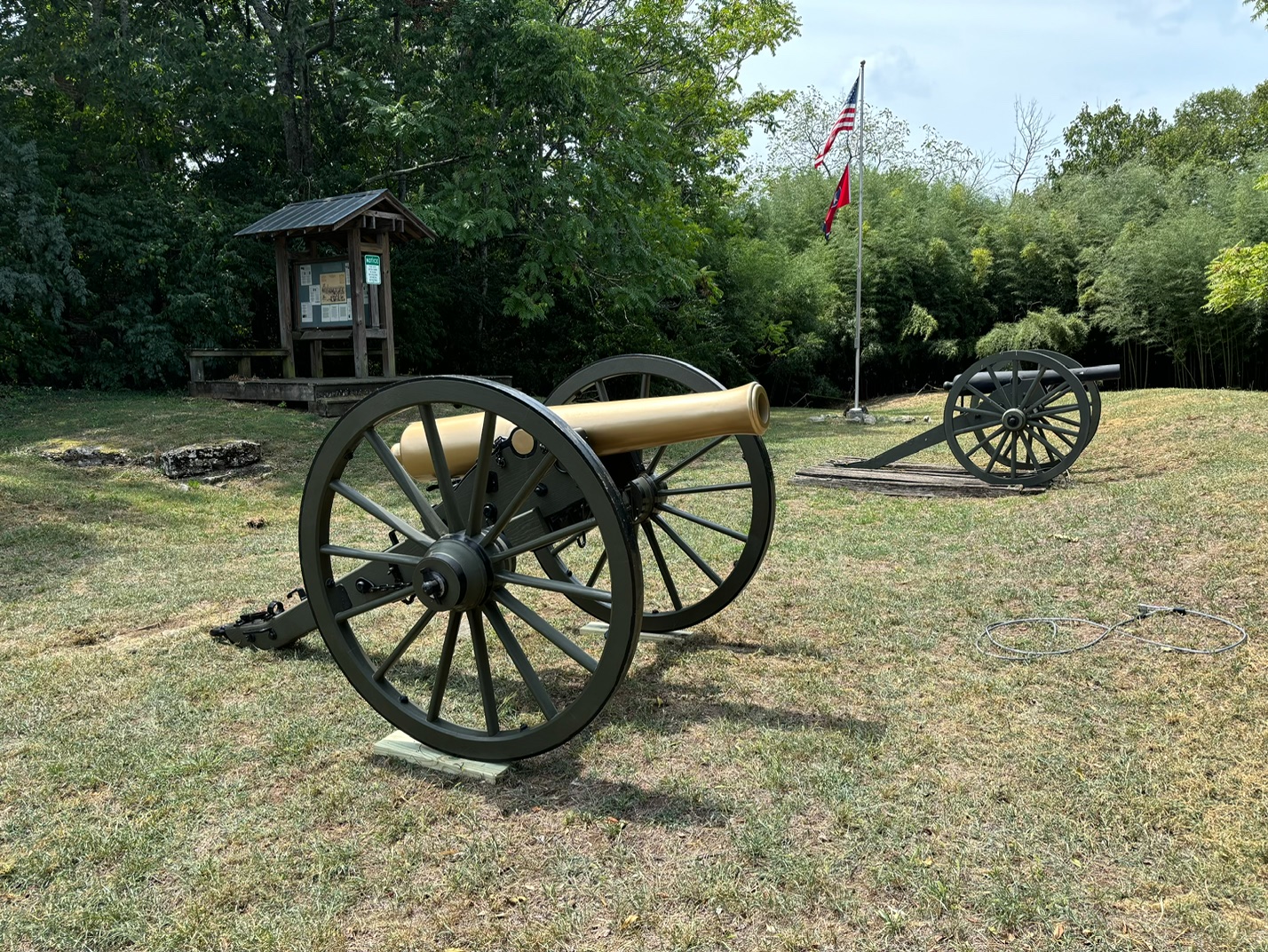
Photo by Bobby Whitson
July, 2024
BONT CLEARS NEW BATTLEFIELD PROPERTY, UNEARTHS MORE EVIDENCE OF THOSE WHO FOUGHT THERE 160 YEARS AGO
The Battle Of Nashville Trust continues to make progress in restoring its newly-acquired 1.2 acre battlefield site to the same condition it was in when Federal troops stormed over it l60 years ago on the second day of the Battle of Nashville.
The Trust purchased the property in April, 2024, and immediately put in motion plans to maximize use of the grounds by visitors interested in the battle which occurred there on Dec. 16, 1864. In July, brush and debris were cleared from the site, exposing the original ground where Col. Lucius Hubbard led the Fifth and Ninth Minnesota regiments up the northeast slope of Shy’s Hill, marking the beginning of the end of the Battle of Nashville.
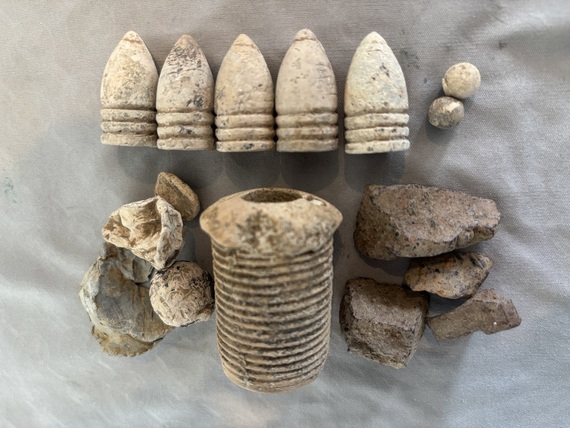
Also exposed was more actual evidence of the fighting that occurred as the Confederate line, above and to the east, fired on Union soldiers assaulting the Hill across that ground. Even though Civil War relic hunters have scanned Shy’s Hill for decades in their search for artifacts, the clearing of the property led to BONT recovering a number of bullets left undetected over the years, along with other relics including uniform buttons, shrapnel, and unidenfied metal. Some of the findings can be seen in the photo below by Bobby Whitson.
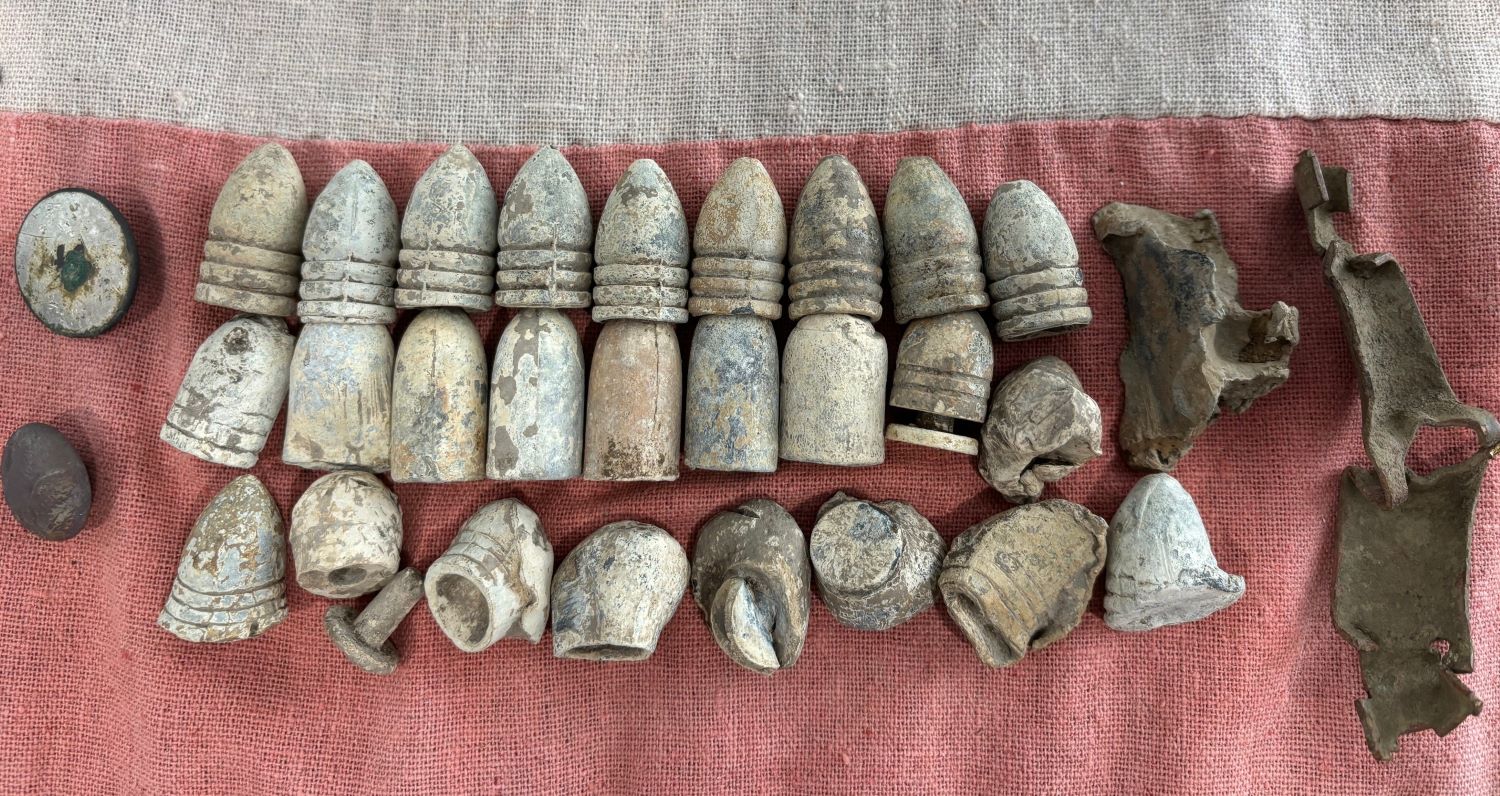
Top row: Silver washed pewter button, .58 3 ringer, the next 8 are .570ish Confederate 3 ringers, sabot fragment from an artillery round, unidentified brass piece. Middle Row: US General Service Eagle Button, fired 3 ringer, 6 dropped Enfields (one is stepped on), dropped Williams Cleaner, fired 3 ringer. Bottom row: Fired 3 ringer, fired Williams Cleaner with separated disk, fired Confederate 3 ringer, fired Enfield, 2 fired Williams Cleaners, two fired 3 ringers.
Because of the number and field position of “drops” (unfired bullets) found during the clearing, BONT historians were able to determine the location of Confederate pickets. Bobby Whitson, President of BONT, reminded anyone interested in relic hunting on the new site that metal detecting is strictly prohibited on this and all other battlefield ground which is owned or maintained by the Battle of Nashville Trust.
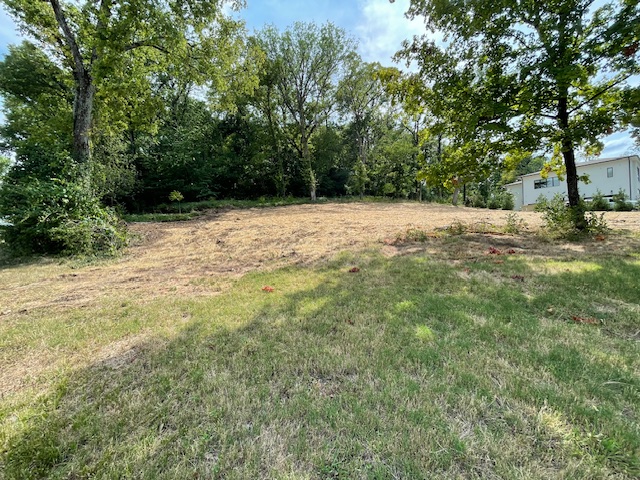
The new site is not yet open to the public but BONT is hoping to prepare it for visitors this Fall in conjunction with the 160th anniversary of the Battle. Plans currently include further improvements to the property for ingress and egress, as well as parking. In addition, BONT is working with Civil War Trails to install interpretive signage, both at the 4601 Benton Smith Rd. site and the plateau further up the hill where BONT has placed field artillery pieces in the area most likely used for Beauregard’s battery on Dec. 16, 1864.
“We are devoting the highest level of expertise, time, energy, and resources to preserve fully this hallowed ground on which so many Minnesotans and others were wounded and killed assaulting the Confederate position on the hill,” Whitson said. “It’s an invaluable piece of the battlefield. It’s our privilege at the Trust not only to acquire it, but now to preserve it, to maintain it, and to interpret it for visitors to learn about this momentous event in Nashville and U.S. history.”
April, 2024
BATTLE OF NASHVILLE TRUST ACQUIRES NEW BATTLEFIELD GROUND, ADDING TO SHY’S HILL PRESERVATION
An unexpected set of virtually “undreamed of” circumstances has come together to enable The Battle of Nashville Trust (BONT) to acquire a historic tract of “core battlefield” property near the base of Shy’s Hill on which Union soldiers attacked and died in the most decisive event of the Battle on Dec. 16, 1864.
The property consists of a vacant residential lot located at the corner of Harding Place and Benton Smith Road and was featured in the background of the famous painting of the Battle of Nashville by Minnesota artist Howard Pyle. It was this 1.2 acre ground over which Federal troops attacked Confederate forces occupying the summit of Shy’s Hill on the second day of the battle, routing Hood’s troops and permanently disabling the Confederacy’s military capability in the western theater of the Civil War.
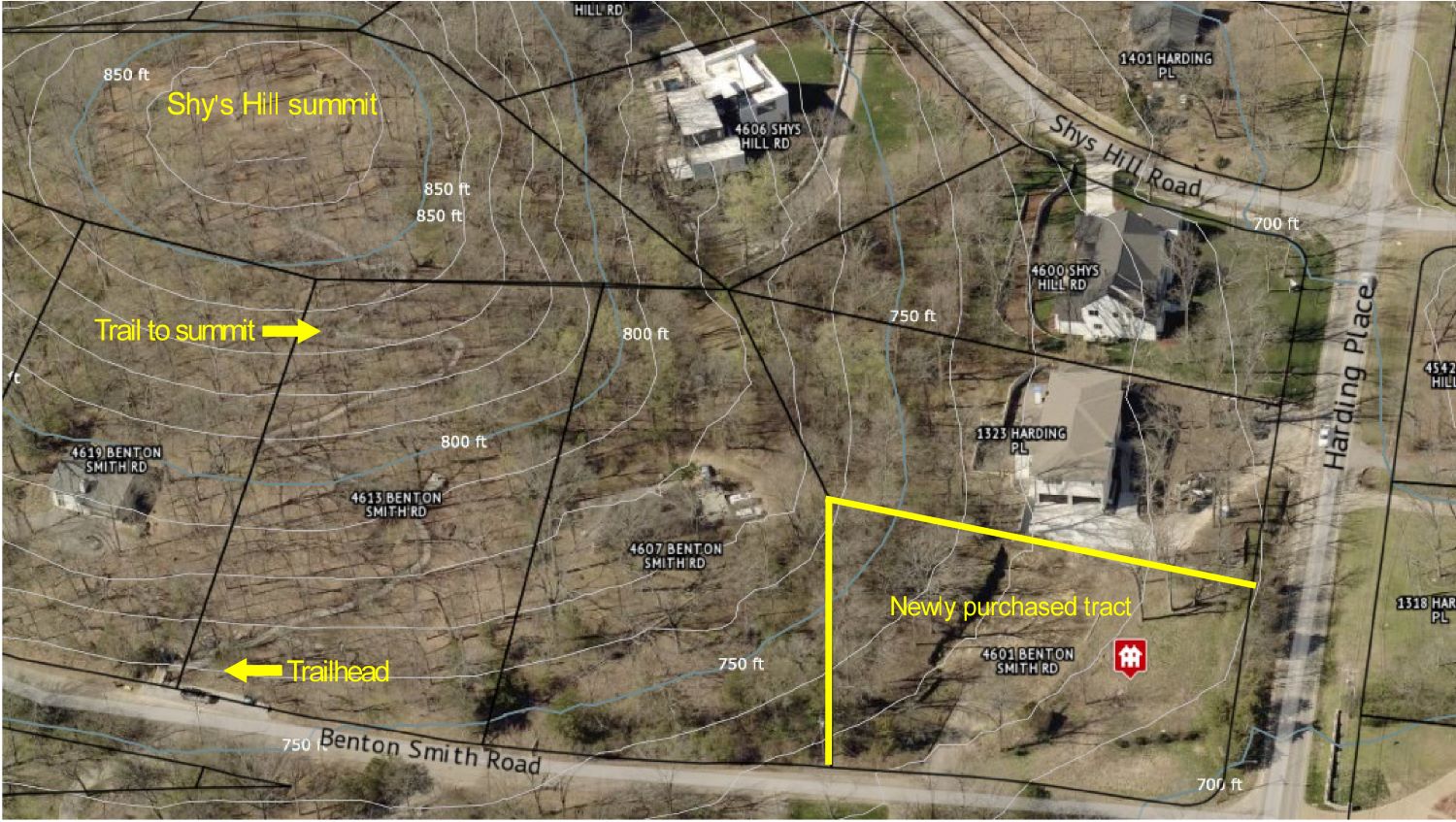
Aerial view of Shy’s Hill, showing newly-acquired core battlefield land at the corner of Benton Smith Road and Harding Place. Only a single residential lot separates it from BONT’s 3.5 acre battlefield site. Click image to enlarge.
Bill Ozier, President of BONT, stated that the Trust “never dreamed that it would be able to purchase” the historic ground because of its location in a prime area of an affluent residential development. However, several factors came together to make the purchase unexpectedly possible: in 2021, BONT became the beneficiary of a wealthy donor’s estate; then in 2023, a drop-off in Nashville’s hot residential real estate market at the end of last year prompted a developer to sell the parcel rather than build on it; and finally, BONT successfully worked with and was assisted by The American Battlefield Trust (ABT), a national preservation non-profit which works to acquire and preserve American battlefields across the country.
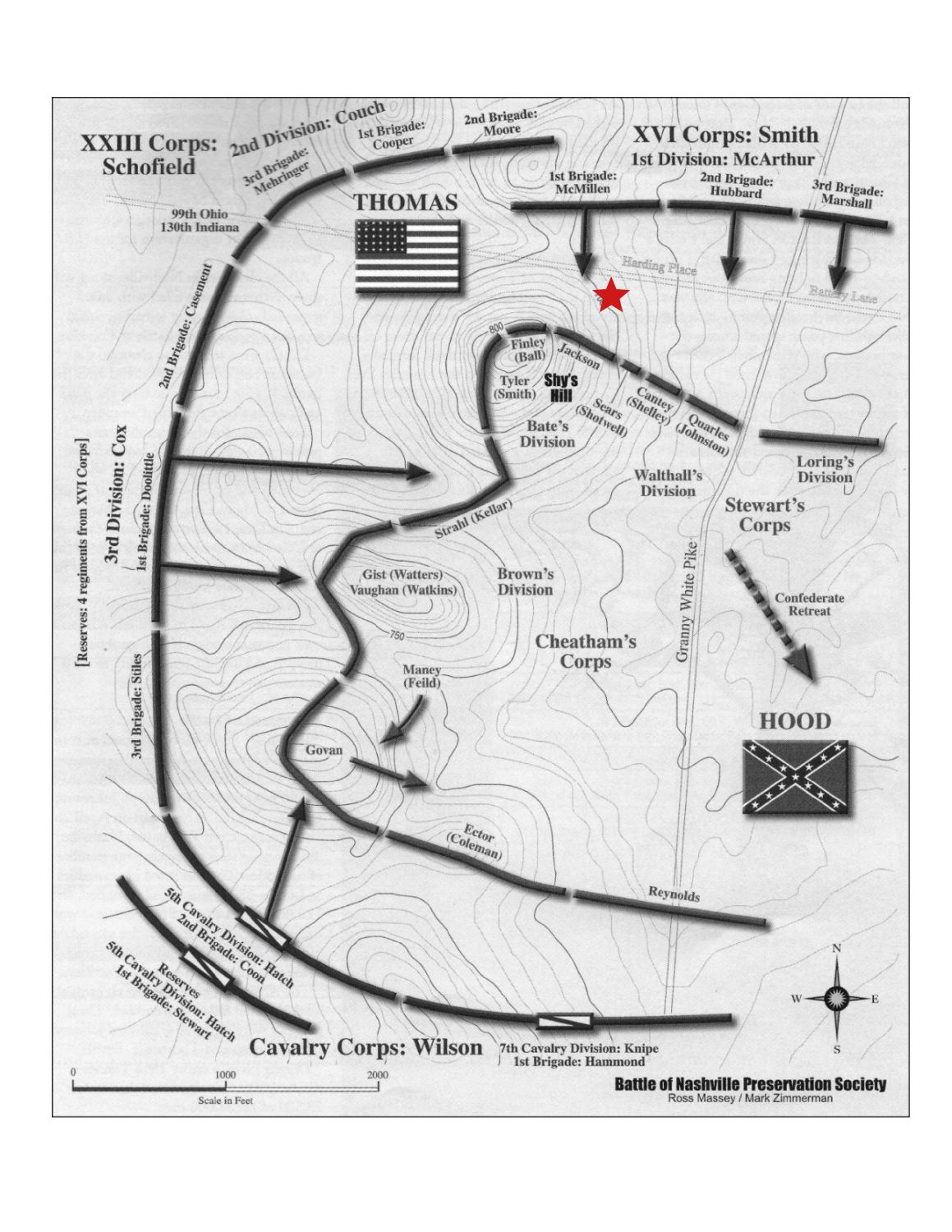
Red star denotes approximate location of newly-acquired battlefield site. Click image to enlarge.
When those factors converged in early 2024, BONT’s Board determined that the acquisition was too historically important to pass up, and put together funds to purchase the tract at what amounted to its appraised value of $1,175,000 with the assistance of the ABT.
The tract is not immediately adjacent to, but only a short walk from, BONT’s Shy’s Hill historic site and trailhead. Plans are already underway by the BONT Board for improvements to the site, including clean-up, appropriate landscaping, future signage similar to that utilized on National battlefield parks, and potentially adding parking space.
The tract, located at 4601 Benton Smith Road, is the first acquisition of Nashville battlefield land for preservation in decades. A 3.5 acre privately-owned section of land encompassing most of the upper portion of Shy’s Hill land was originally donated by a developer to the Tennessee Historical Society (THS) in 1954. The Battle of Nashville Preservation Society (now, BONT), organized in 1992, was involved in preservation and maintenance of the tract, including construction of a switchback trail to the top, and finalized purchase of all but the summit in 2005. The THS maintained ownership of the summit, but leases it to BONT, which maintains and interprets the site for public use.
Residential development had begun around Shy’s Hill shortly after World War II. Fortunately, long before that, at a time less than 40 years after the battle, famed Minnesota artist Howard Pyle visited the area and made photographs which he used to portray, as accurately as possible, part of the Federal assault by Minnesota troops (within this page, see important articles by BONT Board members John Banks and Philip Duer, describing and analyzing the accuracy of the Pyle painting). The Pyle photos have never been found, but his massive painting completed in 1906 still hangs in the Minnesota State Capitol Building, and BONT historians agree that the newly-acquired property is depicted in the background of the painting.
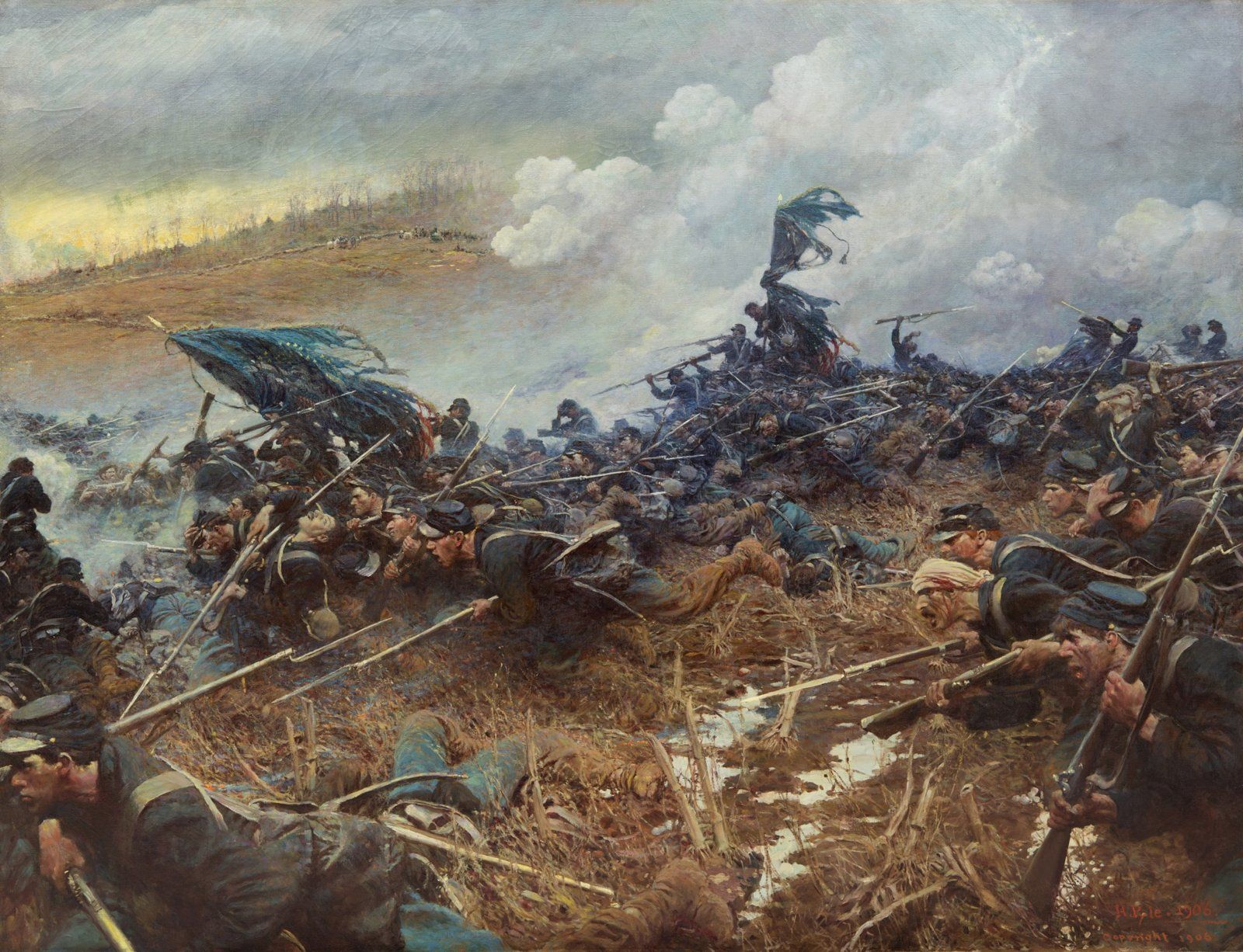
Howard Pyle’s famous mural painting of the battle at Shy’s Hill, featuring the Minnesota Second Brigade in the area of BONT’s new battlefield tract. Click image to enlarge.
The historical importance of preserving this part of the battlefield cannot be overstated. On Dec. 16, 1864, the new ground acquired by BONT was positioned between the Confederate line anchored on top of Shy’s Hill, and Federal troops amassed to the north and west poised for attack. Union Brig. Gen. John MacArthur, a division commander within the XVI Corps of Gen. Andrew Smith, became frustrated by the delays of high command and essentially forced the late afternoon assault on Shy’s Hill. In the Pyle painting, Col. Lucius F. Hubbard, commander of the Second Brigade, led the Fifth and Ninth Minnesota regiments up the northeast slope of the Hill, requiring them to cover open ground consisting of a muddy cornfield, and exposing them to devastating enfilading fire from the Confederate line to their east.
In the violent chaos of the charge, Hubbard had two horses shot out from under him and sustained a bullet neck wound, and four color bearers of the Minnesota Fifth regiment were shot down (three of them killed). The Fifth sustained 100 casualties in the charge over this ground, approximately 25 percent of its total regimental force. The 4601 Benton Smith Rd. property was also immediately adjacent to the area involving the assault of the steep north slope by Col. William McMillan’s First Brigade, which led the Federal attack beginning at approximately 4:00 p.m.
Nov. 4, 2023
BATTLE OF NASHVILLE TRUST MOURNS PASSING OF JOHN ALLYN — HISTORIAN, COLLEAGUE, AND FRIEND
The fields and stone walls around Confederate Redoubt No. 3 in Nashville would have been enveloped in a maelstrom of rifle fire, the whine of minie balls and thunder of artillery, and the thick fog of black powder smoke, as the Union army bore down from three directions on the last remaining Confederate earthworks in the late afternoon of Dec. 15, 1864.
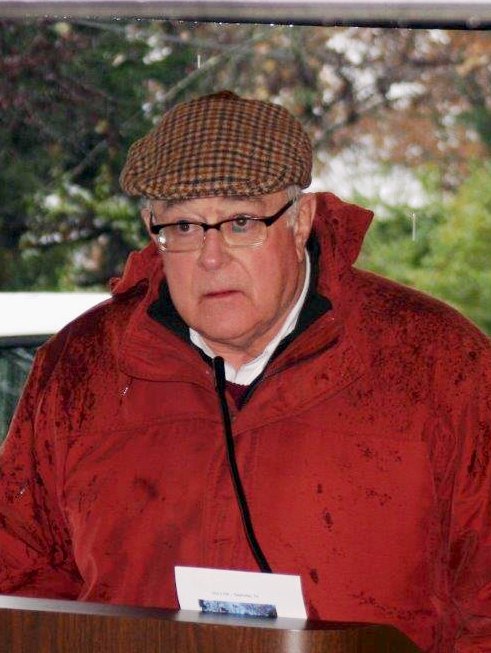
John Allyn speaking at the Minnesota Monument Dedication Ceremony on Shy’s Hill, 2014
It was therefore the perfect place for the home of Nashville attorney John Allyn to live with his family on the short dead-end street which later evolved there, Hood’s Hill Road, just over a football field’s distance from the Redoubt, the vestiges of which are now barely visible in the backyard of the nearby Calvary Methodist Church.
John, 76, passed away on Nov. 4, 2023, but he left a long and meaningful legacy of contributing to the preservation and understanding of the Battle of Nashville and other aspects of Nashville’s military and ancestral history. He served many years on the Battle of Nashville Trust board in his role as a tireless supporter of the its mission of acquiring, preserving and interpreting remnants of the battlefield.
A New Yorker by birth, John came south to attend Vanderbilt University. He majored in history, or as his family noted, he “majored in his hobby.” Afterwards, he received his law degree from Vanderbilt Law School, and decided to stay in Nashville. These decisions were fortunate for Nashvillians interested in the history of the city, especially the years of the Civil War and the December, 1864, Battle of Nashville.
His work for BONT was concentrated in the years 2013 to 2018, when he served as its president, but his work and influence spread far beyond that role. He became one of the Trust’s “go to” historians who, as an attorney, dedicated his keen mind, analytical ability and pure joy of history to understanding and interpreting every aspect of the Battle of Nashville.
John wrote a number of in-depth articles for the BONT website, including, as would be expected, contributing to the site’s page on the mayhem that had occurred in his neighborhood about 150 years earlier at Redoubt No. 3, and also on the Cumberland River naval skirmishes that preceded the main battle of December 15 and 16. In 2013, he edited massive changes to the Battle of Nashville Wikipedia page in order to clarify and amplify the factual content.
He had a special interest in the men who fought for Minnesota, a state which suffered more casualties at Nashville than at any other battle where its troops fought, and which is commemorated with a granite monument and flag on Shy’s Hill. He wrote an essay for the website on the importance of Minnesota troops in the Battle, and was later invited to present his thoughts and findings to the Minnesota Historical Society in Minneapolis.
His interest in the ancestry of those who fought in Nashville led him to contribute a website essay on Nashville’s Civil War burials, and to become involved with other Nashville historical groups, especially the Nashville City Cemetery Association for which he served as a board member and president, enjoying especially leading some of the City Cemetery’s legendary tours. In addition, he had an important role with Friends of Fort Negley, and served as a featured speaker at various historical meetings. John had an ancestral link to the Battle through his wife, Cary DeWitt Allyn, whose great-grandfather, Marcus Bearden DeWitt, was the chaplain for the 8th Tennessee posted on the down slope of Shy’s Hill on Dec. 16.
The BONT board and membership will miss John personally as well as his dedication to its mission, his time and talent as president, and his work clearing brush on the slopes of Shy’s Hill with as much zest as his time spent in the research of official battlefield records. The Trust will honor his memory at its annual Wreath Ceremony on the summit of Shy’s Hill on Dec. 16, 2023, the 159th anniversary of the Battle of Nashville.
October, 2023
MONUMENT DEDICATED ON SHY’S HILL TO COMMEMORATE 114th ILLINOIS VOLUNTEER INFANTRY
Representatives of both the “114th Regiment, Illinois Volunteer Infantry Reactivated” and the Battle of Nashville Trust (BONT) formally dedicated placement of a granite monument on Shy’s Hill on Oct. 28, 2023, in honor of the men of the 114th Illinois who took part in the assault of the Hill on Dec. 16, 1864.
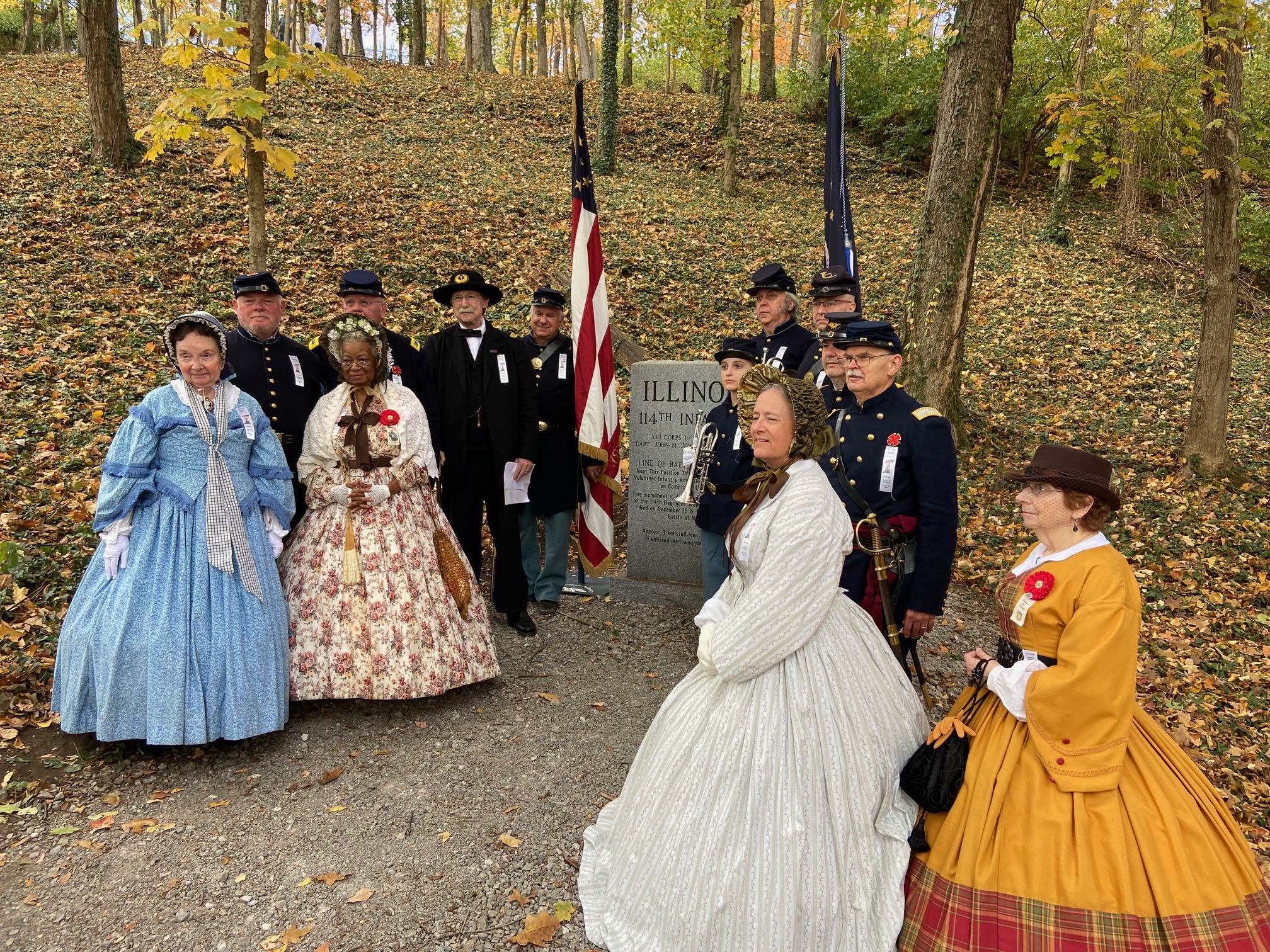 Pictured above, Left to right, women: Mary Disseler, Stephanie Thomas, Lisa McLane, and Laura Reyman. Men: Stan Buckles, Don Ferricks, Jonathan Reyman, David Jostes, Andy VanDeVoort, Violet Filipiak (in front of Andy, her grandfather), Mike Vizral, Shawn McLane, Richard Schachtsiek, Lisa McLane, and Laura Reyman. Photo by Bobby Whitson
The Illinois monument, erected on the Hill in February, 2023, by the Illinois group with cooperation of BONT, is the second one honoring Federal troops involved in the battle at Shy’s Hill. In November, 2014, a granite monument was placed on the plateau of the Hill by the Minnesota Civil War Commemoration Task Force in memory of the 97 Minnesota troops killed in the charge up the north and northeastern slopes.
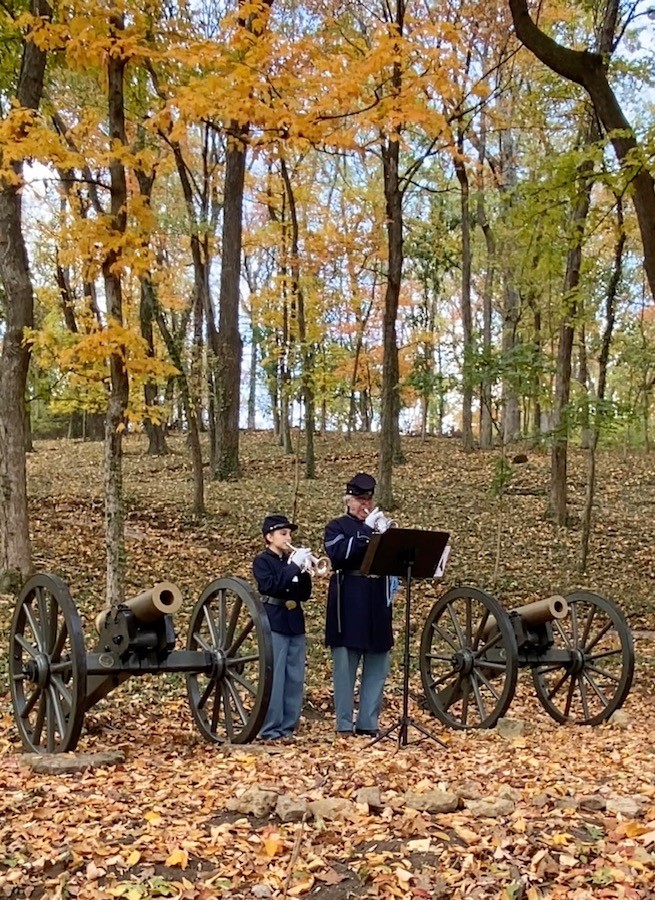
Andy VanDeVoort and his granddaughter, Violet Filipiac, sound taps in echo. To hear them, click their photo
The Federal monuments will be joined in the future by an obelisk style monument at the summit honoring the Confederate forces which held the Hill on the evening of Dec. 15 and most of the day of Dec. 16. (BONT uses Peffen Cline Masonry Group for monument installation due to the high level of expertise needed on the Hill’s challenging terrain.)
The dedication ceremony included members of the 114th Illinois Reactivated dressed in period uniforms with comments by several of their representatives including Col. Richard Schachtsiek, Stan Buckles, and Chaplain Jonathan Reyman, as well as by BONT president Bill Ozier and historian Jim Kay. In addition, taps were sounded in echo by Illinois bugler Andy VanDeVoort and his granddaughter, Violet Filipiak, and a commemorative wreath was placed at the site by Shawn McLane on behalf of the 114th, Donald Ferricks on behalf of the descendants of the original 114th, and Mary Disseler on behalf of the Soldiers Aid Society.
The Illinois contingent included Stan Buckles of Mt. Pulaski, IL, the representative of the 114th Regiment Reactivated who worked with BONT regarding installation of the monument. He has written a regimental history of the unit entitled “Not Afraid To Go Any Whare,” quoting a line from a soldier’s letter.
The original 114th Regiment was formed in the summer of 1862. The unit was unique in that most of its members, or their families, personally knew President Abraham Lincoln, causing their remarks in letters and diaries to take on a more familiar tone when writing of President Lincoln.
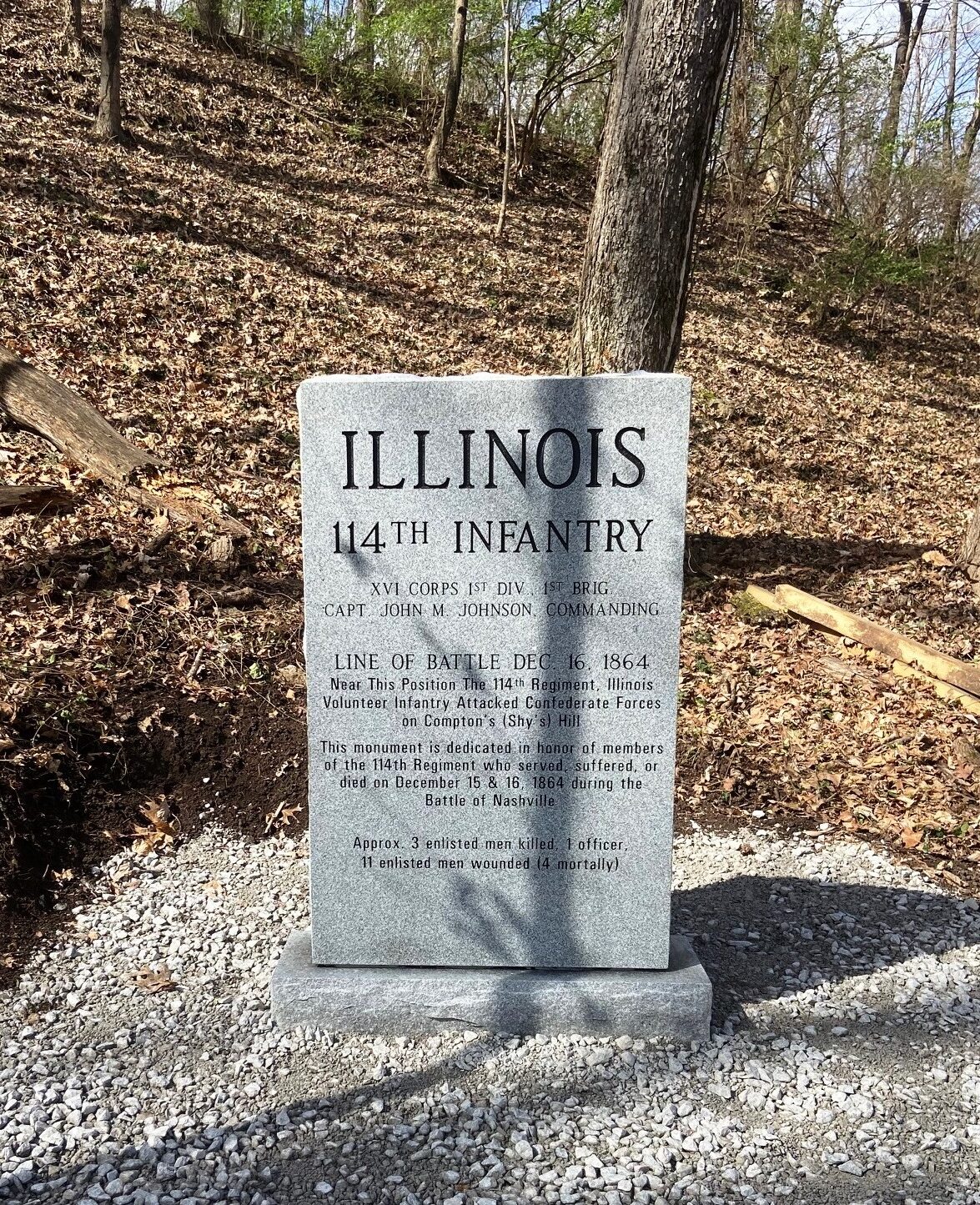
Photo by Bobby Whitson
Most of the regiment’s early action was in Mississippi, including the Battle of Jackson and the siege of Vicksburg. However, at the battle of Brice’s Cross Roads in North Mississippi, due to poor leadership by commanding Gen. Samuel D. Sturgis, the regiment was decimated by Gen. Nathan Bedford Forrest in June, 1864. Stan Buckles noted that after that embarrassment, several members of the 114th testified in a later Court Of Inquiry against the drunken conduct of both Sturgis and their brigade commander, Col. William L. McMillen. As noted below, this name would come to play an important but dishonorable role in the Battle of Nashville, according to many historians.
The Regiment fought in the Battle of Tupelo, Mississippi in July, 1864 before arriving in Nashville as part of Gen. Andrew J. Smith’s XVI Corps, Brig. Gen. John MacArthur’s 1st Division. The 114th was one of three regiments in the 1st Brigade (along with the 93rd Indiana and 10th Minnesota) still under the command of the widely disliked and disrespected Col. McMillen.
When the Battle of Nashville began on Dec. 15, 1864, the 114th Illinois was involved in the capture of both Redoubts 4 and 5 on Dec. 15. Late in the day of Dec. 16, 1864, they were among the large surge of Federal troops who successfully participated in the charge up Compton’s (now Shy’s) Hill. They were one of the first regiments to gain the north slope works and break the Confederate line of Finley’s Florida brigade at the summit.
As the battle at Shy’s Hill came to an end, Confederate Brig. Gen. Thomas Benton Smith was forced to surrender and shortly thereafter, while in custody and defenseless, he was bludgeoned over the head with a sabre by a Union officer, causing permanent brain damage that left him disabled for life. Col. McMillen has been alleged to be the assailant, as noted by some historians, but there is no official record of the attacker’s identity. If McMillen was the assailant, he had long since lost the respect of the men of the 114th Regiment. The street that is adjacent to the eastern slope of Shy’s Hill is named “Benton Smith Rd.” in Smith’s honor.
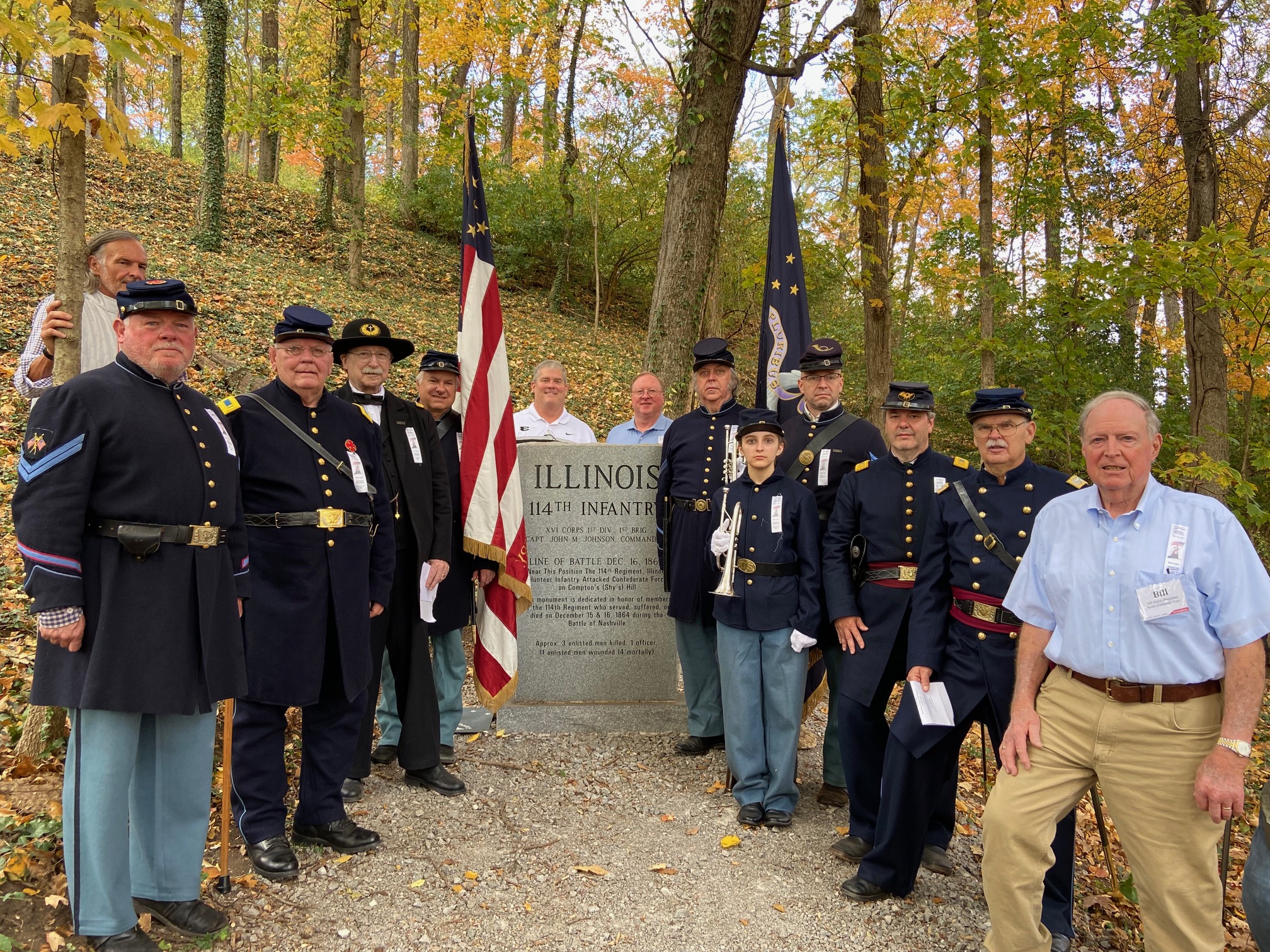
Above: Men of the 114th accompanied by members of the Battle of Nashville Trust Board, including L-R, Jim Kay, Bobby Whitson, Sidney McAlister and Bill Ozier. Photo by Bobby Whitson
The 114th Regiment, Illinois Volunteer Infantry Reactivated, was founded only three years after the Civil War Centennial in 1968, and has been continually active since its founding. It celebrated its 50th anniversary in September, 2019, making it one of the oldest reenactment/living history Civil War regiments in the country. Their goal is to place markers on all of the battlefields in which the unit saw action, and have already done so at Brice’s Cross Roads and now, Shy’s Hill.
See additional photos (courtesy of Bobby Whitson and Sidney McAlister) of the Ceremony in the gallery below (hover cursor over photo for full captions):
-
- Stan Buckles addresses attendees during dedication
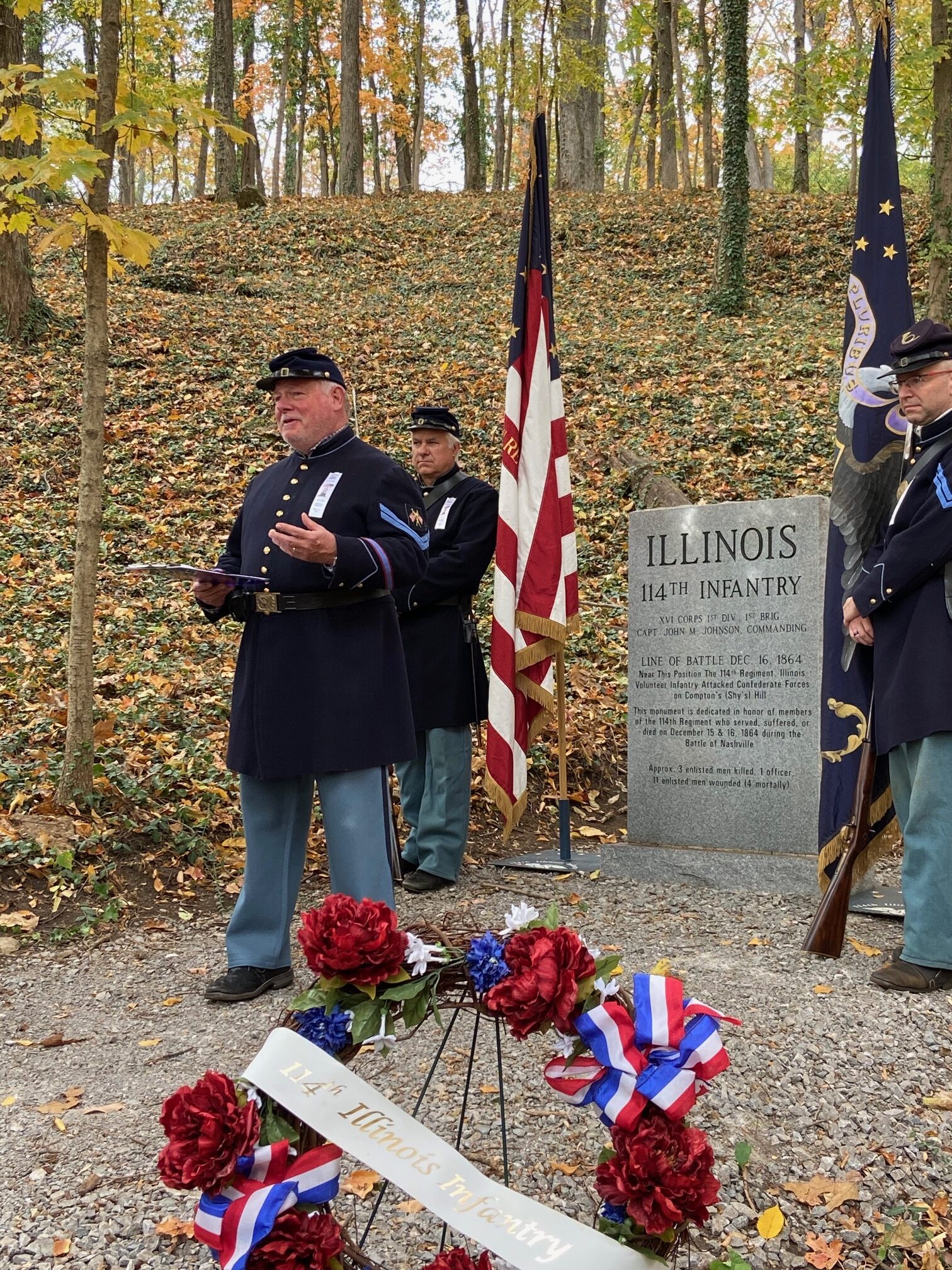
-
- Richard Schachtsiek speaking
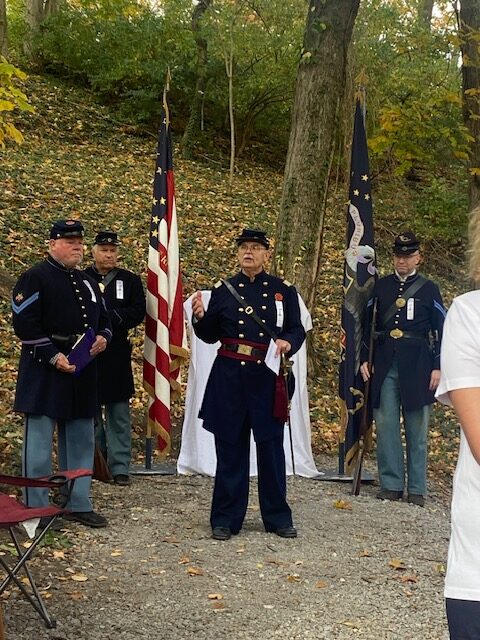
-
- Men of the 114th Illinois Infantry Reactivated
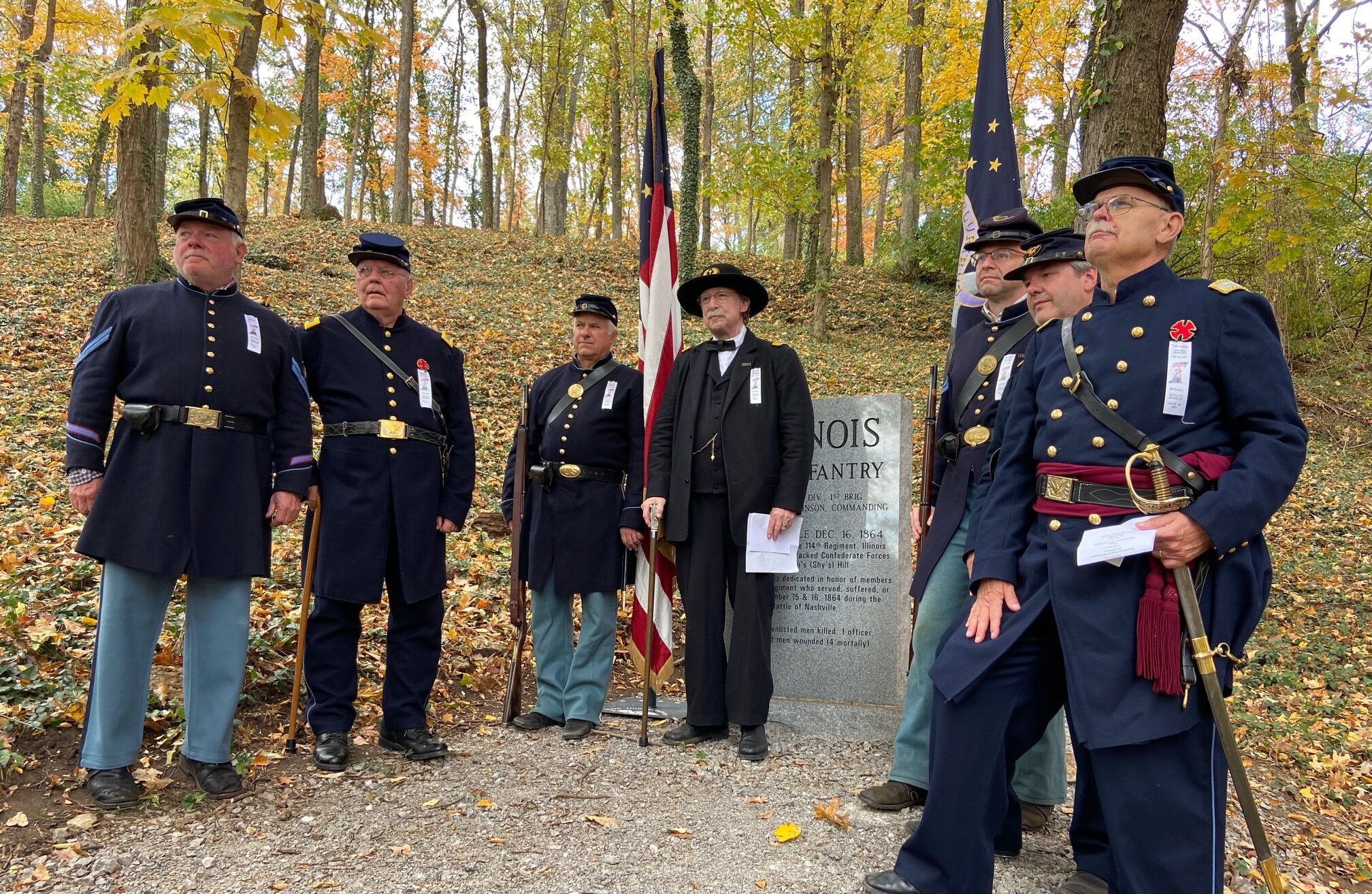
-
- Andy VanDeVoort and granddaughter Violet Filipiak sound Taps
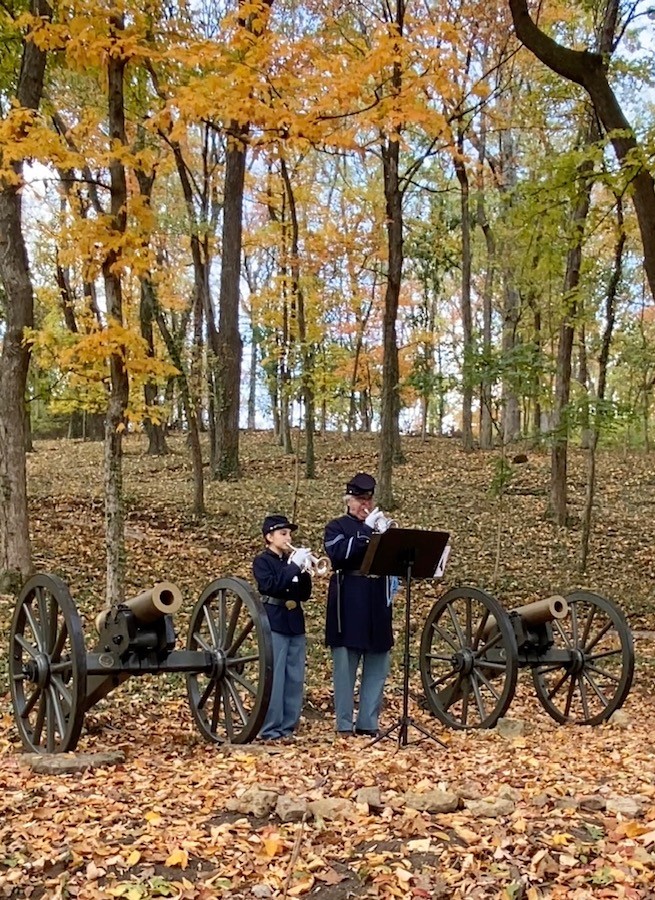
-
- Dedication Ceremony in progress
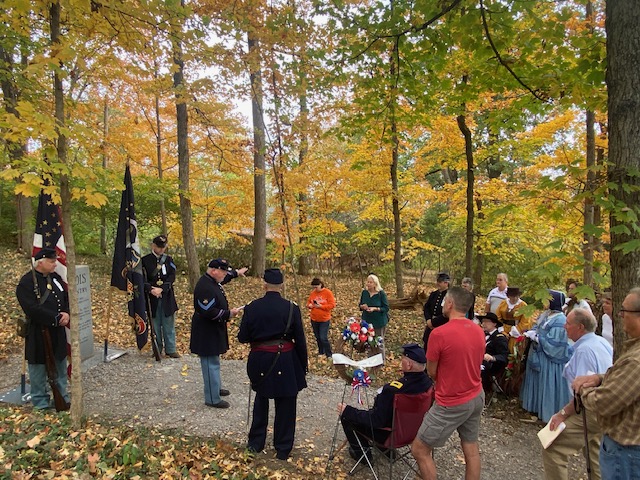
-
- Bill Ozier remarks at wreath placement
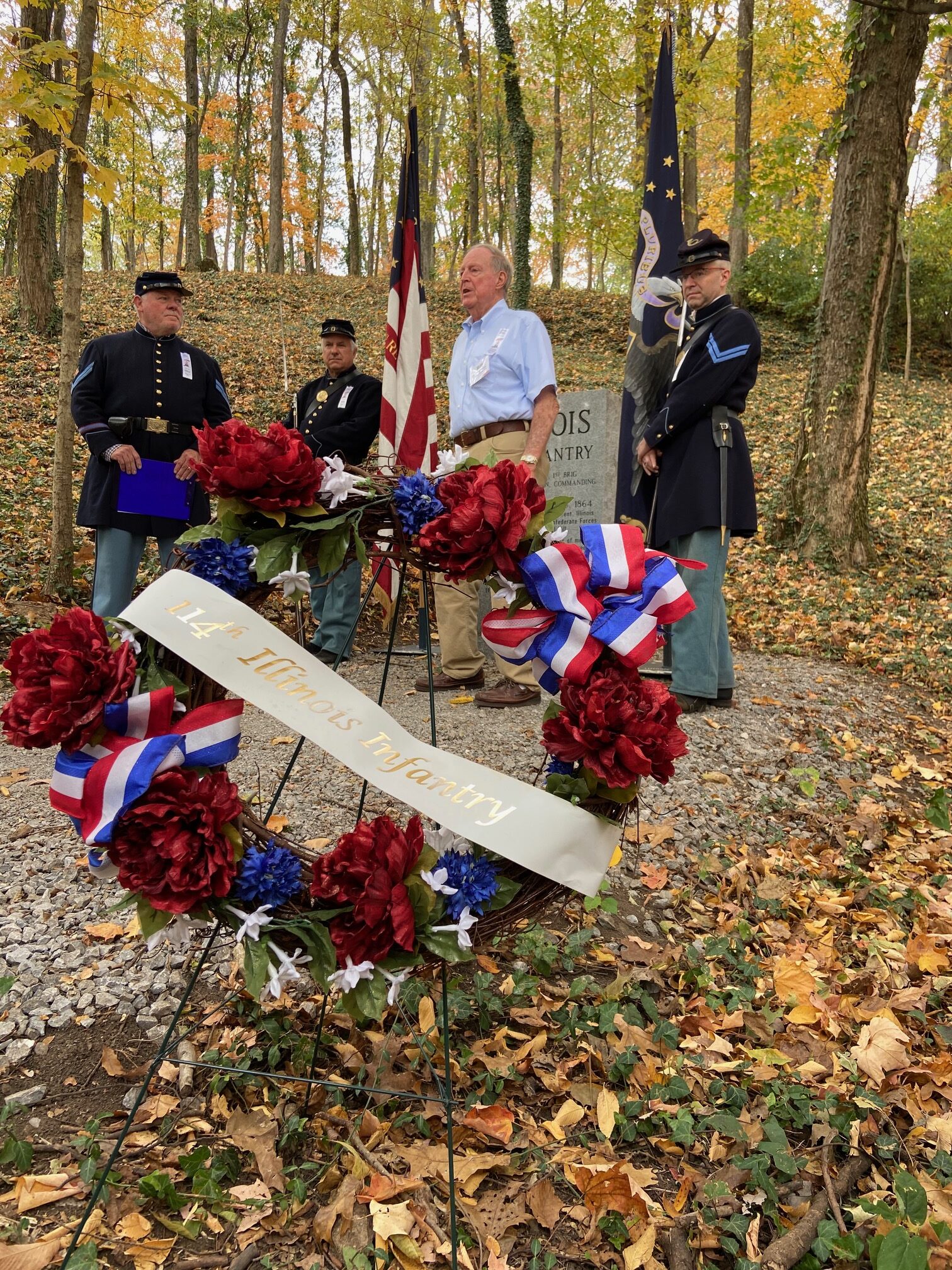
-
- BONT representatives Philip Duer, Jim Kay, Bobby Whitson, Bill Ozier and Sidney McAlister
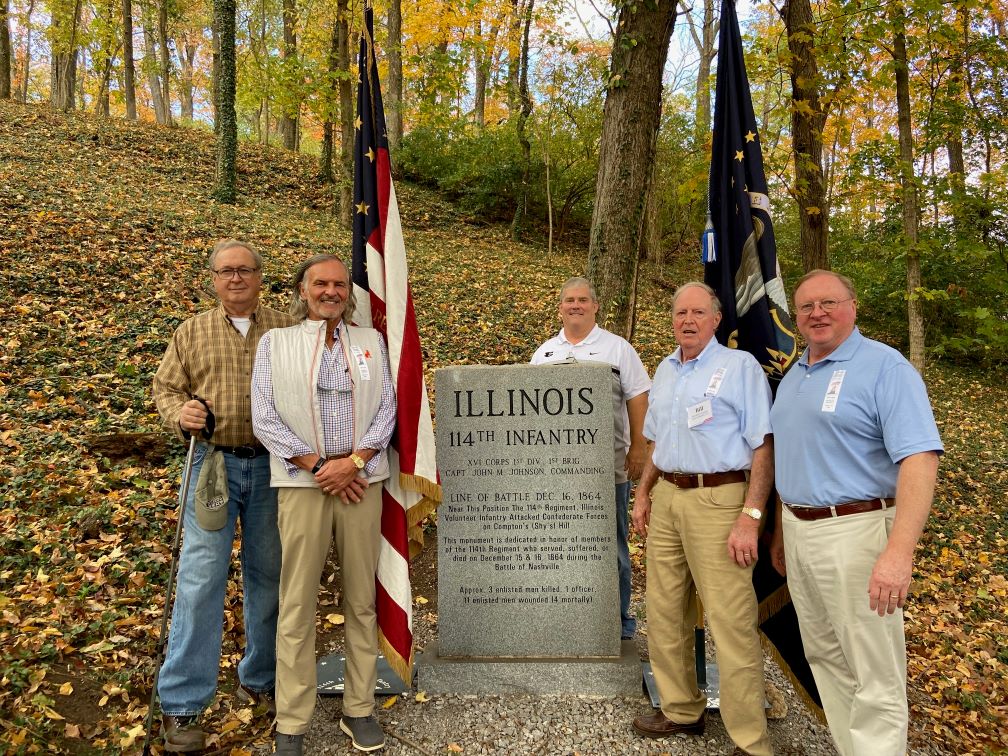
-
- Jim Kay watches Taps played at Howitzer battery
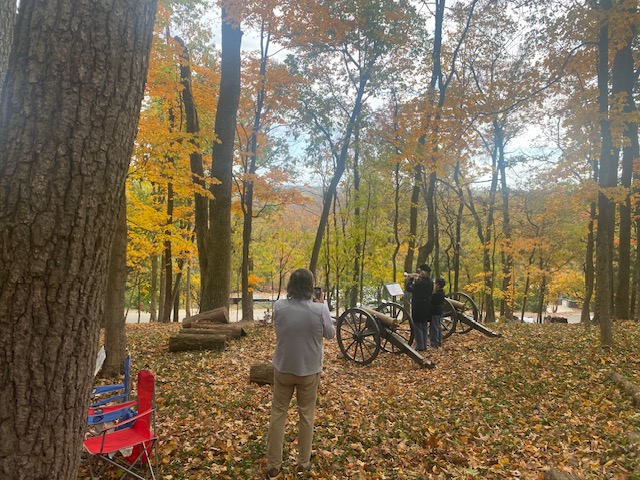
-
- Representatives of Illinois and Nashville contingents
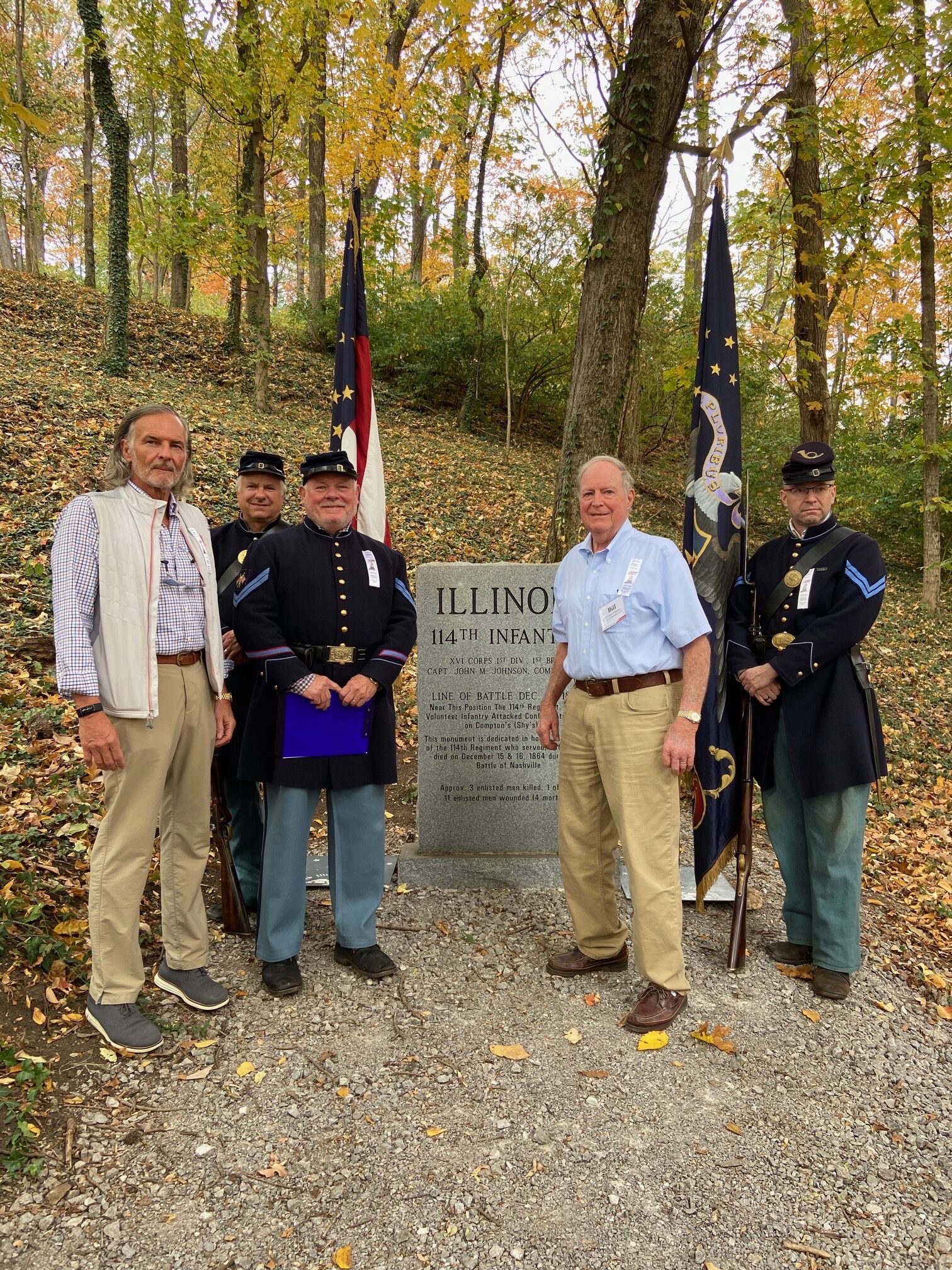
-
- Group portrait of 114th
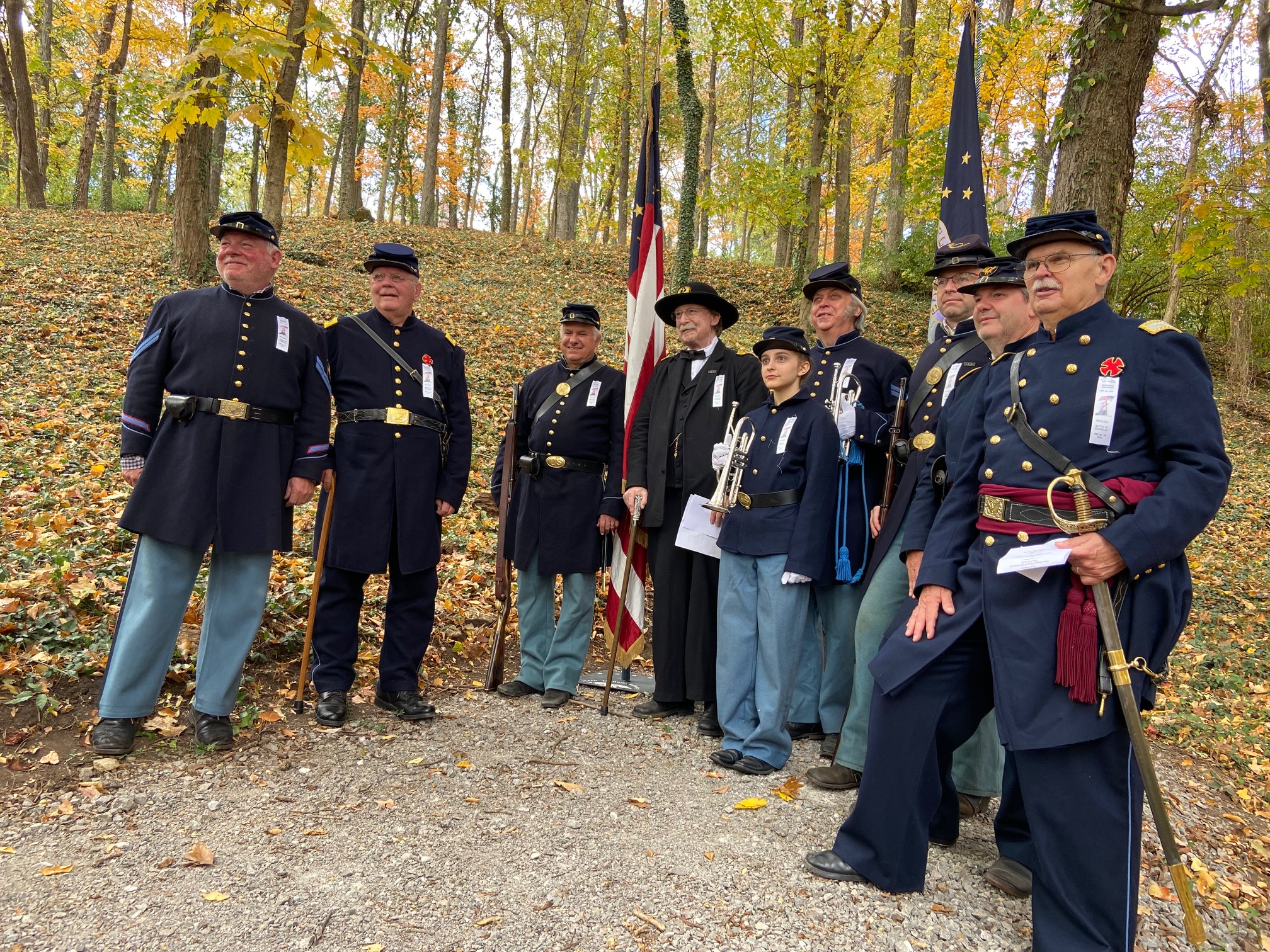
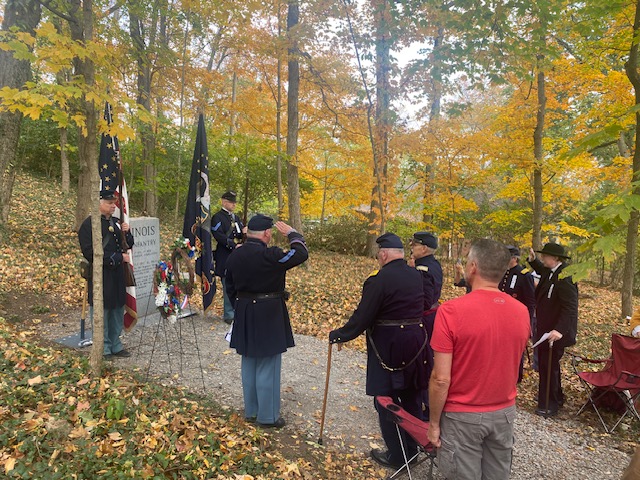
-
- See names in main story
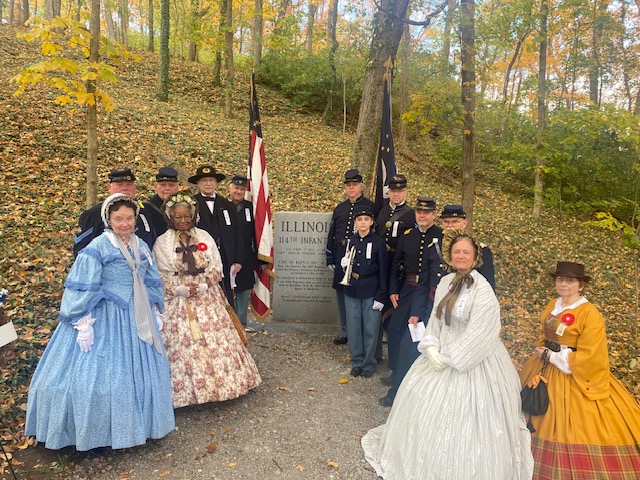
October, 2023
SHY’S HILL ARTILLERY BATTERY READY FOR ACTION AS REFURBISHED HOWTIZERS RETURN TO PLATEAU
Two Mountain Howitzers that had been removed from Shy’s Hill a year ago for repair were reinstalled at their historic location on the Hill on Oct. 14, 2023, after refitting and restoration by specialists in Pennsylvania.
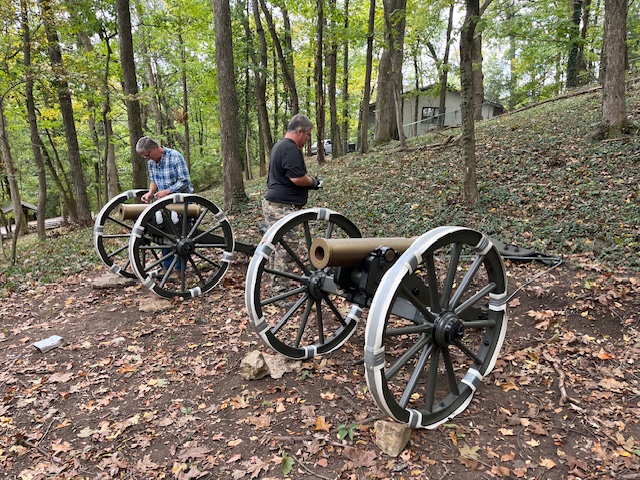
Mountain Howitzers return to the plateau on Shy’s Hill as Mark Martin and Bobby Whitson begin removing shipping material. Photo by Bill Ozier
The guns symbolize the howitzers that were wrangled up to this spot through darkness and muddy fields after the first day of the Battle of Nashville on Dec. 15, 1864, by the men of Confederate Capt. Rene Beauregard’s artillery battery. For a more complete summary of the acquisition and history of these field pieces, see earlier posts on the Shy’s Hill page.
The reinstallation was accomplished by Jim Kay, driving a 4-wheeler, along with BONT President Bill Ozier, Board member Bobby Whitson, and former Board member Mark Martin.
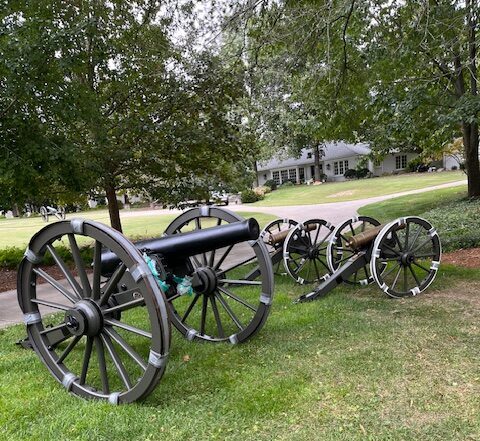
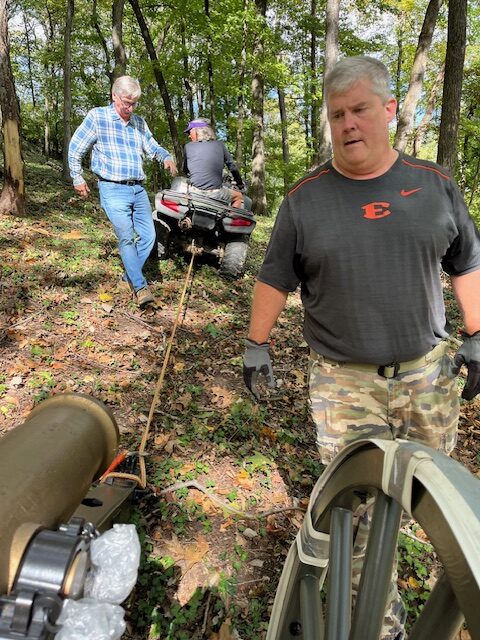
Mark Martin (L) and Bobby Whitson (R) assist Jim Kay on 4-wheeler to move howitzers into place. Mules and horses, not ATVs, were used in 1864. Photo by Bill Ozier
In addition, the 6-pounder field piece donated by the Woolwine family was also delivered back to BONT after being refitted with a new aluminum carriage. The cannon is destined to take its place on the battery line at Redoubt No. 1.
The reproduction cannon tube was donated by Ms. Graham Woolwine-Gilson, a Nashville native now living in Mamer, Luxembourg, and bears a bronze plaque stating, “Donated in memory of Porter Anthony (Tony) Woolwine.” The replica cannon tube was designed to resemble those manufactured by Noble Brothers, a large ironworks factory in Georgia producing pre-war items such as steam boat engines and locomotives but which turned some of its production to cannons for the Confederacy during the Civil War.
For a more detailed summary of the tube and its acquisition, see separate posts below on the Battle of Nashville Trust “News” page.
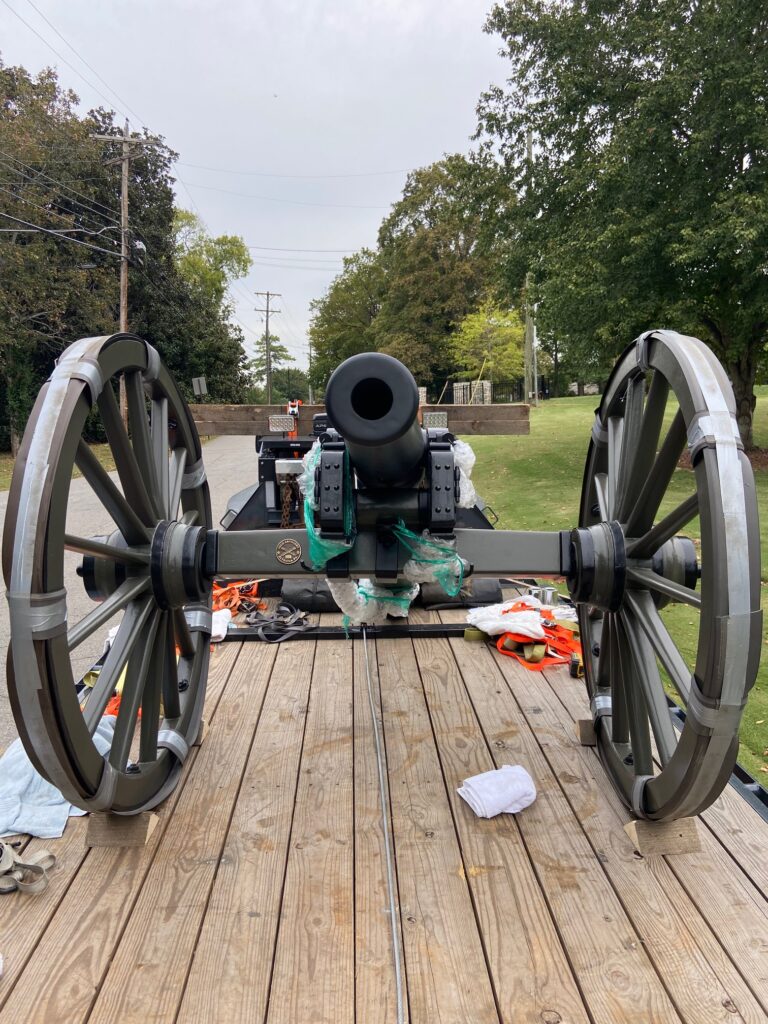
July 13, 2023
AFTER 159 YEARS, EXPERTS GET A FIRST-EVER PEAK AT THE BATTLE HISTORY REVEALED WITHIN “SUNNYSIDE’S” CEDAR LOGS
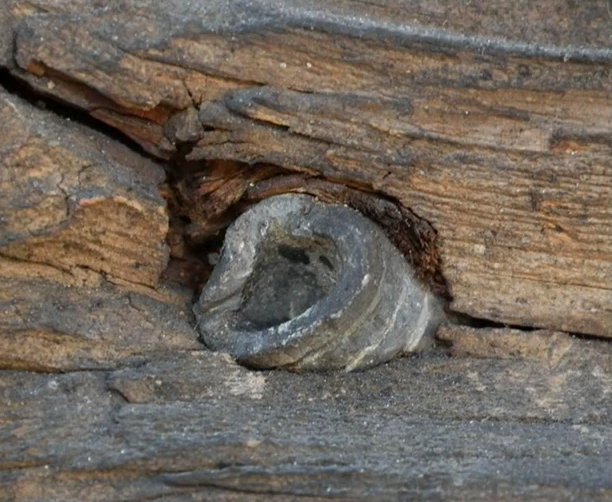 Bullets fired into the Sunnyside mansion’s log walls on Dec. 15, 1864, have been recovered, analyzed and preserved in a joint project of the Metro Historical Commission and the Metro Nashville Police Department, further clarifying initial fighting along the Confederate line on the first day of the battle.
The joint project took place during the renovation of “Sunnyside,” an antebellum mansion which was located in the “no man’s land” between the Federal and Confederate main lines on the first day of the Battle of Nashville.
The Historical Commission requested the CSI division of MNPD to analyze the portion of the 1852 house consisting of an original log structure that formed one wing of the mansion, using an array of technology including traditional trajectory and flight path techniques, 360 degree laser scanners, drones, and photogrammetry software. The Commission reported on the findings in a public meeting at Fort Negley Visitor’s Center on July 13, 2023. To view the 53 minute presentation, click HERE.
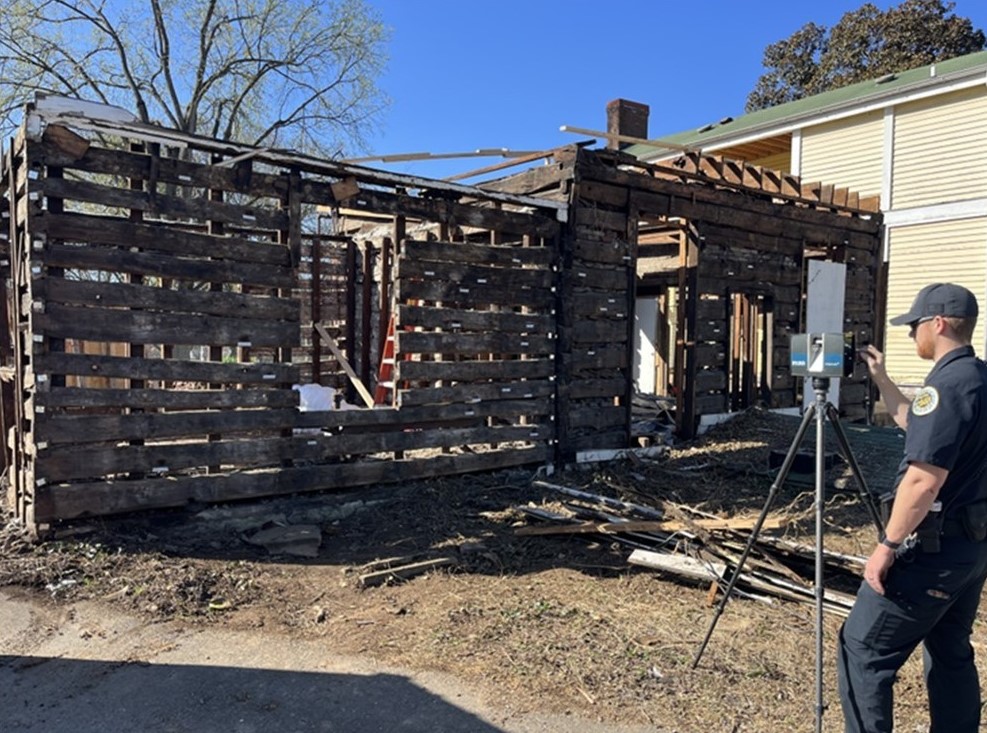
Above: 3-ring minie ball embedded in Sunnyside log; MNPD investigator using laser technology to determine trajectories of bullet hits in log wall
Preservation of the “battle history” data within the logs was imperative, since the renovation required removal of the log structure.
The findings were interesting and important, although not completely definitive. Despite this important work, historians were still not certain as to exactly what occurred at Sunnyside on Dec. 15, 1864. Even prior to this project, bullet holes had long been discovered in the porch and columns of the house, which was known to have been used as a hospital for wounded Union soldiers.
However, the MNPD work gave many more substantive clues as to events of that day 159 years ago. Among other findings, investigators discovered two embedded Federal bullets and 24 “defects” showing bullet strikes and their trajectories. Since Sunnyside was the site of the Confederate forward picket line, the bullet strikes were likely Union projectiles fired, as investigative techniques confirmed, primarily from the west and north, which was consistent with the known progression of the battle on that day. BONT strongly recommends viewing the video of the joint agency presentation (see link above) for a thorough understanding of the investigative techniques and findings.
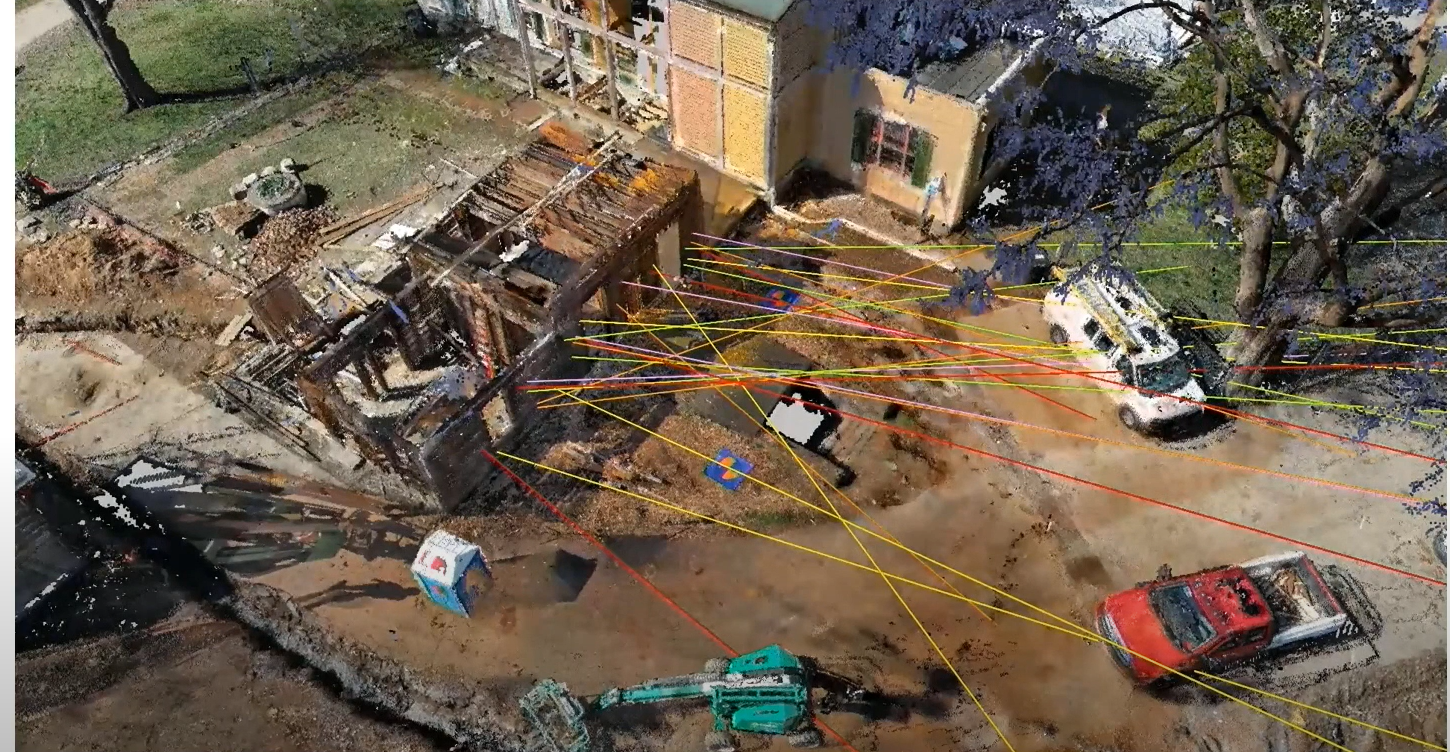
MNPD depiction of laser beams revealing flight paths of bullets that struck Sunnyside north wall; see video link above for full explanation (click to enlarge)
“Sunnyside” mansion had been built eight years before the Civil War for Mary Childress Benton, widow of Jesse Benton who had famously been involved in a pistol fight with Andrew Jackson in 1813. During construction, she had lived in a pre-existing log house, but liked it so much, she had it incorporated into the new frame house. By the beginning of the War, it was occupied by one of her relatives, Mary Douglass, and her husband Frank Sevier. After the war began, the house and grounds were bought by John Shute for his daughter, Mrs. Stephen Childress. After later ownerships by the Noel and Sevier families, the remaining 20.5 acres was sold in 1945 to the City of Nashville and in 1948, became known as Sevier Park.
Currently, the yellow mansion is the centerpiece of the Park in South Nashville and houses the Metro Historical Commission and Metro Historic Zoning Commission.
May 17, 2023
BONT HOSTS BOARD OF AMERICAN BATTLEFIELD TRUST AT “BATTLE OF THE BARRICADE” HISTORIC SITE
The Board of the Battle of Nashville Trust hosted a dinner event for the Board of the American Battlefield Trust (ABT) at the Richland Country Club on May 17, 2023, bringing the two Civil War preservation groups together at the site of a legendary battle.
The ABT was in the Nashville area for its annual meeting, being held in Franklin May 18 – 23, and joined the BONT Board at Richland, the site of which was involved in the Battle of the Barricade on the rainy night of Dec. 16, 1864 as Confederate troops attempted to buy time for their retreating comrades after the collapse of Hood’s line in the late afternoon of that day.
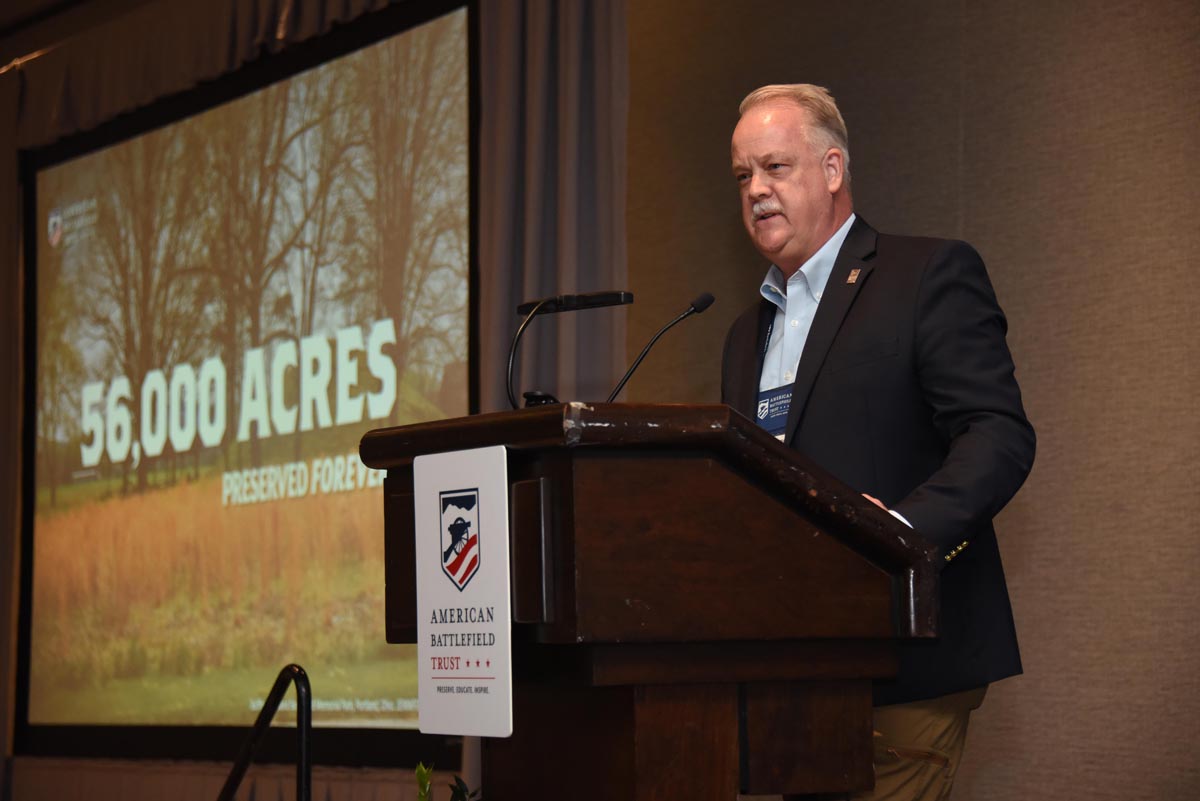
David Duncan, President and CEO of American Battlefield Trust, speaks at conference
Welcoming remarks were made by BONT President Bill Ozier and by former BONT president Jim Kay, who is also as past president of Richland CC and who spearheaded Richland’s preservation of its historical place in the Battle of Nashville, including placement of a Barricades historical marker on the site in 2008. Both expressed BONT’s interest in working with the ABT regarding ongoing preservation matters, especially the acquisition of additional Nashville battlefield properties.
The next day, BONT Board member Brandon Hulette was a guest lecturer at the main ABT conference with his presentation, “Old Story, New Tricks: New Insights Into Battlefield of Nashville, as was Jim Kay on the topic, “Failure From The Top: Hood’s Disaster Into Tennessee.”
The American Battlefield Trust is the premier national Civil War preservation non-profit organization, located in Washington, D.C. It is dedicated to promoting educational programs and heritage tourism initiatives to inform the public about the Civil War (as well as the Revolutionary War and War of 1812) and its significance in American history. The ABT has acquired and preserved 53,000 acres of battlefield land in 24 states at more than 145 battlefields.
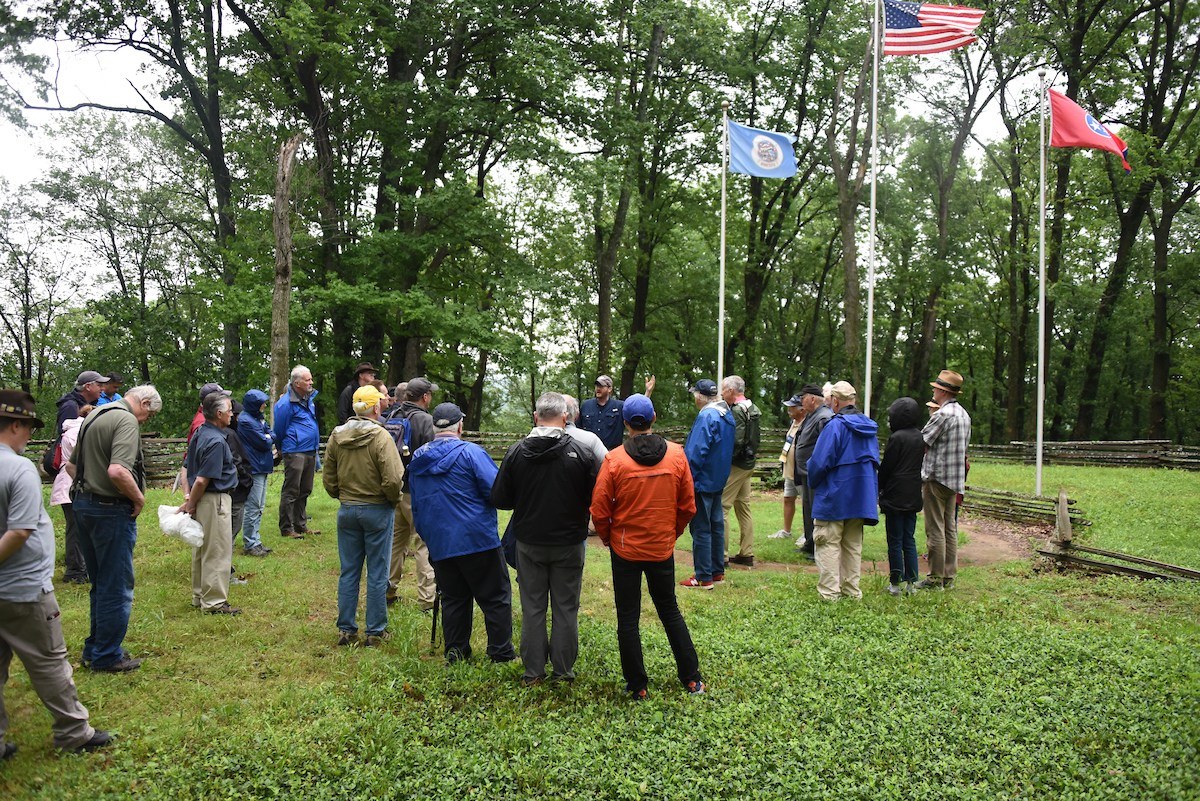
ABT Board tours Shy’s Hill as part of annual meeting agenda
The site of the BONT event welcoming the ABT represents an important chapter in the story of the Battle of Nashville. As Confederate troops fled south from their broken battle line on Dec. 16 with Federal Gen. James Wilson’s cavalry in hot pursuit, Col. Edmund Rucker’s 1200 men hastily threw up a barricade of brush, logs and fence rails across the macadamized Granny White Pike in the area now occupied by Richland CC. In the rain and dark of the night, Rucker’s men held off Wilson’s cavalry in hand-to-hand fighting until almost midnight, allowing the Confederate retreat to continue south down the Granny White and Franklin pikes.
February, 2023
NEW TRAIL TO THE SUMMIT MAKES SHY’S HILL MORE ACCESSIBLE TO ALL VISITORS
The Battle of Nashville Trust has completed construction of a new, revised trail up to the top of Shy’s Hill and it is now ready for visitors.
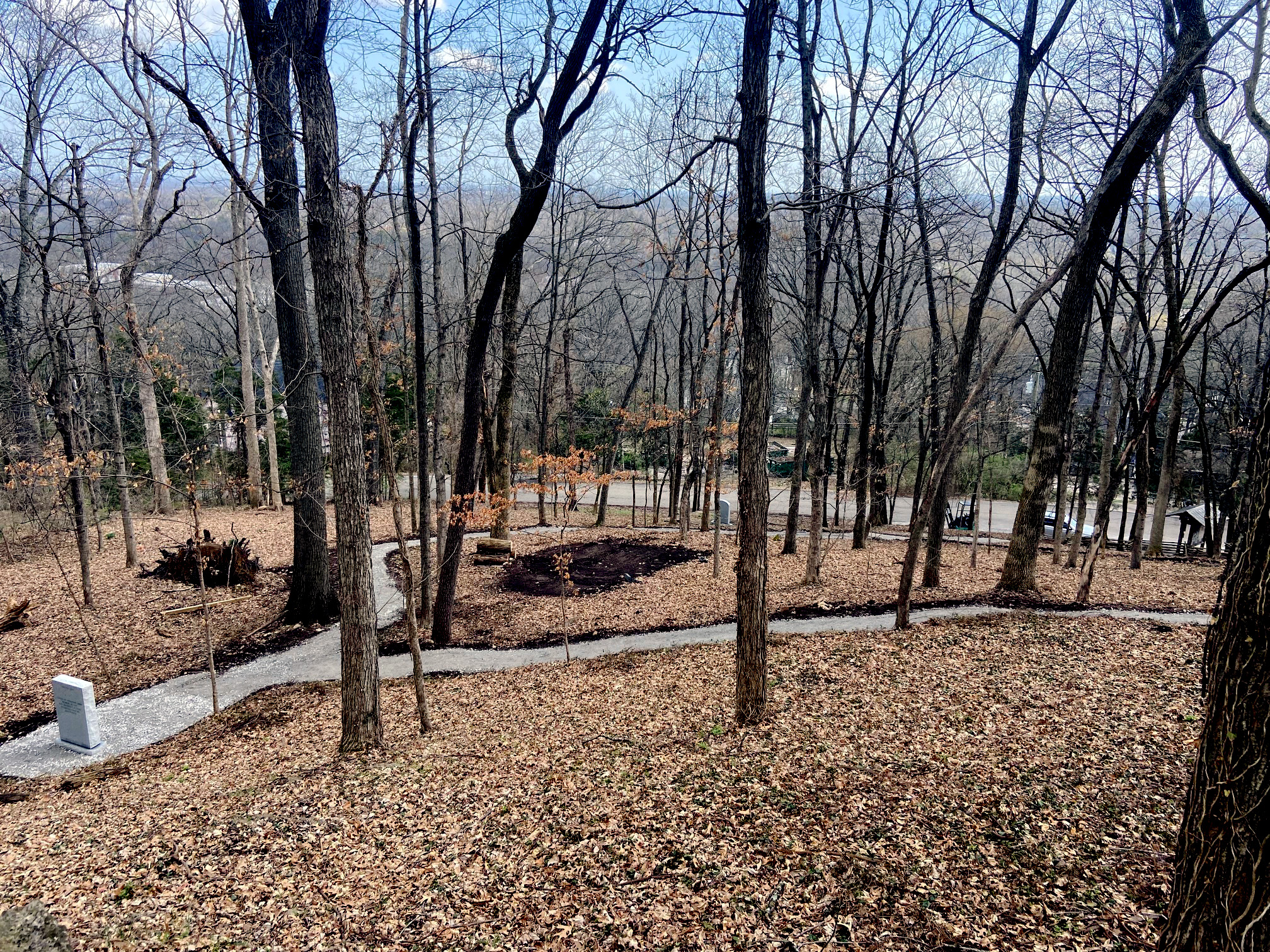
Photos by Bobby Whitson
The new design features updated steps up to the trailhead, a specialized stone surface that removes obstacles such as tree roots, and a newly plotted route up the steep slope that makes the climb easier.
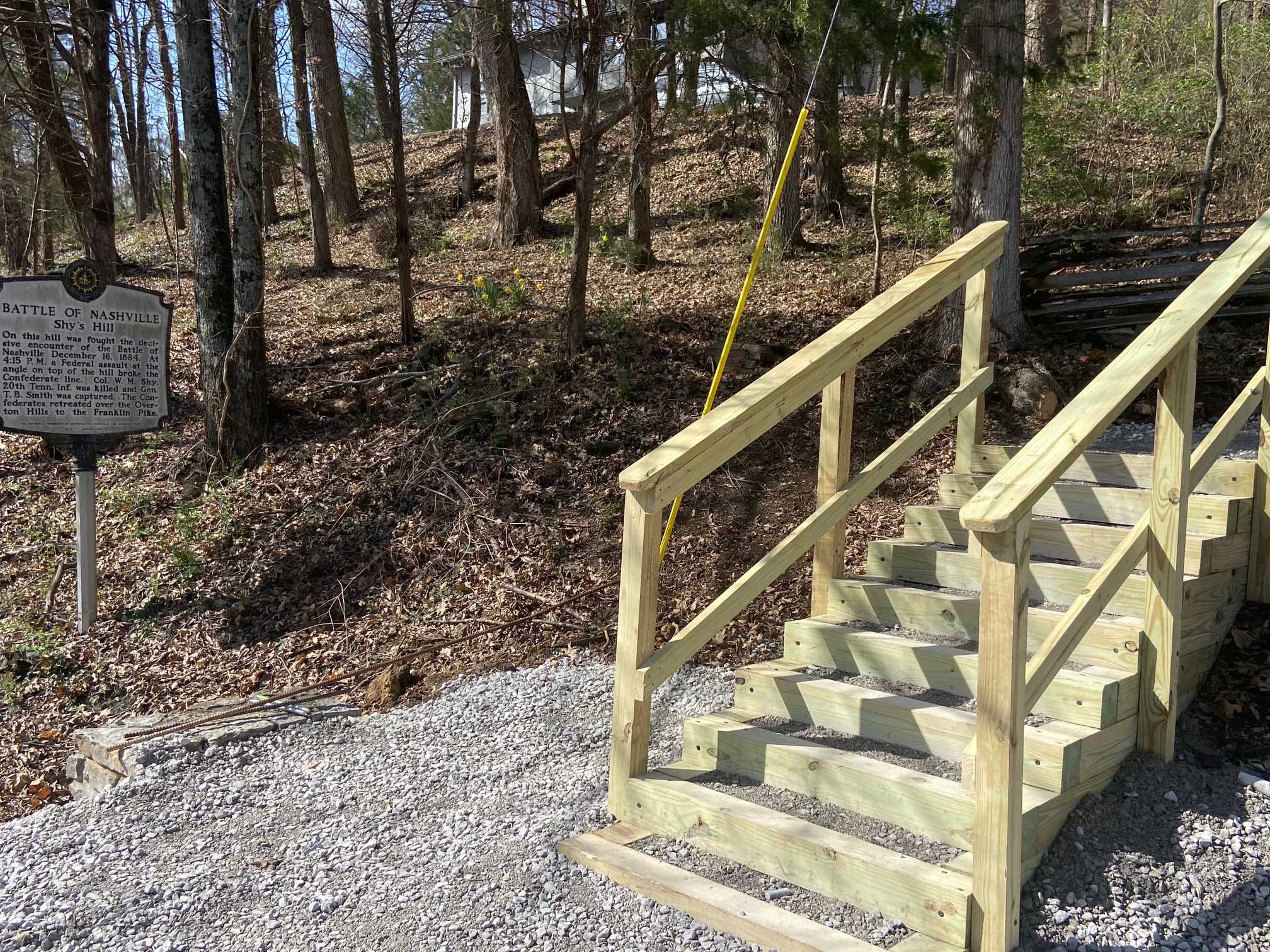 For all of the years the Trust has had ownership or control of the Shy’s Hill battleground, maintaining a safe and accessible trail to the top has always been a challenge due to the extreme elevation angle. In an attempt to finally correct that problem, BONT president Bill Ozier said the Trust retained the services of the Atlanta trail-design firm, “Tailored Trails,” which is also rebuilding the walking trails in Nashville’s Percy Warner Park. The trail surface is designed to withstand water erosion to the greatest extent possible on extreme grades like Shy’s Hill.
BONT also had a gravel pad built for the most recent monument addition to the Hill, representing and honoring the 114th Illinois Infantry which was involved in the battle of Dec. 16, 1864, and suffered casualties in the assault on this high ground.
President Ozier stressed that BONT’s board and Shy’s Hill team are working on plans to erect a granite monument at the summit, honoring the various Confederate units that defended the hilltop against the overwhelming Union forces arrayed below it.
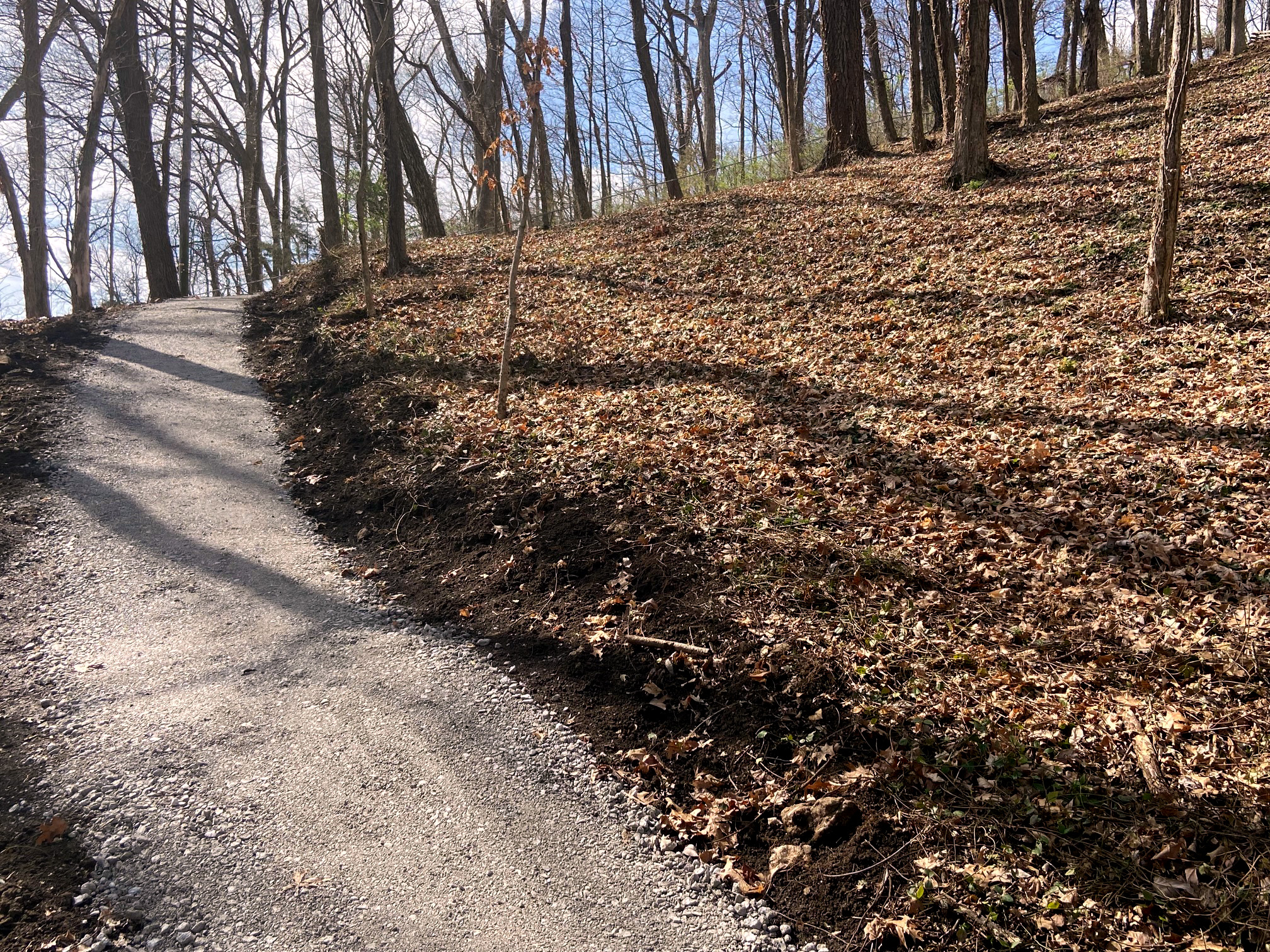
Photos by Bobby Whitson
February, 2023
BONT Board Member John Banks Takes You On An Amazing Civil War Road Trip With His New Book
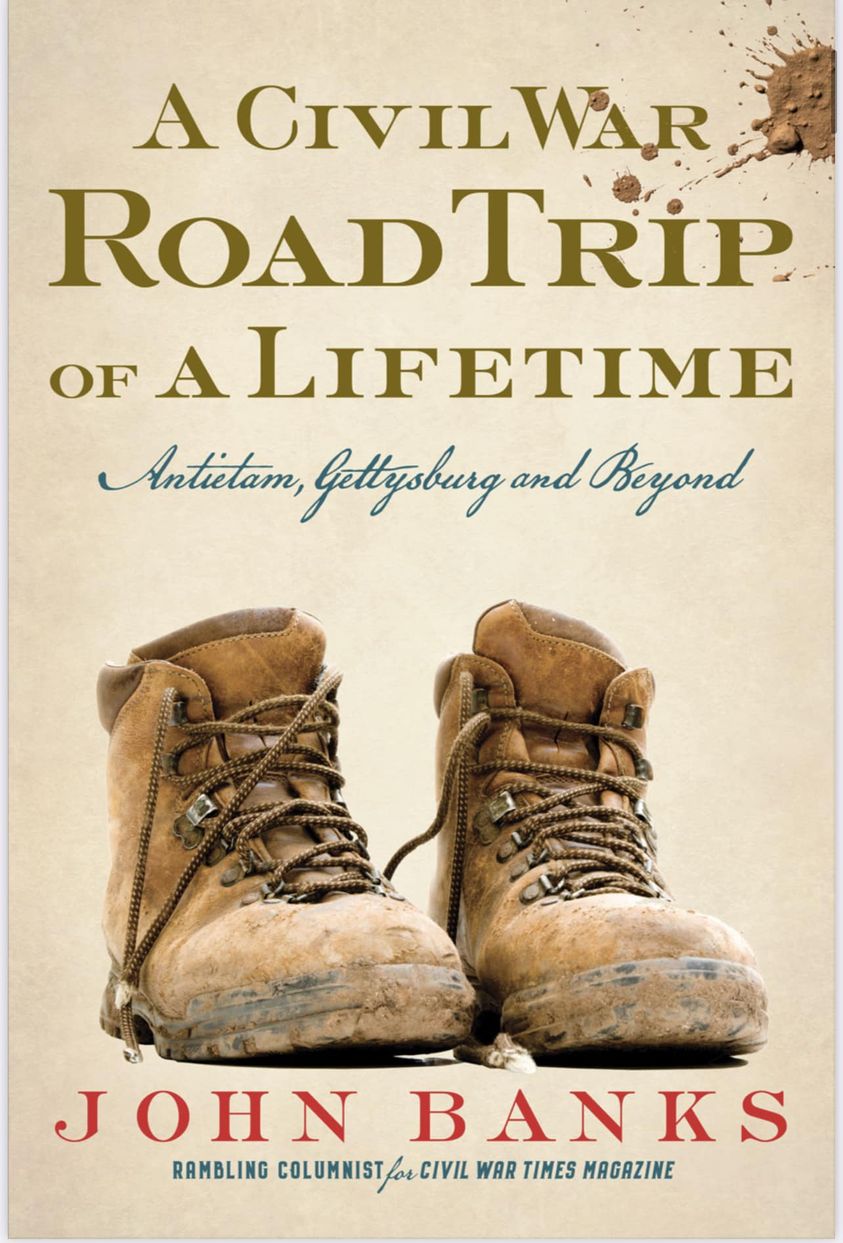 Over more than a year, Battle of Nashville Trust board member John Banks crisscrossed the country—communing with Civil War spirits, admiring a sunset at the Andersonville POW camp, riding on the back of an ATV on a Mississippi battlefield, enduring a “ghost investigation” in Gettysburg, and much more.
In Tennessee, he ventured into the woods with a moonshiner’s son to inspect graves of U.S. Army soldiers killed at the obscure Battle of Dug Hill, underwent hypnosis in a fort in Franklin, and eluded traffic on Granny White Pike in Nashville in a quest to learn more about a Medal of Honor recipient.
Banks writes about these adventures in his third book, A Civil War Road Trip Of A Lifetime (320-plus pages, 89 photos). It will be available in late spring. The book is available for pre-ordering by clicking HERE.
Banks is also author of Connecticut Yankees at Antietam and Hidden History of Connecticut Union Soldiers. A columnist for Civil War Times magazine, he has also written for such notable publications as the New York Times, Dallas Morning News and America’s Civil War magazine.
When he’s not submitting articles to publications and writing books, he also writes a well-respected Civil War blog, “John Banks’ Civil War Blog.”
A longtime journalist (Dallas Morning News and ESPN), Banks is also secretary-treasurer of “The Center for Civil War Photography” and a board member of the “Save Historic Antietam Foundation” in addition to his work with the Battle of Nashville Trust board.
Author John Banks and wife at Mule Day Celebration in Columbia, TN. As John clarified when he submitted this photo, “I am at far right.”
February, 2023
KRISTA CASTILLO, FORT NEGLEY HISTORIAN AND CIVIL WAR PRESERVATIONIST, ANNOUNCES RETIREMENT AFTER 13 YEARS AS MUSEUM HEAD
Krista Castillo, a veteran voice in illuminating the history of the Civil War in Nashville, especially the significance of Fort Negley, has announced her retirement after 13 years as Museum Coordinator at the Fort Negley Visitors Center.
A long-time friend of the Battle of Nashville Trust, she has been a valuable and important partner in the preservation and interpretation of not only Fort Negley, but also the history of the Battle of Nashville and the city’s place in the Civil War.
 Krista obtained her undergraduate degree in history from Mount Union College, followed by a Masters in Military History from Austin Peay State University, and immediately put that background to use in helping others understand Nashville’s involvement in the War, and taking a leadership role in the preservation and interpretation of the Fort. In 2010, she became the Museum Coordinator at Fort Negley. Her role in that position has been extensive, including directing and supervising the overall operation, programming, special events, research, partnerships, management projects, exhibits, fund-raising efforts, volunteers and staff of Fort Negley Visitors Center and Historical Park to fulfill the missions of the site and the Parks Department.
In addition to her professional role at Fort Negley, Krista has also served as president of the Nashville Civil War Roundtable, which she helped create in 2009. Philip Duer, former president and long-time board member of BONT, said he has known her since her early days at Negely, adding, “She was a driving force in establishing the present iteration of Fort Negley and foundational in creating the Nashville Civil War Roundtable which is based at the visitor center where monthly meetings are held. Krista, as President along with Greg Biggs of the Clarksville Civil War Roundtable and as Program Chair for NCWRT, scheduled a wide range of speakers to tell the often unknown, or in some cases, long overlooked stories of the Civil War.”
Krista has been a member of the Inter-Museum Council of Nashville (ICON) since 2014, including serving on its board and as membership chair. ICON is a professional organization “committed to encouraging the development and education of Nashville-area museums and cultural institutions.”
She was also instrumental in establishing the Friends of Fort Negley, a non-profit volunteer organization whose members and donations support and advocate for the preservation of Fort Negley and public accessibility to the surrounding Park area. The FOFN will be hosting an invitation-only farewell reception for her on Wed., Feb. 22, 2023.
Duer, speaking on behalf of the Battle of Nashville Trust board and membership, further noted that “Krista will be sorely missed. She was always generous with her time and energy in opening the fort and its wonderful facilities to BONT and many other historical groups and it is hoped that the next museum coordinator will follow her lead. They will have big shoes to fill.”
December, 2022
“NASHVILLE SITES” LAUNCHES NEW BATTLE OF NASHVILLE ON-LINE DRIVING TOUR
 NashvilleSites.org has released a new “driving tour” that enables users to drive to several key Battle of Nashville locations while learning about the sites through narration, text, and/or images. Click on Nashville Sites Civil War Driving Tour to join the tour.
The basic tour presents an overview of 11 Battle locations, beginning with the surrender of Nashville and moving on through sites such as Fort Negley, Granbury’s Lunette, Redoubt No. 1, Shy’s Hill, Sunnyside Mansion, and the Battle of Nashville Monument. “Nashville Sites” states that the tour experience can be customized by visiting one or all of the tour stops in any order, either in-person by driving, or by visiting virtually using any device. Each stop has audio narration, a map, and historic images.
The Civil War Driving Tour was sponsored by the Tennessee Civil War National Heritage Area and the Center for Historic Preservation at Middle Tennessee State University. Nashville Sites offers more than 30 free, self-guided walking and driving tours about Nashville history that can be taken virtually or in-person.
November, 2022
BONT MAKES AVAILABLE A FAMOUS “AUTOGRAPH BOOK” FROM UNION PRISON WHICH HAS LINK TO TRAGIC EVENT IN NASHVILLE
The Battle Of Nashville Trust (BONT) has been given permission to display a rare Federal prison “autograph book“ which is historically important on its own, but which also links one of the most tragic stories of the Battle of Nashville to one of the Union’s most well-known prisoner of war forts.
During the Civil War, the Federal army established the Johnson Island Civil War prison and fort on a 300 acre island in Lake Erie, near Sandusky, Ohio, and during its three years of operation, it housed more than 15,000 Confederate prisoners of war. Initially, most of them were officers, though other ranks were added as the war progressed.
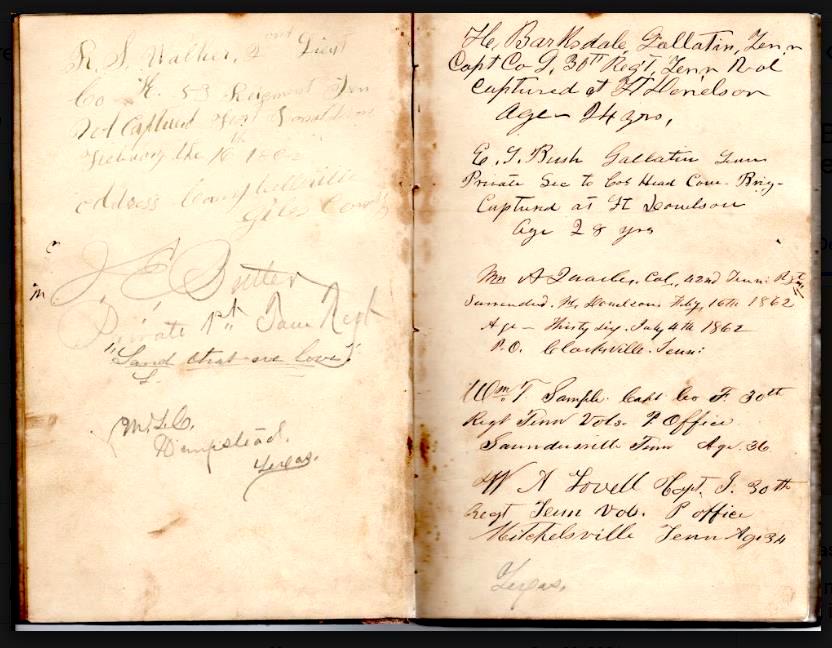
Opening pages of the Butler “Autograph Book.” Click the image to see all of the original and transcribed pages
One of its most famous Confederate POWs who spent time there was Brig. Gen. Thomas Benton Smith, whose name is associated with one of most well-known atrocities of the Battle of Nashville. Gen. Smith, a native of Rutherford County, Tennessee, had begun his military career with the 20th Tennessee Infantry Regiment. By the time of the Battle of Nashville, he had advanced to command of Tyler’s Brigade of Bate’s Division, positioned on the west side of Shy’s Hill on the second day of the Battle.
Smith was among those who surrendered on Dec. 16, 1864, but while in Union custody behind the lines, and defenseless, reports indicate that he was viciously struck in the head with the butt-end of a sword by Union Col. Colonel William L. McMillen, who had led McArthur’s First Brigade charge up the north slope. The attack on the unarmed Smith resulted in his sustaining a fractured skull and permanent, debilitating brain injury.
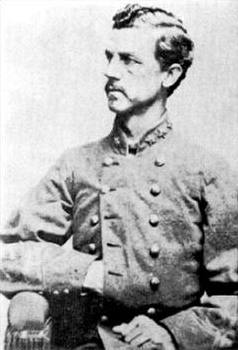
Brig. Gen. Thomas Benton Smith
Gen. Smith was transported to Johnson Island prison and later to Fort Warren in Massachusetts. After his release in July, 1865, he was unable to live a normal life due to the head trauma caused by McMillan’s assault, and he spent the last 47 years of his life in Nashville’s Central State Hospital for the mentally Ill. He died in 1923 at the age of 84. In his honor, the road on which BONT’s Shy’s Hill trailhead is located is named “Benton Smith Road.”
It was a common practice at the Johnson Island prison for the inmates to procure writing materials in order to record the names of their fellow prisoners in so-called “autograph books.“ One of these extremely rare books was inherited by Nashville attorney Taylor Sutherland who, realizing its significance, donated it to a nonprofit which preserves the history and artifacts from the Island fort, “The Friends And Descendants Of Johnson’s Island Civil War Prison.” As part of the donation arrangements, the nonprofit agreed to not only scan all of the pages of the book showing the original script and notes of the Confederate inmates, but also to have all of the script transcribed for easy reading.
The Friends group, as well as Taylor Sutherland, have granted permission to BONT to post the link for the scans of original pages, as well as the transcribed pages, for review by those interested in the island and his connection with Nashville. The book was begun by prisoner William Reuben Butler during the period April 9 through Sept. 1, 1862. Gen. Smith’s name does not appear in the book because his internment occurred in 1864; the officers included here were mainly those captured at Ft. Donelson and Shiloh. To view the original scanned pages and transcriptions, click the photo above of the opening pages of the Book, or on this link: Butler Autograph Book.
October 21, 2022
INSTALLATION BEGINS ON IMPORTANT “CIVIL WAR TRAILS” SIGNAGE HONORING TRAIL-BLAZING AFRICAN AMERICAN SOLDIERS
Editor’s Note: Since the posting of this story, the Civil War Trails marker honoring the USCT soldiers in the Battle of Nashville has been erected and is available for public viewing. For more, see our story on the dedication ceremony.
The Battle Of Nashville Trust’s campaign to have two new Civil War Trails markers honoring United States Colored Troops soldiers who fought in the Battle of Nashville moved a step closer to reality on October 21, 2022, when work began on the first of the structures.
Drew Gruber, Executive Director of Civil War Trails, and his team, installed the initial directional sign and interpretive signage stand on the grounds of STEM Prep High School. USCT troops advanced into this area on the first day of the Battle of Nashville on Dec. 15, 1864.
The Battle of Nashville Trust (BONT) initiated contact in early 2022 with Civil War Trails, spearheaded by BONT board member John Banks. The plan ultimately came together after BONT received grants from the Tennessee Wars Commission to fund the marker, and BONT board member Clay Bailey secured permission for its placement on the school property at 1252 Foster Avenue, marking the USCT’s involvement on the first day of the battle. The grant also funds a second marker to be placed later in the area of the Dec. 16, 1864, battle at Peach Orchard Hill.
The historic area where the new Foster Avenue marker is being installed is only a half mile southeast of the important sites on Polk Avenue, including the preserved remnants of Granbury’s Lunette as well as the first-ever historical marker commemorating the USCT‘s role in the Battle of Nashville, erected in October, 2021, by the Tennessee Historical Commission, signifying the important and unique role played by African-American troops in the battle.
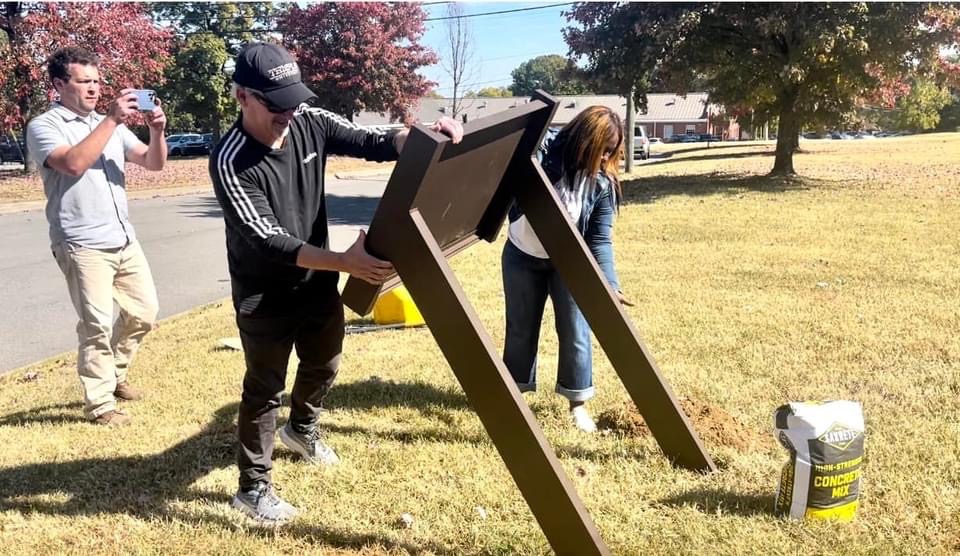
These photos show Director Gruber and his CWT assistants placing the initial structures for the marker and interpretive signage. The final story board will be placed soon, explaining the military and historical significance of the area. The Civil War Trails program works with historical groups within a six-state area encompassing major Civil War battlefields to help visitors locate and understand notable Civil War events, and “to put them in the footsteps of the generals, soldiers, citizens, and the enslaved who found themselves in the midst of this Civil War.“ Civil War Trails has erected some 1,200 interpretive signs since 1994, 350 of which are located throughout Tennessee.
BONT is continuing its efforts to locate a suitable spot for a CWT marker at Peach Orchard Hill, commemorating a battle that featured battlefield bravery by USCT troops so remarkable that it drew praise from commanders for both armies in their reports.
Sept. 17, 2022
SHY’S HILL HOWITZERS REMOVED FOR REPAIR AND REFITTING WITH NEW WEATHER RESISTANT CARRIAGES
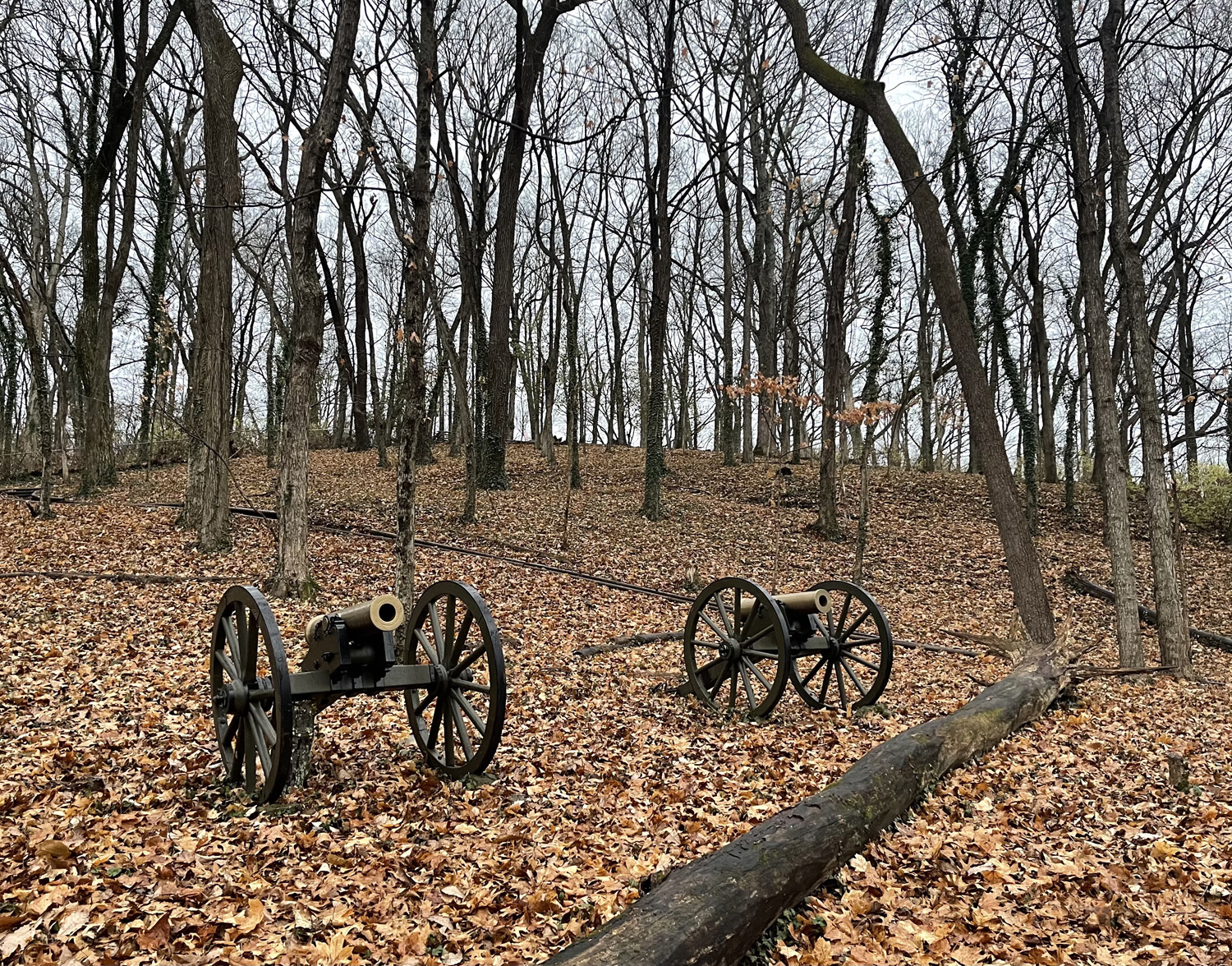 The two “Mountain Howitzers” located on the lower east side of Shy’s Hill were removed by BONT board members on Sept. 17, 2022, after the replica field pieces became too weather-damaged to be appropriate for display, and will be returned after repairs.
The two replica mountain howitzers were placed on the Hill in April, 2019, to demonstrate the approximate location of the only artillery pieces that were in service there on Dec. 16, 1864. However, wood used in construction of the carriages had deteriorated, requiring their removal.
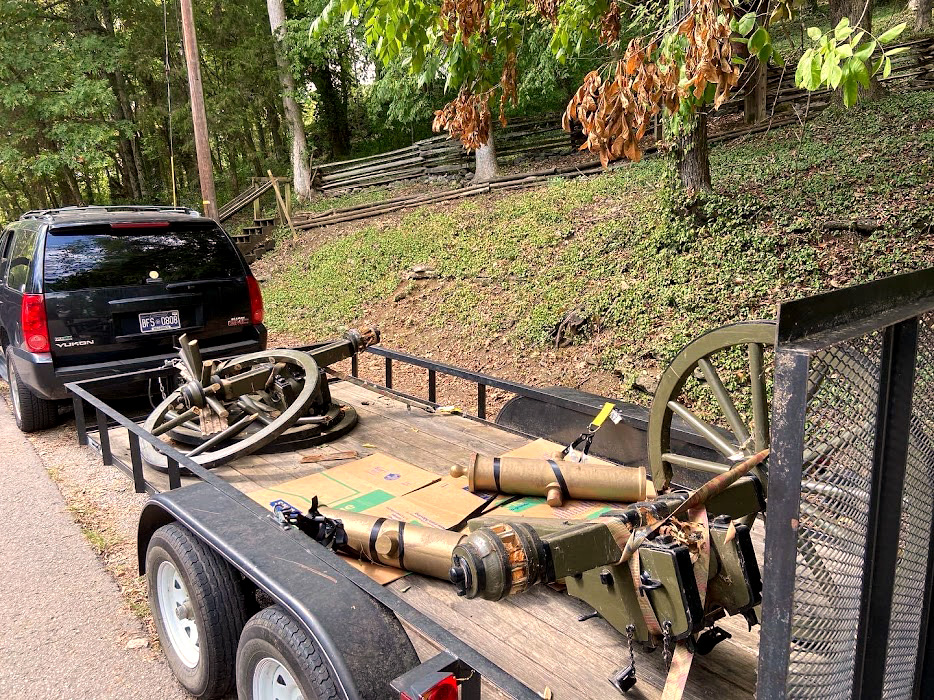
Howitzer tubes and broken carriages loaded aboard BONT board member Bobby Whitson’s much-used “ol’ warhorse Bessie” for transport to repair facility
“With the leadership of Bobby Whitson, chainsaw work by Jim Kay, strong backs of Clay Bailey, Jim Atkinson, Jimmy Pickel, and the assistance of gravity, we were able to decamp the two artillery pieces from the slope of Shy’s Hill! We look forward to their return with new carriages,” said BONT president Bill Ozier, who was also on the work detail.
BONT will have the cannon barrels refurbished and refitted with aluminum carriages, and they will be returned to the site as soon as possible. The location was determined by BONT historians to be the most likely area where Hood’s troops were able to assemble a small battery of artillery during the night of Dec. 15 and early morning hours of Dec. 16, 1864.
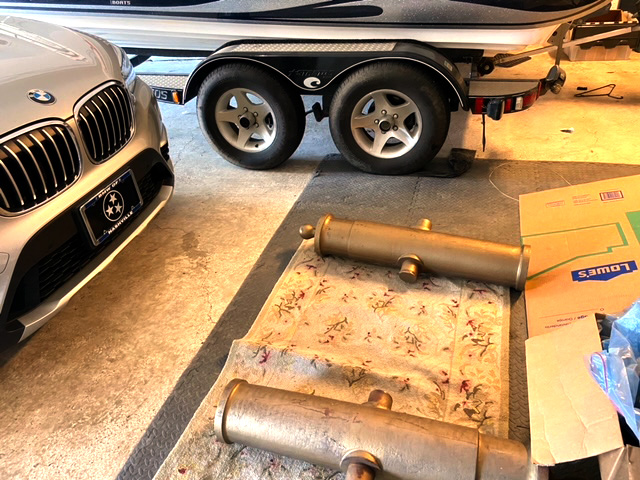 After the Confederate line was forced to fall back from its initial positions on Dec. 15, 1864, Maj. Gen. Benjamin Cheatham’s corp had only 34 artillery pieces available for service for the second day of battle, and only a handful of these could be transported through the night and the boggy cornfields to a flattened plateau on the east side of the Hill. Maj. Gen. William Bate had apparently found a rough country road in this flattened area, believed to be located in the vicinity of the current Benton Smith Rd. and the Shy’s Hill trail head.
By first light on Dec. 16, the Shy’s Hill battery, which was under the command of Capt. Rene T. Beauregard, consisted of a small number of the lighter and more portable howitzers. They were later supplemented on the plateau with four other smoothbore field pieces under the command of Maj. Daniel Truehart. Many others, especially the heavy Napoleons, could not be dragged through the thawing mud of the fields, especially under the difficult conditions of a nighttime retreat and establishment of a new line of battle.
The “Mountain Howitzer” was a bronze smoothbore 12-pounder field piece that got its name from its development in the 1830s as an easily transportable field piece for use in the western mountain terrain of the Indian and Mexican-American wars. It was much more portable than the larger artillery such as the 2,500 pound Napoleons, the workhorse artillery of the Confederate army. The howitzer was relatively lightweight and could be disassembled into three pieces for easier transportation. It fired explosive ordnance as well as case and canister, with a maximum range of about 1000 yards.
June, 2022
FLAGS AND FINIALS: NEW BOOK EXPLORES RARE CIVIL WAR TOPIC
 Civil War historian Del Thomasson of Ringgold, Georgia, has recently published two books with text and numerous depictions of flagstaff finials that were used during the Civil War.
The first edition of Flagstaff Finials, Toppers, & Ferrules came out in July, 2021, but had sold out by December. In January, 2022, he published a second edition, which he says is selling briskly. He informed BONT that he and his wife “traveled to state archives in several states or worked with state archives to obtain pictures of several original pieces including Virginia, South Carolina, Michigan, Wisconsin, Pennsylvania, Illinois, Missouri, Alabama, etc. Several of the pictures in the book are from private collectors, ground recoveries, and my own collection.”
Thomasson’s 250-page book is self-published and self-distributed. It contains approximately 366 color pictures, and several essays on regiments, color bearers, or individuals. The book can be purchased for $45.00 (plus shipping cost) by contacting the author directly at delthomasson@outlook.com.
March 1, 2022
NEW BOOK DESCRIBES THE MASSIVE FORTIFICATION OF NASHVILLE DURING THE CIVIL WAR, AND HOW THIS SET THE STAGE FOR FEDERAL VICTORY IN THE WESTERN THEATER
Mark Zimmerman, noted Nashville Civil War historian and author, has published a new book, Fortress Nashville: Pioneers, Engineers, Mechanics, Contrabands & U.S. Colored Troops, which takes its place as the definitive work on the massive fortifications of Nashville during the Civil War.
 Zimmerman, a longtime member and supporter of the Battle Of Nashville Trust, is a former newspaper journalist and publications manager who has now written eight books on the general history of Middle Tennessee, four of them focusing on the Civil War, including the Battle of Nashville. Fortress Nashville follows the highly-praised Mud, Blood & Cold Steel: The Retreat From Nashville December 1864, published in 2020. He is also the author of Guide To Civil War Nashville (2nd ed., 2019), a must-have overview of all aspects of the Battle of Nashville.
Fortress Nashville is the first major work in which a historian’s research has so comprehensively described the massive fortification of the city, but which also has so clearly explained why this extraordinary task was critical to the war strategy of the U.S. Army. [Note: see excellent review of Fortress Nashville in “Civil War Books And Authors,” an independent, non-fiction American Civil War book review journal, below.]
In early 1862, the Federals quickly and easily occupied the strategically important city of Nashville, and recognizing its military importance, immediately undertook all possible measures to make certain it would never lose this geographic and logistic advantage. Nashville’s network of numerous rail lines radiating out from the City, and its port facility on a significant navigable river, dominated the Federal war effort in the Western Theater. Zimmerman concludes that Federal control of the heavily fortified logistics and transportation hub enabled the successful military operations of U.S. Gens. Grant, Sherman, and Thomas.
In November, 1864, when Confederate General John Bell Hood brought his Army of Tennessee northward from Franklin, Nashville was the most heavily-fortified city in the country other than Washington, D.C. The Confederate army had no reasonable option to attack “Fortress Nashville“ because of its impenetrable defensive works. After the Confederate retreat on December 16, 1864, and Lee’s surrender to Grant in 1865, the immense defensive structures were disassembled and the materials sold off for approximately $30 million. Left standing, however, was the U.S. Army‘s crown jewel of its fortification system, Fort Negley, now serving not only as a reminder of the Federal occupation, but also as a symbol of African-American involvement with construction of the Fort, including organization of the United States Colored Troops which fought during the Battle of Nashville.
Zimmerman‘s book is a significant undertaking. Consisting of 344 pages, it not only pulls together in-depth research about Nashville’s infrastructure during the War, but also supports its analysis with 80 illustrations, charts and graphs, 204 photos, 76 maps, and numerous original artworks, including those of Philip Duer, former president and current board member of the Battle Of Nashville Trust. Other topics explored include the Pioneer Brigade, the First Michigan Engineers, U.S. Military Railroads, fortification technology and design, military hospitals, army depots and garrison towns, the Confederate river forts, fortifications associated with the epic Battle of Nashville, and antebellum pioneer forts.
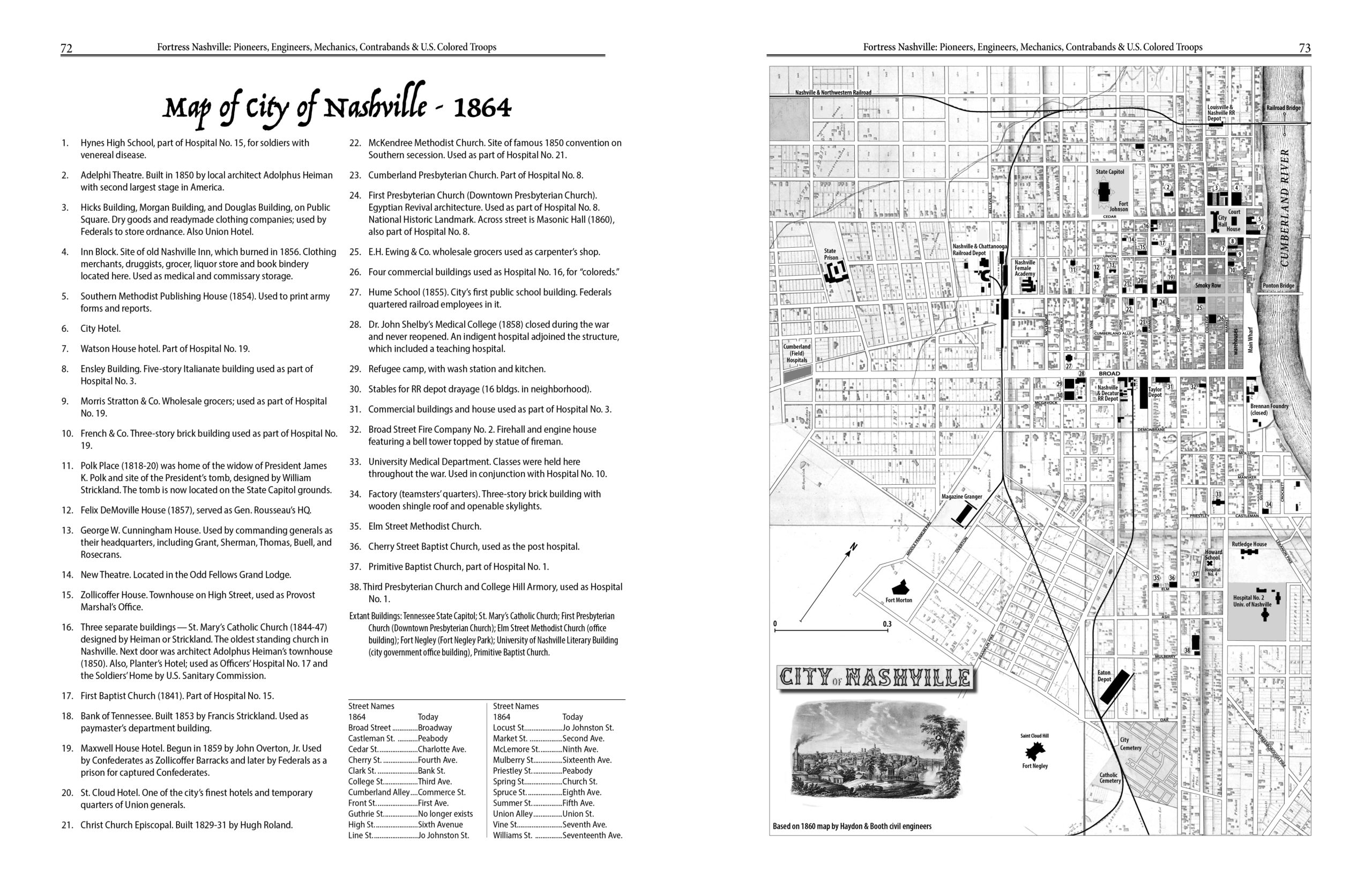
Sample page from Fortress Nashville, showing detailed fortifications map of Nashville (double click to enlarge)
The author has provided BONT with a link — Fortress Nashville At-A-Glance — showing a representative sampler of 56 pages of content, text, maps, photos, and illustrations, to give readers an idea of both the depth and range of the book. Fortress Nashville is available on Amazon. For more information about Mark Zimmerman, Fortress Nashville, and his other publications, visit his website at www.zimcopubs.com.
Review: In a May, 2022 review, “Civil War Books And Authors,” an independent, non-fiction American Civil War book review journal, noted that Fortress Nashville “ranks among the most compelling descriptive and illustrated histories of major Civil War fortification networks.” Pointing out that numerous other works have acknowledged the immense strength of the fortifications built in and around Nashville during the War, “details have always been sparse, and certainly no single volume has approached the level of comprehensiveness displayed in Mark Zimmerman’s new book.” The entire review can be read at https://cwba.blogspot.com/2022/05/review-fortress-nashville-pioneers.html.
March, 2022
MINNEAPOLIS CIVIL WAR ROUNDTABLE JOINS IN EFFORT TO RAISE PRESERVATION FUNDS FOR NASHVILLE BATTLEFIELD
Many Minnesotans both follow and support the preservation efforts of the Battle of Nashville Trust, and with good reason: Four Minnesota regiments engineered the final charge up Shy’s Hill on Dec. 16, 1864, sending the Army of Tennessee into retreat and ending the Battle of Nashville.
The exploits of the 5th, 7th, 9th and 10th Minnesota regiments came at a cost – the deaths of 98 Minnesotans — making that December 16 the deadliest day of battle for Minnesota soldiers in any battle in American history. Minnesotans made up one-third of the total casualties on the Nashville Battlefield.
Now, the Twin Cities Civil War Roundtable is putting out the word to its own membership, and others in Minnesota, to support BONT’s efforts to maintain and enhance the battlefield. Ken Flies, long-time friend and supporter of BONT and a principal in the placement of the Shy’s Hill monument honoring Minnesota soldiers, is a former president of the TCCWRT and has sent their most recent newsletter focusing on the Battle of Nashville. Read Ken’s newsletter at Twin Cities Civil War Roundtable Newsletter: Nashville , and for more information, click the photo below to visit the TCCWRT website.
February 25, 2022
ROBERT HICKS: CIVIL WAR PRESERVATION LOSES PASSIONATE CHAMPION
Robert hicks, best-selling author and acclaimed Civil War preservationist, passed away on Feb. 25, 2022, at his home near Leiper’s Fork, TN. He was 71.
Hicks was heavily involved with preserving the historic sites of the Battle of Franklin. His many achievements and accolades included his highly-praised novel, The Widow of the South, a work of historical fiction depicting the life of Carrie McGavock at her home, Carnton Plantation. The plantation house is one of the centerpieces of the preserved portions of the Franklin battlefield.
The novel, which acted as a tourist and financial magnet for the maintenance of Carnton, resulted in Hicks being named Tennessean of the Year in 2005 by The Tennessean. He was also honored as co-founder of Franklin’s Charge, a coalition of various Franklin preservation groups which resulted in the acquisition of previously commercially-developed battlefield acreage. Among his many other awards, the American Battlefield Trust presented him with the coveted Edwin C. Bearrs Lifetime Achievement Award in 2018.
The Battle of Nashville Trust joins in the tributes to Robert Hicks, not only for his work in Franklin, but also because his legacy of promoting the cause of historical preservation of Civil War sites also had a positive impact on the Battle of Nashville Trust’s mission to save and reclaim portions of the Battle of Nashville battlefield.
For further reading about his extensive contribution to keeping the battle sites secure for future generations, see the obituary of Robert Hicks and many other tributes to him, such as this one.
Feb. 15, 2022
Vanderbilt Professor Summarizes Use Of Modern Technology To Uncover Secrets of the Battlefield Which Have Been Hidden By Time
Brandon Hulette, Asst. Professor of History at Vanderbilt University and a member of the Battle of Nashville Trust board, spoke on the topic “Old Story, New Tricks” at the Nashville Civil War Round Table on Feb. 15, 2022, discussing how technological tools are revealing details about the battlefield that have been hidden by time. Below is a report on the talk by former BONT president and current board member Philip Duer:
Professor Hulette, accompanied by multiple staff and students from his recently formed Civil War classes, descended upon the Battle of Nashville last year armed with modern technology to begin a fresh look at one of the largest Civil War battlefields of the war. With grants and donations, including funds from BONT, Prof. Hulette (Lt. Col., U.S. Army Reserves) established several test sites around the exterior environs of Fort Negley and Shy’s Hill using ground penetrating radar and magnetometers investigating the historical record below the surface without actually disturbing the ground.
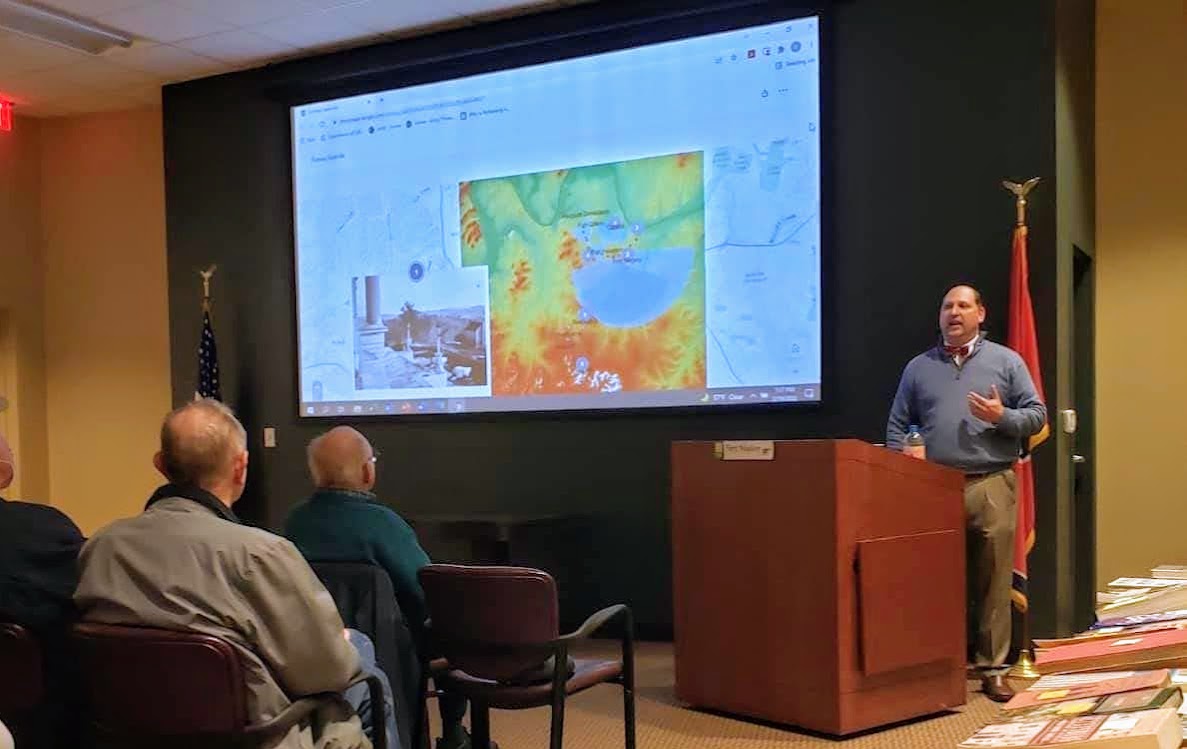
While the laborious field work commenced on the ground, other students and staff digitally created story-mapping overlays utilizing GIS, satellite images, contemporary photographs, and first person accounts to record, verify, and document the fortifications and battle lines.
A separate set of students and staff began digitally documenting the activities of the Union “Brown Water Navy” and in what has not been done before, pinpointing the daily locations and skirmishes of the Union military craft on the Cumberland River leading up to, during, and after the actual battle. The mapping locates, on a daily basis, the ships involved, the type of action, and the results in an interactive format.
In his discussion at the NCWRT, Prof. Hulette could not emphasize enough the importance of the Union gun boats protecting the flanks of the Nashville fortifications, especially the northeast flank past Rutledge Hill (in the old General Hospital area).
Another group of students tasked themselves with researching, locating and digitally documenting the plethora of U.S. Hospitals established in the City of Nashville during the War, as Nashville was the final care destination for all Western Theater casualties. Utilizing story-mapping technology, a detailed report for each hospital, including photographs, and locations, were digitally mapped.
Reviewing contemporary photographs, first person accounts, previous recorded battlefield maps, and satellite imagery, Prof. Hulette and his crew began the study of several test sites employing GPR and magnetometer studies, with the resulting discovery of several interesting phenomena:
- Fort Negley: Civil War period maps indicate that there had been significant entrenchments around the fort during the war, but which are no longer visible above ground. However, GPR technology has revealed parallel straight lines of subsurface disturbance which indicate the existence of earthworks, with one anomaly appearing to represent a Bomb Proof. Straight lines generally do not appear in nature and the disturbances that were found were consistent within the 2 foot depth below the ground where Civil War strata would be found. It is hoped with further funding, additional grids can be marked and searched;
- Shy’s Hill: In Prof. Hulette’s search locations, below the crest and below the assumed trench line on the north slope, the test areas denoted several areas of disturbed soil. One feature demonstrated a right angle and straight lines with both test sites posing more questions than answers.
As an assistant professor at Vanderbilt in the History Department, Prof. Hulette has established two classes with the Civil War as their topic at the University. They have been a huge success. Students who have really never entertained learning about this time in our nation’s history have developed a keen interest and are adding to the wealth of knowledge by their work with modern technology.
December 15 – 16, 2021
A REMEMBERANCE IN PHOTOS: 157 YEARS AFTER THE BATTLE OF NASHVILLE
On December 16, 2021, an approaching cold front brought a light drizzle and low skies just before dusk, not unlike the same date 157 years ago when the top of the Hill was engulfed in a violent clash of armies. Unlike that long ago day, however, the temperature was almost 70 – more than 40 degrees warmer than the day the Battle of Nashville ended. Despite the weather, the Battle of Nashville Trust continued its tradition of honoring those who fought in the two-day battle with commemorative wreathes placed at Shy’s Hill and Redoubt No. 1, and by gathering in the gloomy twilight to hear its historians recount the details of a major Civil War battle that occurred where Nashvillians now live in quiet neighborhoods. Below is a photo essay by BONT board members John Banks and Mark Martin.
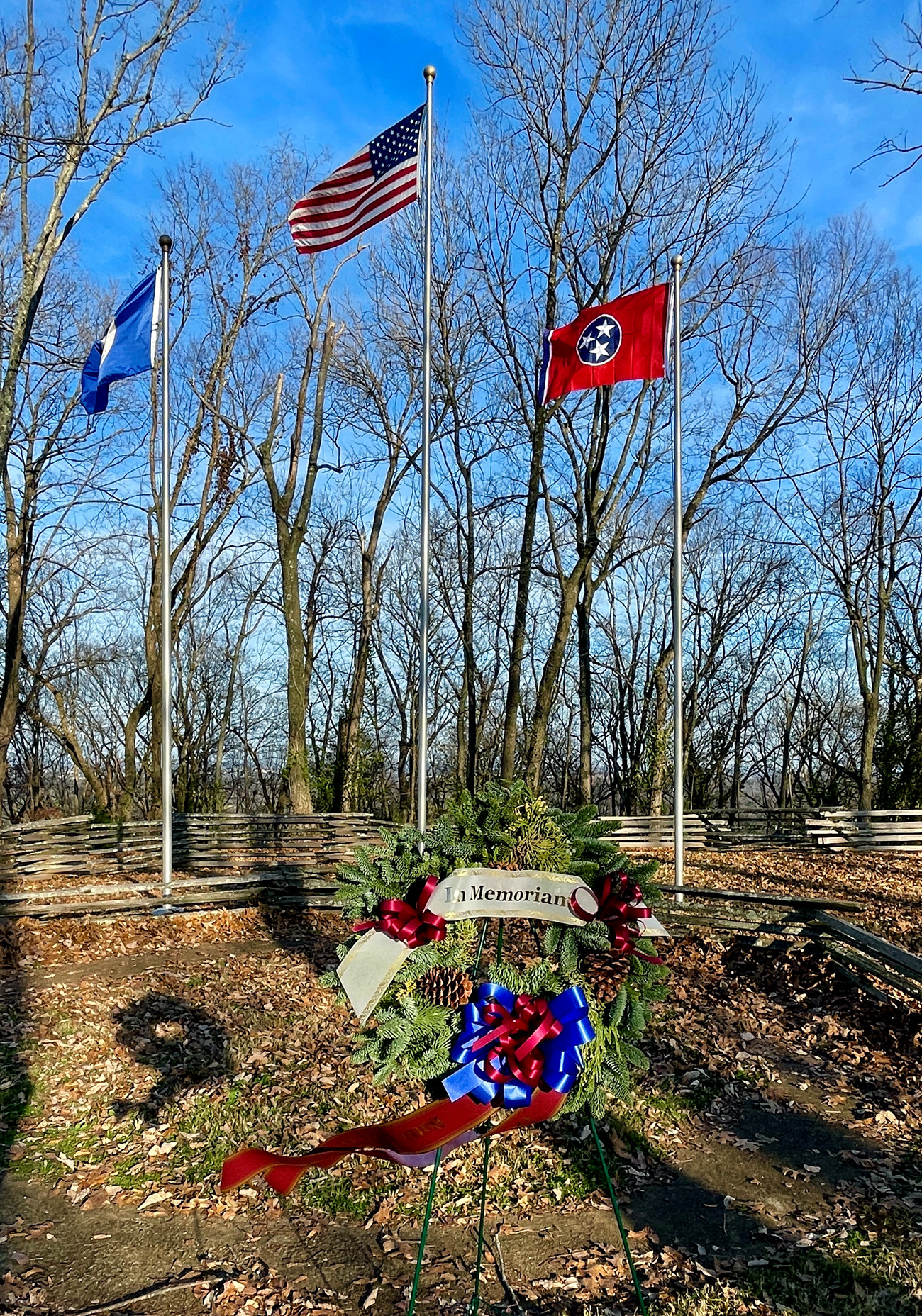
Shy’s Hill flag pavilion with commemorative wreath, with thanks to BONT board member Ellen McClanahan. Photo by Mark Martin
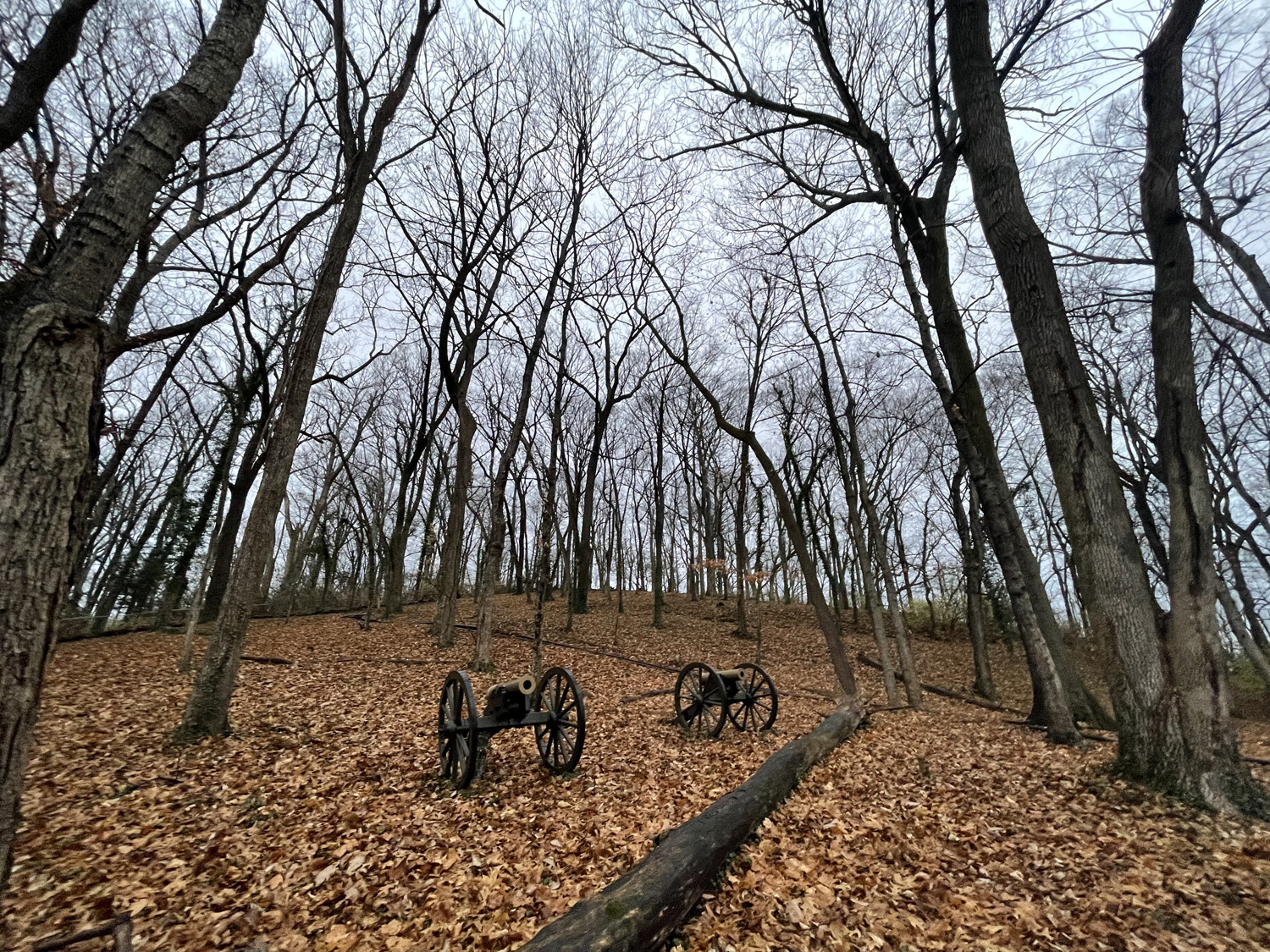
Field pieces mark the plateau of Shy’s Hill’s imposing northeast slope, the only location Hood could get an artillery battery in place on Dec. 16. Photo by John Banks
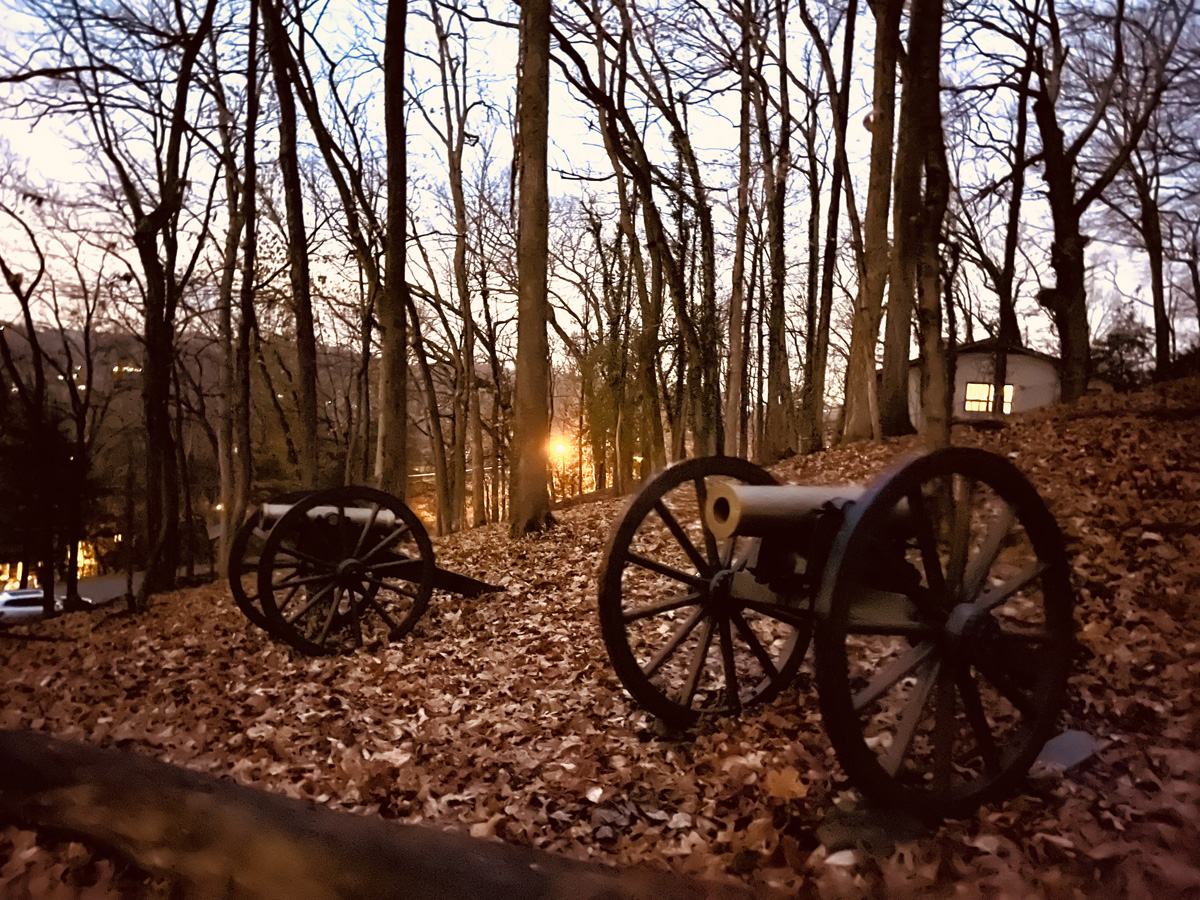
Howitzers in the glow of 21st Century street lights. Photo by John Banks
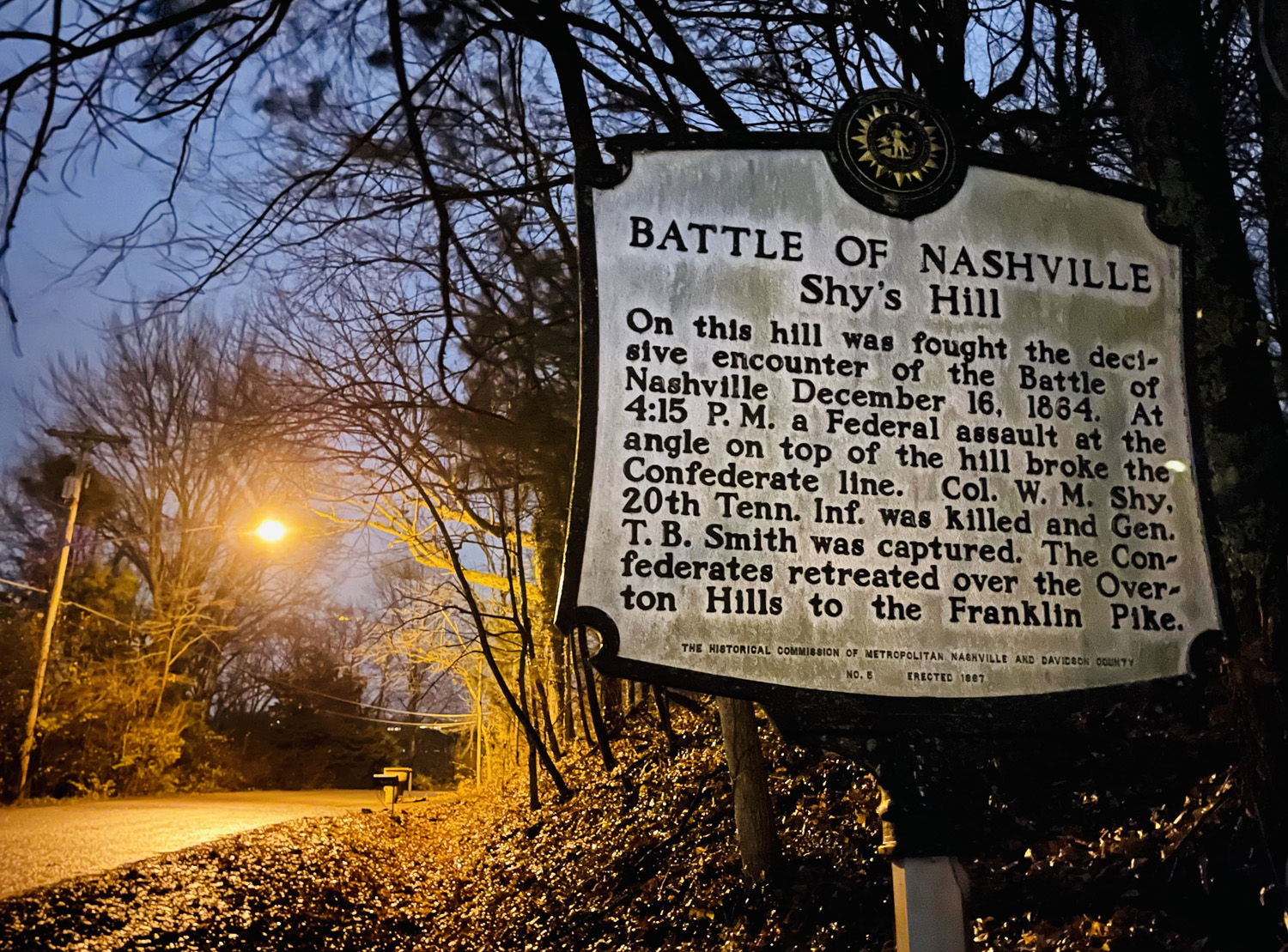
The Shy’s Hill story bathed in ghostly light at dusk. Photo by John Banks
The lights of Nashville surround the solemnity of the hill on which so many died in 1864. Photo by John Banks.
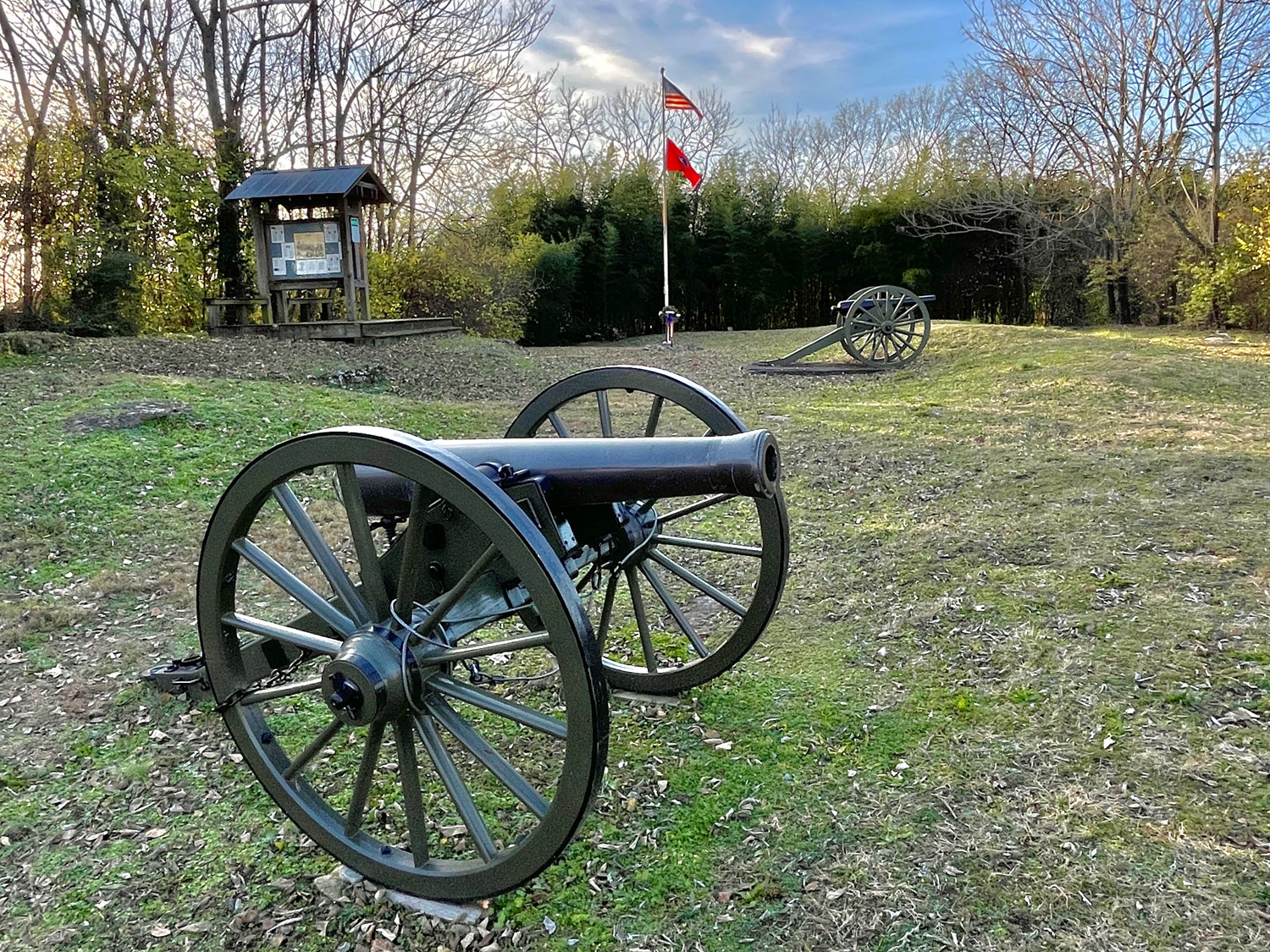
A memorial wreath stands at the flag pole of Redoubt No. 1, behind the two artillery pieces that would have had heated barrels on Dec. 15, 1864. Photo by Mark Martin
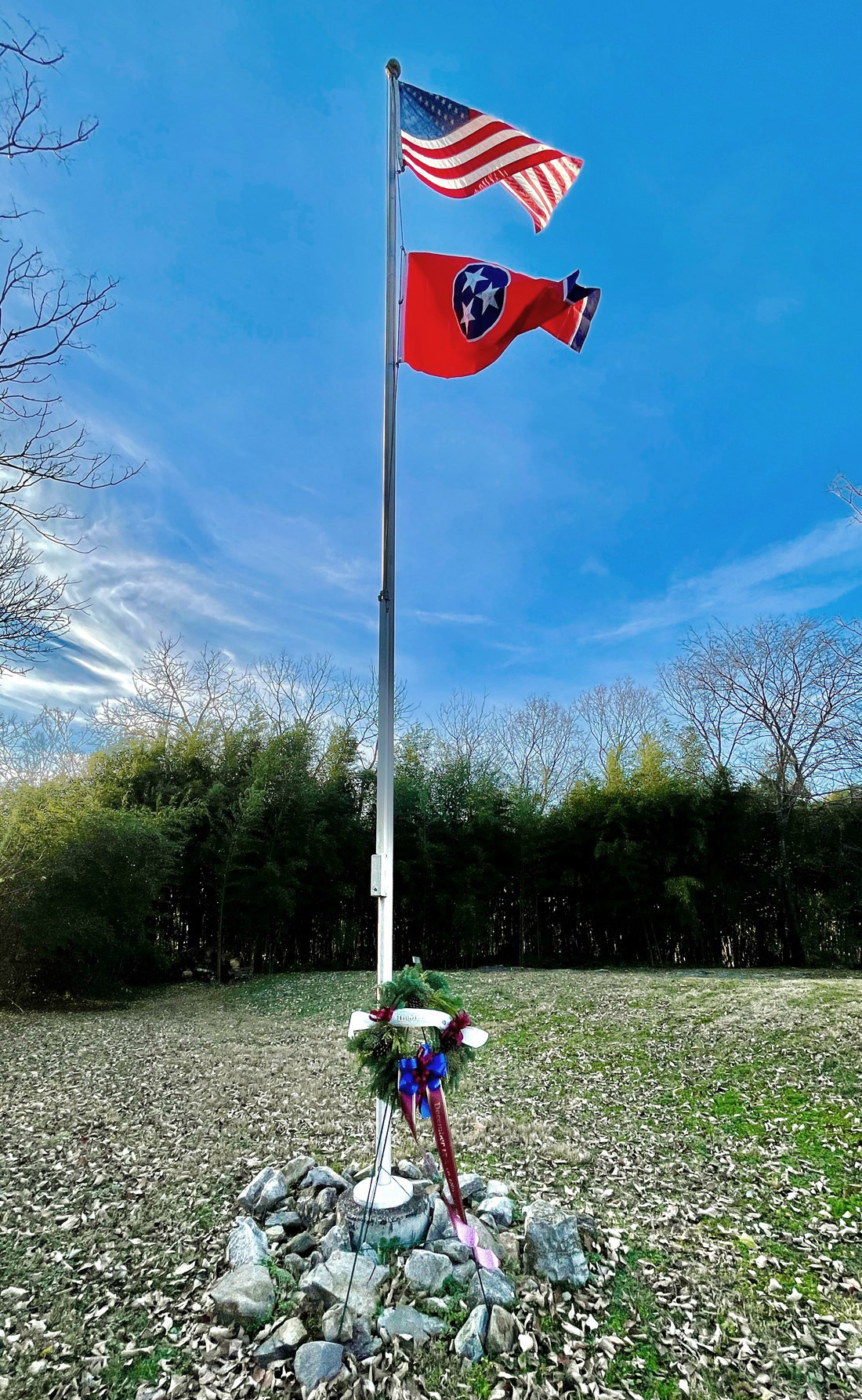
Flags stand sentinel in this urban remainder of Redoubt No. 1. Photo by Mark Martin
December 7, 2021
BONT RELEASES STATEMENT REGARDING REMOVAL OF NATHAN BEDFORD FORREST STATUE NEAR INTERSTATE 65 IN NASHVILLE
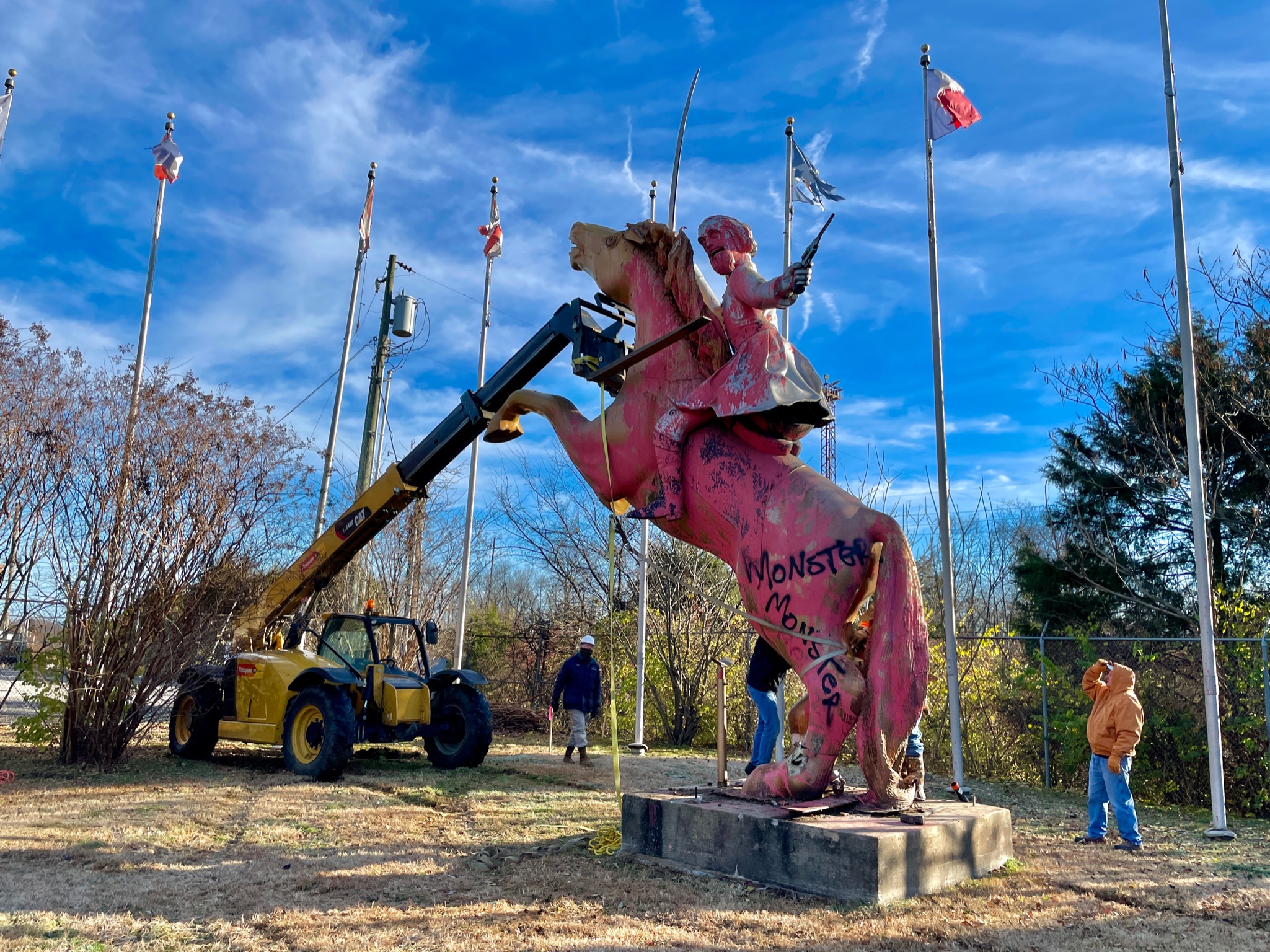
Photo by Mark Martin
On Dec. 7, 2021, the Board of Directors of the Battle of Nashville Trust, Inc., in association with and approval of the Executor and legal counsel for the Estate of William Dorris, released the following Statement commenting on and explaining the disposition of the statue of Gen. Nathan Bedford Forrest previously standing on property owned by Mr. Dorris:
Statement from The Battle of Nashville, Trust, Inc., Trent Watrous, Executor of the Estate of William C. Dorris, and Todd Presnell, Counsel to the Executor
The Battle of Nashville Trust, Inc. (the “BONT”), Trent Watrous, the Executor of the Estate of Charles William (“Bill”) Dorris, and Todd Presnell, counsel to the Executor, released the following statement today (December 7, 2021) regarding the Nathan Bedford Forrest statue along Interstate 65 in Nashville, Tennessee:
Charles William (“Bill”) Dorris passed away on November 24, 2020. Under Mr. Dorris’ Last Will and Testament (the “Will”), Mr. Dorris left his property on Hogan Road in Nashville containing the Nathan Bedford Forrest statue to the BONT. Mr. Dorris had no prior affiliation with the BONT and the BONT had no idea it was a beneficiary of his Will until well after Mr. Dorris passed away.
The BONT, in consultation and with the approval of Trent Watrous, the executor of Mr. Dorris’s estate, made the decision to remove the Nathan Bedford Forrest statue from the Hogan Road property that Mr. Dorris had left the BONT in his Will.
This decision was made for several reasons-each reason sets aside the contentious debate about Forrest as a person or as a Confederate general:
1. Forrest was not present at The Battle of Nashville.
2. The statue is ugly and a blight on Nashville.
3. It has been vandalized, is in disrepair, and is dangerous.
4. Having the statue in such a prominent location in Nashville distracts from the BONT’s mission and would be and has been divisive in the city we all cherish.
The Estate of William C. Dorris remains open in the Davidson County Probate Court, and no decision has been made regarding the statue’s disposition or location.
The Will also set up a separate trust where three distinctive segments of the Hogan Road property will be held in trust. These three distinctive segments are for property containing a pre-Civil War ice house, a pre-Civil War artisanal well, and a flag display of state flags of states that joined the Confederacy. These three items (the flag display, the ice house, and the well) will be preserved in trust, pursuant to Mr. Dorris’s wishes.
We would also like to provide some additional context about the preservation of history, which is critical. The Nashville battlefield was one of the largest in the Civil War and the least protected. It spans from the Cumberland River near Charlotte Pike east to the other side of Nolensville Road and South from the hills just south of town all the way to Brentwood. The core battlefield covers most of Green Hills all the way east to I-65. The citizens of Nashville tried to protect some of the site as early as the 1920s but were unsuccessful. Development and time have made the battlefield virtually unrecognizable. However, the BONT, in conjunction with its partners including Metro Nashville, have been able to save some of the sites for all Americans. The interest in the Civil War and the battle here is huge. The BONT has had over a million visitors to our website from all over the country and the world. People want to know where their great great great grandfather fought and his roots in time and history.
The BONT is proud of what it has accomplished. The BONT’s sites are hidden gems in the community-protected forever-for all to enjoy.
The battle here was perhaps the most decisive victory for the United States during the war and it ended major fighting in the western campaign. The largest attack of the war by African Americans -the USCT-occurred here on Franklin Pike near Battery Lane and their casualties were enormous. History is important. And it is all in our backyards. The Battle of Nashville was a pivotal moment in our nations bloodiest conflict. The Hogan Road property is not core battlefield land. It is a sliver of the retreat. Given the factors outlined above, the BONT, in consultation and with the approval of Trent Watrous, made the decision to have the statue removed.
James D. Kay, Jr., The Battle of Nashville Trust, Inc.
Trent Watrous, Executor of the Estate of William C. Dorris
Todd Presnell, Counsel to the Estate of William C. Dorris
2023 Update: After its removal by the parties to the joint Statement above, the statue was disassembled and moved from the site. It will not be remounted or displayed.
September, 2021
SMOOTHBORE ARTILLERY PIECE DONATED TO BONT, TO BE OUTFITTED FOR DISPLAY ON NASHVILLE BATTLEFIELD SITE
The Battle of Nashville Trust (BONT) has been gifted with a reproduction 6-pounder field artillery piece based on those manufactured during the Civil War by the famous Noble Brothers Foundry of Rome, Georgia.
The cannon was donated by Ms. Graham Woolwine-Gilson, a Nashville native now living in Mamer, Luxembourg. When displayed by BONT, the cannon will be accompanied by a bronze plaque stating, “Donated in memory of Porter Anthony (Tony) Woolwine.”
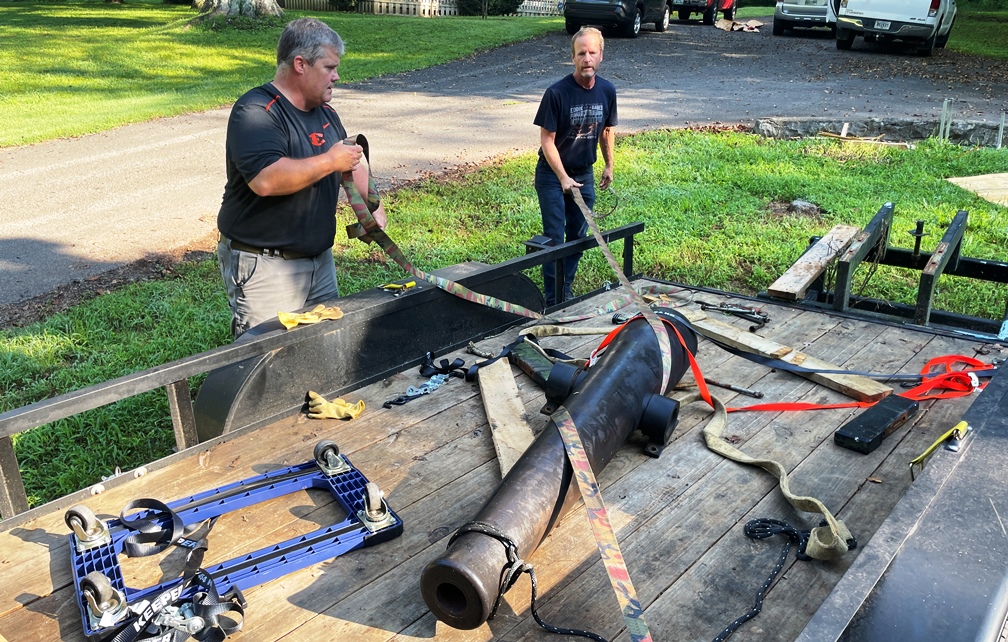
BONT Board members Bobby Whitson and Pete McAlister prep cannon for delivery to Commercial Painting Inc. Photo by Mark Martin
The gift consists of a replica 6-pounder iron cannon tube designed to resemble those manufactured by Noble Brothers, a large ironworks factory in Georgia producing pre-war items such as steam boat engines, locomotives and furnaces. During the war, it turned some of its production to cannons for the Confederacy. The factory was burned to the ground by Gen. William Tecumseh Sherman in 1864, with nothing remaining except the huge lathe machinery used in cannon production.
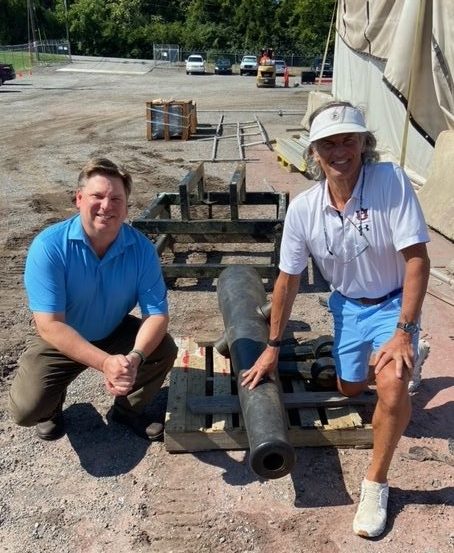
Commercial Painting CEO Jon Petty (L) and BONT President Jim Kay (R), after the Noble Brothers tube had been delivered to prepare it for display.
In his letter accepting the canon barrel on behalf of BONT, President Jim Kay expressed special thanks and noted that it would be placed on “one of the battlefield properties for all to enjoy for decades in the future,” and that “it is people like you that make a difference in what we do.”
The cannon tube, weighing close to 1,000 pounds, was transferred by BONT board members Bobby Whitson, Mark Martin and Pete McAlister from its location in Nashville to Commercial Painting, Inc., where it will be sand-blasted and re-painted.
Afterwards, it will have to be mounted on a custom-built carriage in order to be placed, according to current plans, at BONT’s Redoubt No. 1 preservation site on Benham Avenue.
The muzzle-loading 6-pounder field gun was so-named because it was designed to fire a 3.58 inch-in-diameter round shot that weighed approximately 6 pounds for a range of about 1200 to 1500 yards, depending upon the type of shot used. In addition to solid shot, it could also fire case and canister. It was largely replaced by the U.S. Army early in the war with more advanced artillery, such as the 12-pounder Napoleon smoothbore, but was in use for a longer period by the Confederate armies.
July 22, 2021
VANDY MILITARY PROFESSOR GOES “UNDERGROUND” AT SHY’S HILL
The original surface of Shy’s Hill, which has been partially obscured by 157 years of time and activity since the 1864 battle, was “x-rayed” on July 22, 2021.
The imaging occurred when Vanderbilt military science professor Brandon Hulette took his students and his ground-penetrating radar equipment to the summit to take a look below the surface. Professor Hulette was recently featured on this website because of the advanced technology he is using to explore Battle of Nashville sites, as part of his course, “Telling the Story of Civil War Nashville.”
Below is a “live video” of Hulette, produced by BONT board member John Banks, explaining the process of exploring subterranean Shy’s Hill. The results of the ground-penetrating imaging will be posted on our website.
For more details, visit NewsChannel 5 WTVF’s newscast story about Professor Hulette and his team, as well as John Banks’ Civil War Blog.
July 20, 2021
NASHVILLE CIVIL WAR ROUNDTABLE RETURNS WITH ENTERTAINING GUEST SPEAKER
 The Nashville Civil War Roundtable will resume its 12-year run of war-related presentations on Tuesday, July 20, 2021, with a unique look at the history of the Civil War through the music and legacy of fiddles. The meeting, which is open to the public, will be held in the visitor’s center of Ft. Negley Park in Nashville, beginning at 7:00 p.m.
The guest speaker is author Cody Engdahl, whose topic “A Brief History of the Civil War Through Fiddle Tunes” will focus on the prominence of the fiddle in 19th Century in America and the role it played on both sides during the Civil War. The Roundtable noted that Engdahl, who lives in Nashville, “will be regaling us with his fiddle tunes from the Civil War as well as those written about the war. The music will be interwoven with stories of the era.”
He has published two Civil War books, Rampage on the River: The Battle for Island No. 10 and The Perils of Perryville, and currently researching and writing his third, Blood for Blood at Nashville.
December, 2020
“TENNESSEE WILD SIDE” TV SHOW FEATURES LOSS OF FAMOUS BATTLE OF NASHVILLE WITNESS TREE
In June, 2020, the Richland Country Club reluctantly removed from its golf course a 400-year-old Bur Oak that had witnessed events ranging from buffalo herds to the Battle of Nashville. In December, 2020, the history of the “Witness Tree” was featured on Tennessee’s Wild Side, the outdoor adventure program produced by The Renaissance Center in Dickson, TN, and the Tennessee Wildlife Resources Agency.
The video (see below) features host Steve Hall introducing experts who help viewers explore the amazing timeline of the Witness Tree and all that it had seen and been a part of since it sprouted around the time the Pilgrims landed at Plymouth Rock. The narration includes that of Jim Kay, president of the Battle of Nashville Trust and past president of Richland Country Club, where the tree had lived out its last years.
More facts about the Witness Tree can be found on this website in the Features Page, including an interview with Jim Kay shortly after the tree was removed.
Produced through an educational grant from TWRA, Tennessee’s Wild Side is a family oriented outdoor adventure program featuring outdoor sporting and recreation activities, wildlife conservation, and human interest stories. The program airs on Public Broadcasting Stations across Tennessee.
September 15, 2020
ED BEARSS, PREEMINENT BATTLEFIELD HISTORIAN AND FRIEND OF BONT, DIES AT AGE 97
Legendary Civil War battlefield preservationist, historian and tour guide Edwin C. “Ed” Bearss, a friend of The Battle of Nashville Trust whose members well remember his captivating walks and talks on the Nashville battlefield, died on September 15, 2020, at the age of 97.
As an expert on the battlefields of the Civil War, Bearss was virtually without equal. He began a career with the National Park Service in Vicksburg, Mississippi in 1955 and rose from that position to become Chief Historian for the National Park Service in 1981, a position he held until his retirement in 1995. His extraordinary expertise and career are thought by many to have created and fueled the battlefield preservation movement involving organizations such as The Nashville Battlefield Trust.
BONT’s relationship with Ed Bearss not only included his most recent visits to Nashville in 2013 and 2014, but also the publication of the one-hour video “The Life and Times of Ed Bearss,” produced and directed by Nashville’s David Currey, with executive producer Jim Kay, president of BONT (see DVD cover with link below).
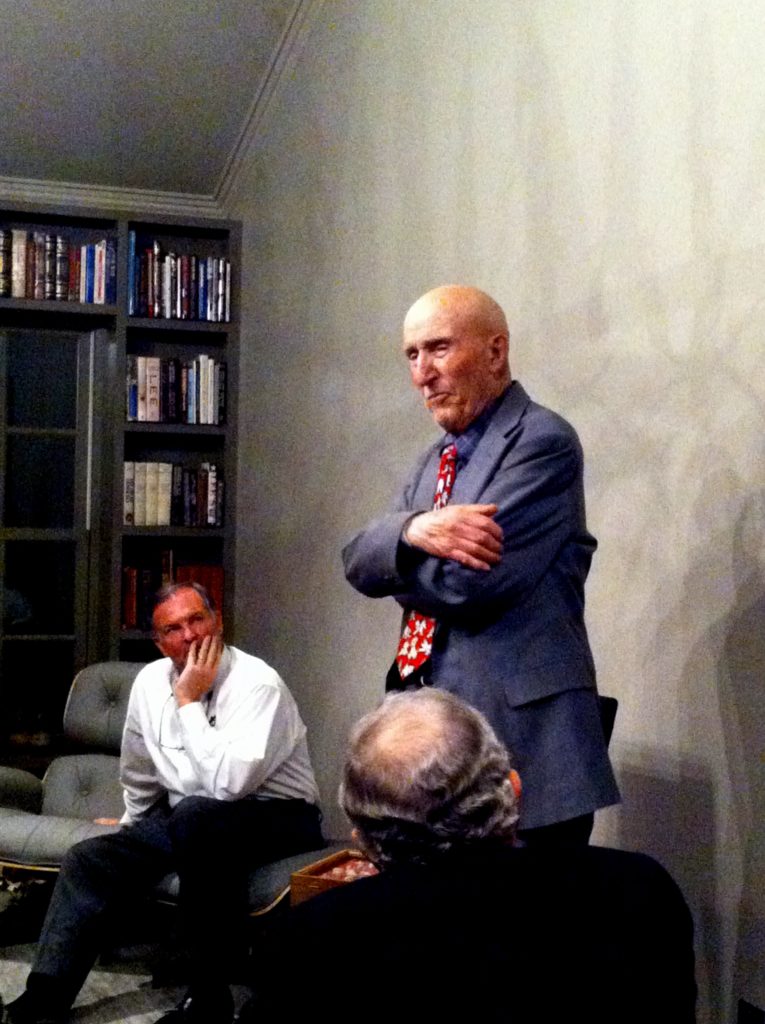
Above: Ed Bearss enthralls his audience in Nashville on December 6, 2013. Click the photo to hear him reveal which CW battlefield was the most moving to him.
On December 6, 2013, BONT and Travellers Rest co-sponsored a joint evening at the home of BONT President Jim Kay. Then 90 years old, Bearss spoke in his legendary “booming tour voice” for 40 minutes, without notes, mesmerizing the standing-only crowd with an anecdote-packed summary of Hood’s march into Tennessee in 1864. Afterwards, he signed copies of some of the 16 books that he had authored, brought along by attendees seeking his authoritative signature.
The next morning he braved the threat of a winter ice storm to lead a day-long bus tour of eight key areas of the Nashville battlefield, including Travellers Rest, Granbury’s Lunette, Redoubts 1 and 3, Ft. Negley, City Cemetery, John Trotwood Moore school, Shy’s Hill and Peach Orchard Hill. Participants said the battlefield “came alive” as Bearss displayed his expertise as a nationally-recognized Civil War tour guide. He often said that you cannot describe a battlefield unless you have walked on it.
Bearss returned to Nashville a year later when BONT commemorated the 150th anniversary of the Battle of Nashville on December 15-16, 2014. In the grand finale of the 4-day city-wide program, BONT hosted a sold-out Sesquicentennial event at Travellers Rest on the evening of December 16, 2014 – 150 years to the day after the Confederate army had retreated south along nearby Franklin Pike as the Battle of Nashville came to a close. Those in attendance that evening knew they were witnessing another kind of history, a 91-year-old legend in the annals of Civil War history and battlefield preservation, discussing the battle on its 150th anniversary, at the house that had been used by Confederate Gen. J